功夫茶 · The Art of Brewing
Brewing guide
Gongfu cha is a practice of attention — small vessels, many infusions, each one different. Here's how to brew each type of tea we carry.
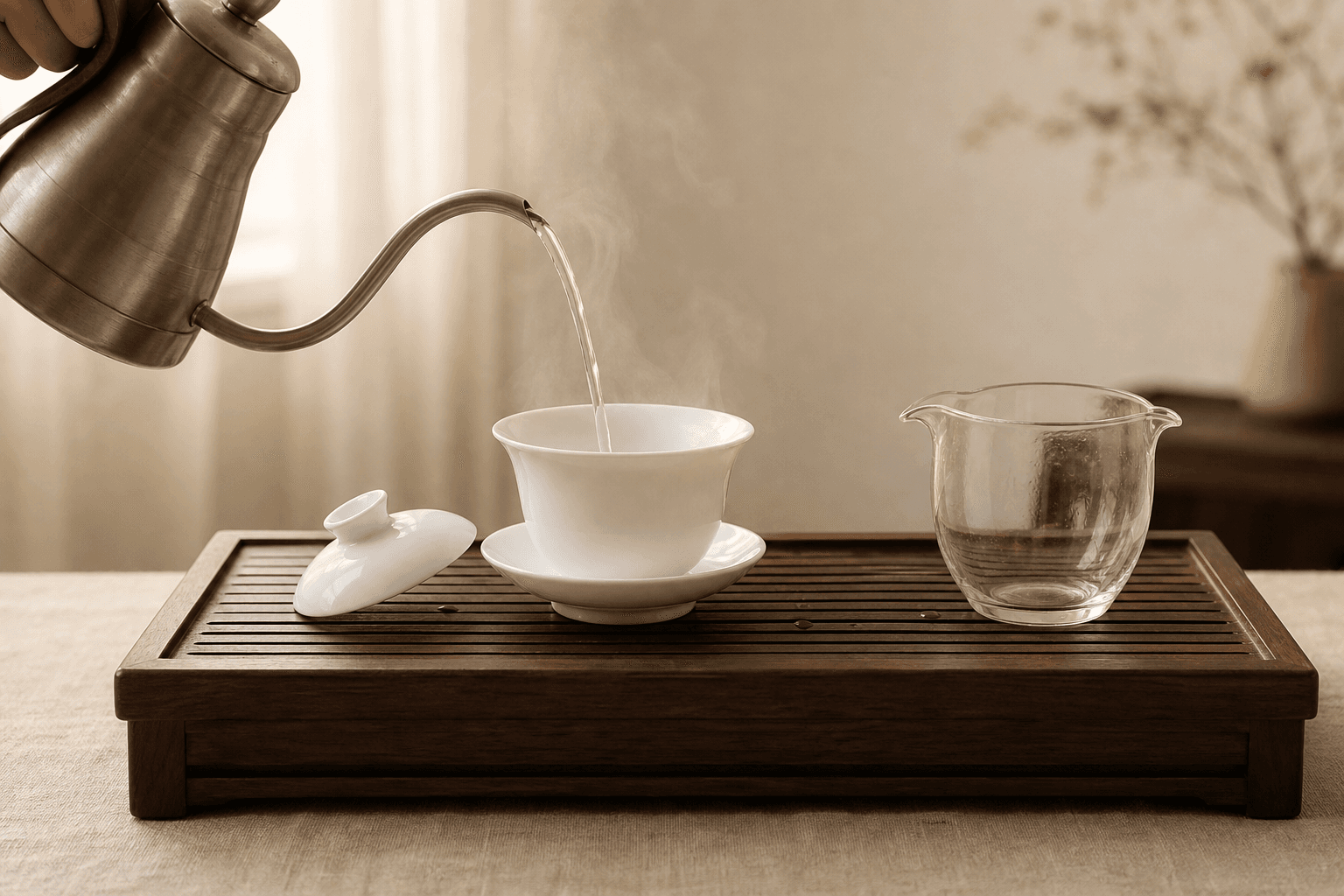
温Step 01
Warm your vessel
Pour hot water into your gaiwan or teapot. Swirl and discard. This primes the clay or porcelain and ensures an even temperature for brewing.
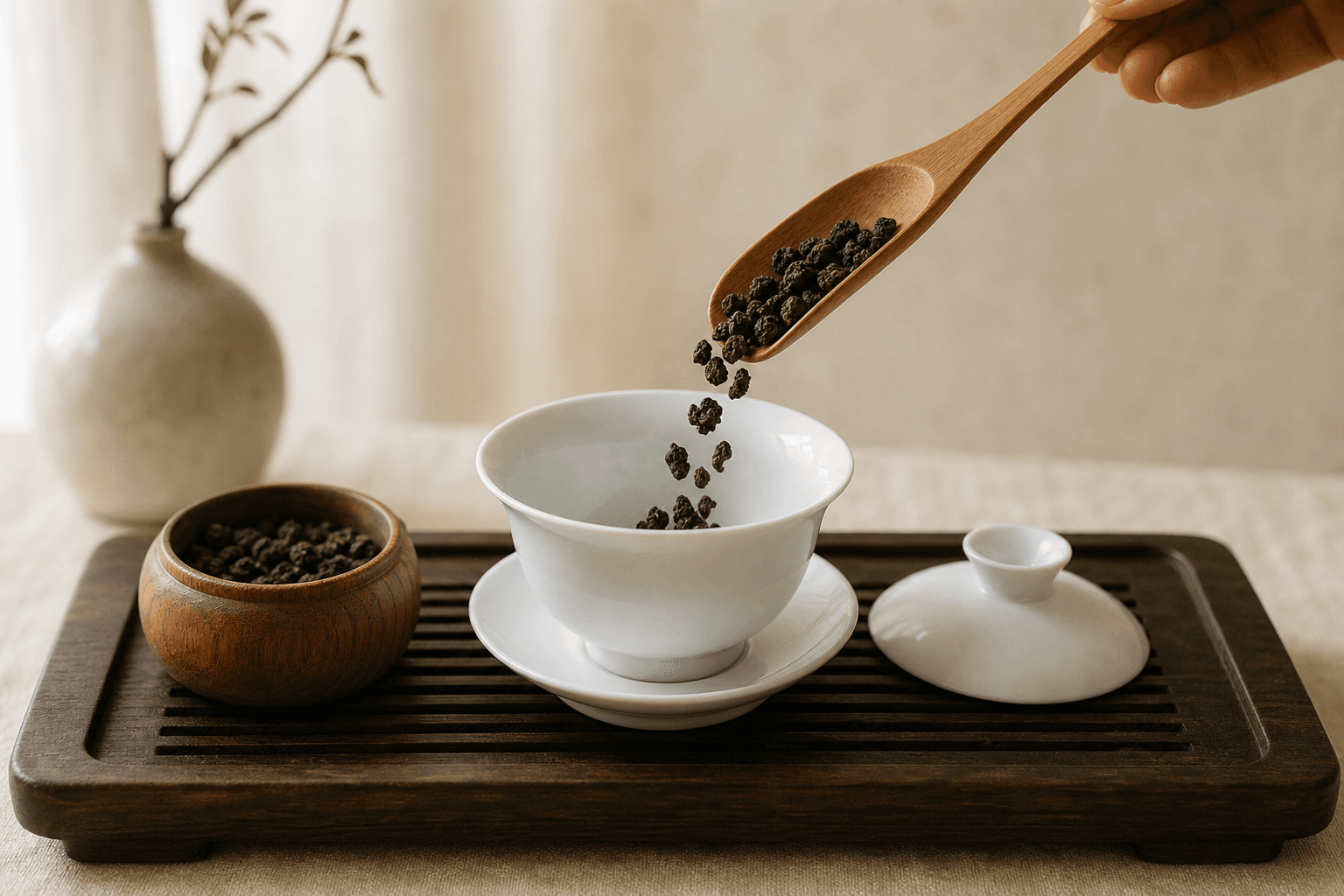
量Step 02
Measure your leaves
Add 5g / 100ml of Pu-erh tea. Inhale the dry leaves — the aroma tells you about the tea's character before the first steep.
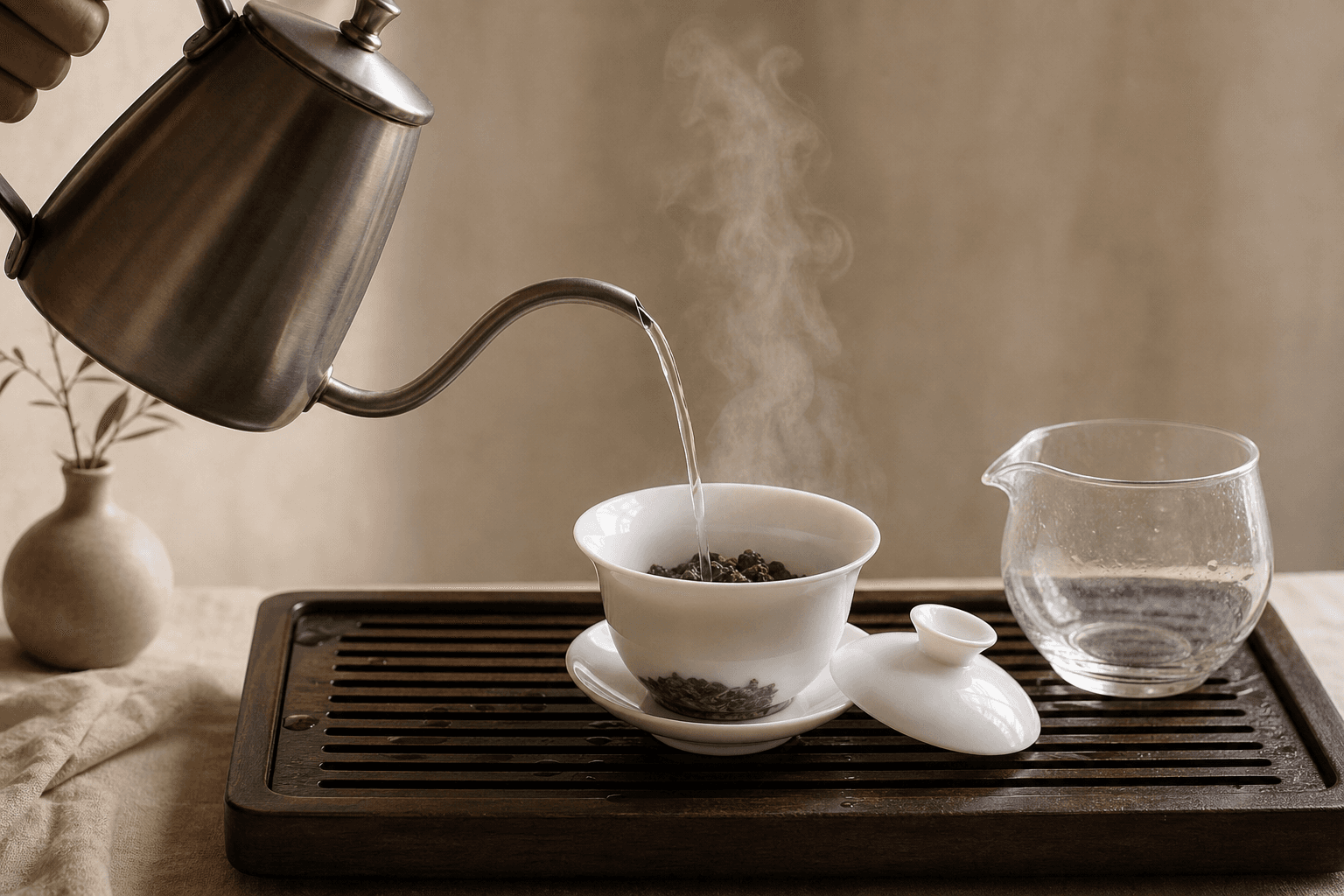
洗Step 03
Rinse the leaves
Pour 100°C water over the leaves and discard after 3 seconds. This "awakens" the leaves and washes away any dust from processing.
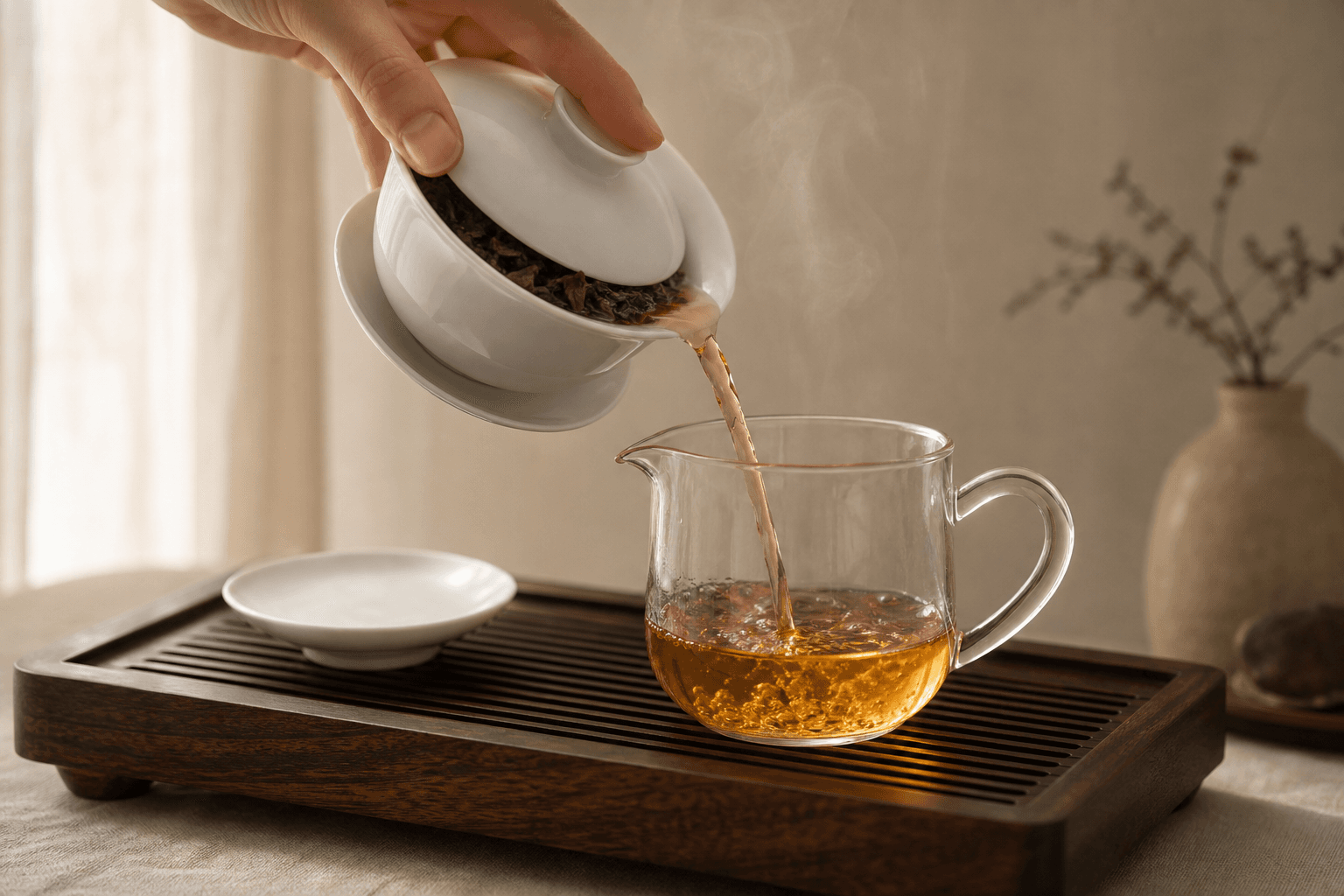
泡Step 04
First infusion
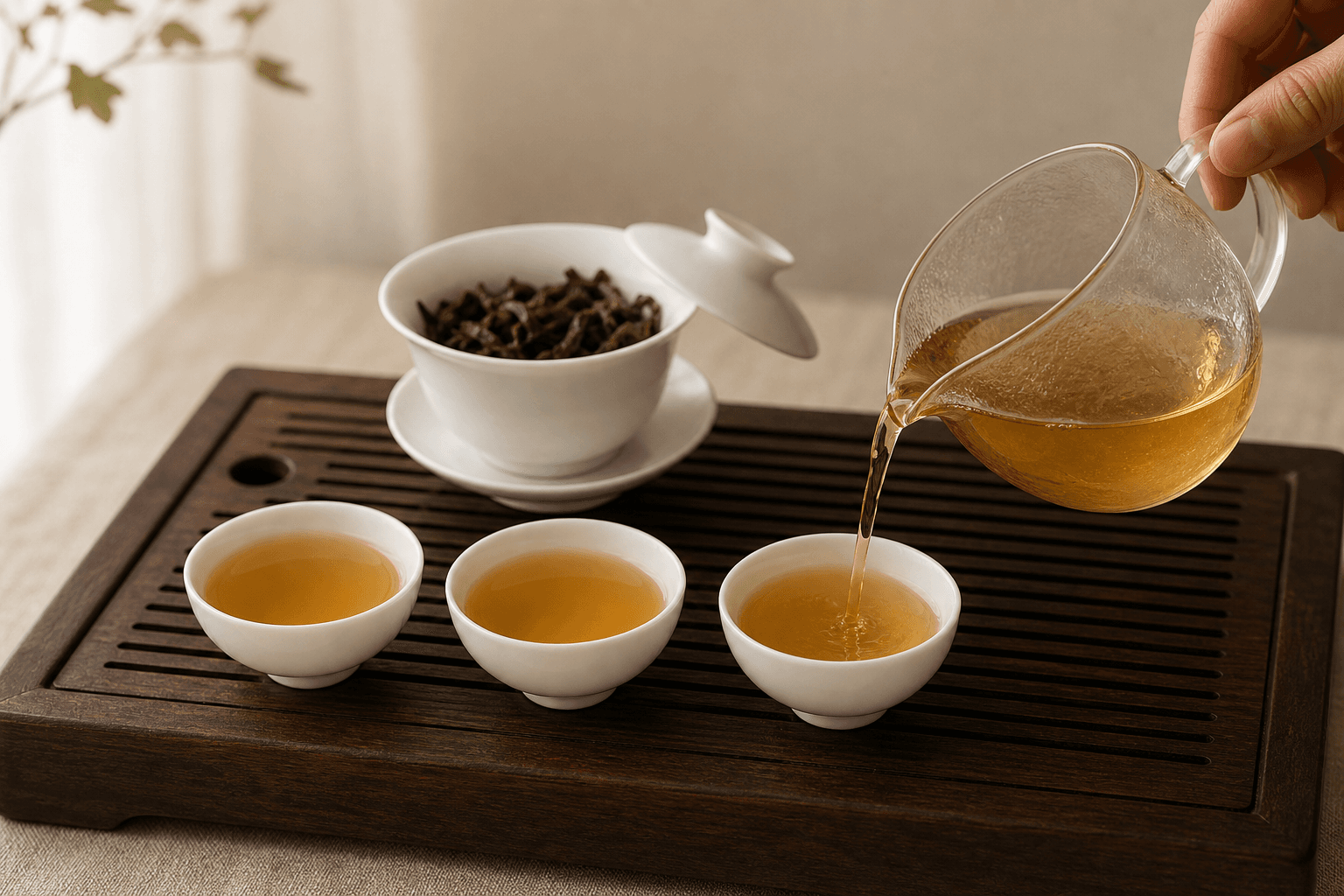
Pour 100°C water and steep for 15s. Pour out completely — don't let leaves sit in water between infusions.
品Step 05
Repeat & explore
Pu-erh yields 10–15 infusions. Add 5–15 seconds each round. Notice how the flavor evolves — this is the heart of gongfu cha.
Recommended Vessel
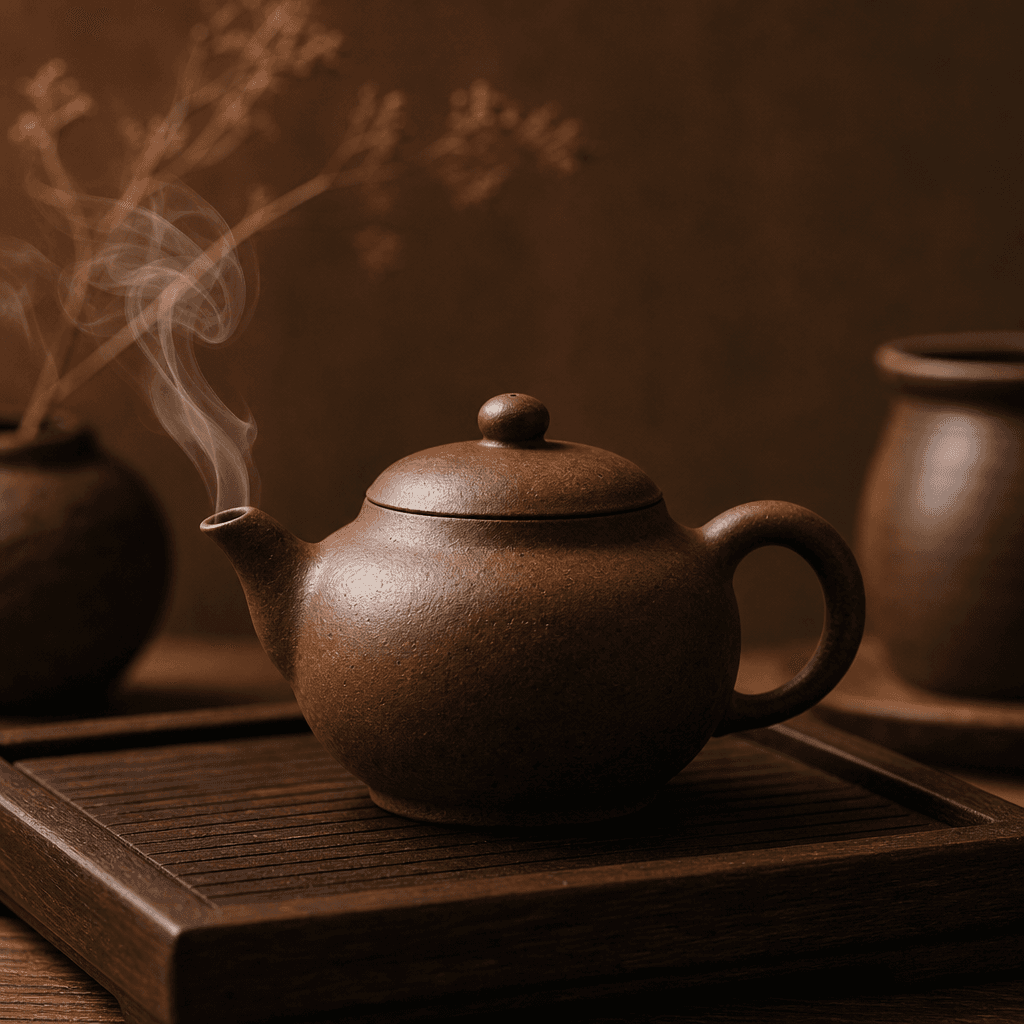
For Pu-erh: Yixing clay pot
Use fully boiling water. Rinse once to awaken the leaves. Pu-erh rewards patience — later infusions reveal hidden sweetness and depth.
Essential tips
Use filtered water
Tap water with chlorine or heavy minerals will mask the tea's natural flavor. Spring or filtered water lets the leaves speak.
Pre-warm everything
Warm your vessel, pitcher, and cups before brewing. Temperature consistency is the secret to even extraction.
Pour out completely
Never let leaves sit in water between infusions. Drain every drop — the last few drops are the most concentrated and flavorful.
Ready to put this into practice?
Browse Our Teas →