普洱 · Origins & Stories
A Field Guide to Pu-erh
Aged, fermented, and prized for decades. Where it comes from, why collectors cellar it, and how to taste its earthy depth.
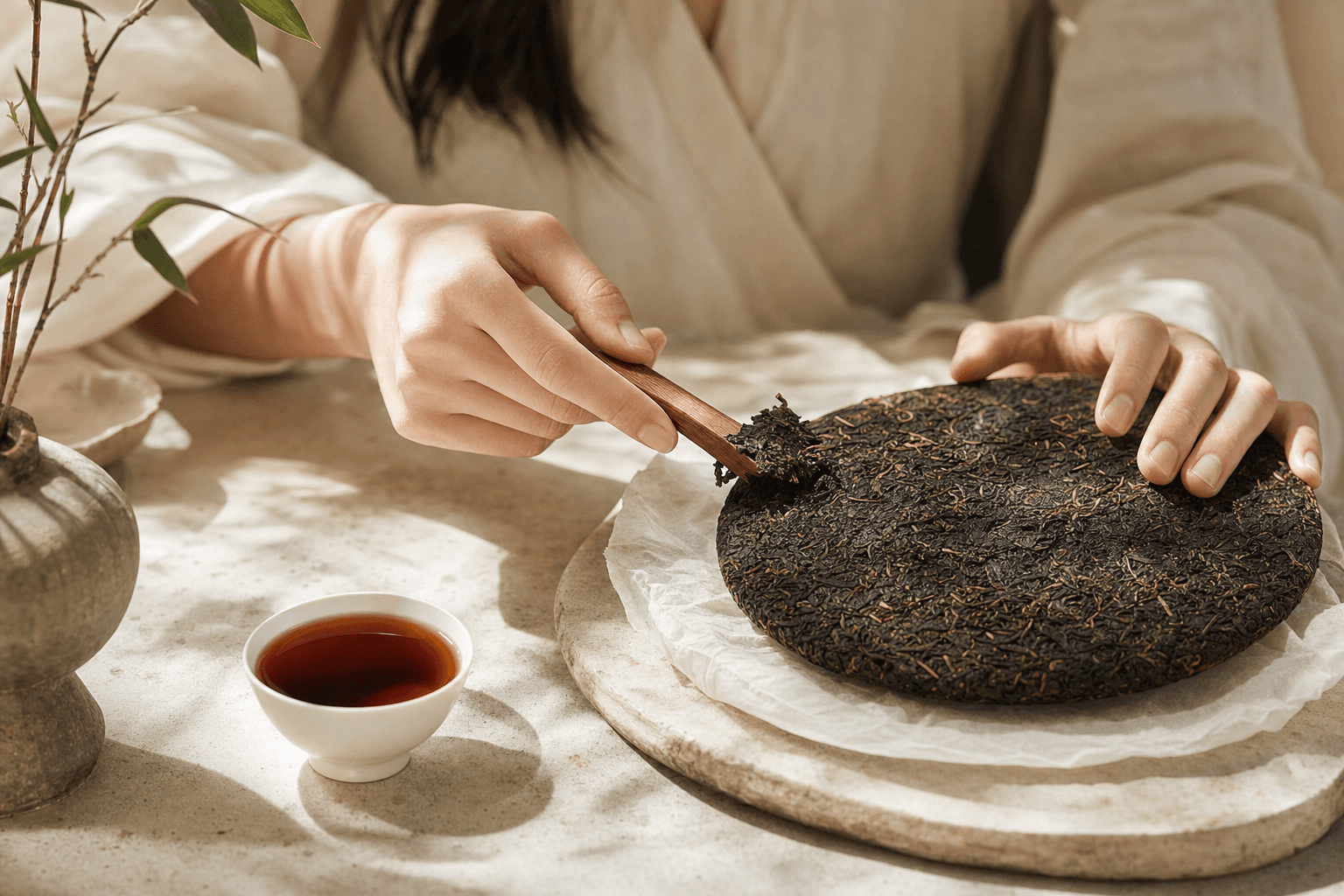
Pu-erh is the one Chinese tea that behaves like wine. It is aged, it is collected, and the best of it grows more valuable, and more delicious, with every passing year. Where other leaves are prized at their freshest, picked in spring and drunk within the season, pu-erh is built to be put away and waited on.
It comes from one corner of China, Yunnan in the far southwest, and from one kind of tree, broad-leaved and old. Almost everything that makes pu-erh strange and wonderful, the cellars, the pressed cakes, the deep earthy cup, follows from those two facts. This is a field guide to all of it, and to the ripe Yunnan pu-erh we pour.
源Where it begins
A tea from Yunnan
Pu-erh begins in Yunnan, the province in China's far southwest where the country folds down toward Laos, Myanmar, and Vietnam. It is warm, high, and wreathed in mist for much of the year, and it is widely held to be the original home of the tea plant itself. Tea has been picked, pressed, and aged in these mountains for well over a thousand years.
The leaf is unusual too. Where most Chinese tea comes from the small-leaf Camellia sinensis, pu-erh is made from the broad-leaf assamica varietal, a larger, bolder cousin that on the oldest gardens grows not as a low clipped bush but as a proper tree, gnarled and tall, reaching back decades or even centuries. That ancient, old-growth leaf carries the depth and the staying power that aging needs.
酵The great divide
Raw and ripe
If you learn one thing about pu-erh, learn this. Every pu-erh is one of two kinds, and the difference is not the leaf but what is done to it after picking.
- Sheng · raw. The traditional form: leaf that is fixed, rolled, and sun-dried into a green tea, then pressed young and aged slowly in storage over years and decades. It starts bright, brisk, and often bitter, and matures, very gradually, into something mellow, sweet, and complex. This is the connoisseur's tea, the one cellared for the long haul.
- Shou · ripe. Developed in the 1970s to fast-forward that aging. Producers pile the damp leaf and let it ferment under heat and humidity, a process called wo dui, or wet piling, for a matter of months rather than years. The result is a dark, smooth, earthy cup that raw pu-erh might take decades to reach, ready to drink from the start.
Our Yunnan Crown line is ripe pu-erh, shou. It is the dark, round, after-meal cup most people picture when they hear the word, deliberately matured in the making for an even, comforting character you can pour today.
藏Aged and collected
Tea that keeps changing
Most tea is racing the clock. A green tea is at its peak within months of picking and fades from there, which is why we seal it and tell you to drink it fresh. Pu-erh runs the other way. Pressed into a cake, it stays quietly alive: microbes and slow oxidation keep working in the leaf for years, softening it, deepening it, turning rough young tea round and sweet.
That is why pu-erh is collected like wine. Cakes are stamped with their year and their region, laid down in cellars, and traded; a sought-after mountain or a celebrated vintage can climb to extraordinary prices as it matures. A raw cake bought young and opened a decade later is a different, better tea than the one that went into storage. Even ripe pu-erh, already matured in the making, continues to settle and smooth with a few years of rest.
Buy a green tea and you are buying this spring. Buy a pu-erh and you may be buying the next twenty years.
饼Cakes and loose leaf
The pressed cake
Reach for pu-erh and you will often be handed not a bag of loose leaf but a solid disc. Pu-erh is traditionally compressed: the round, frisbee-like bing cha, the small domed tuo cha shaped like a bird's nest, and the rectangular brick. The habit is old and practical. Centuries ago, pressed tea travelled better than loose along the Tea Horse Road, the network of mountain trails that carried Yunnan leaf by mule and porter across the southwest and up into Tibet. Compact and durable, it survived the journey, and the pressing also slows and steadies the aging within.
To brew from a cake, do not snap it like a biscuit. Use a pu-erh pick or a blunt knife, find a seam, and slide the point in along the natural layers, prising off thin flakes so the leaves come away whole rather than shattered. Whole leaf brews cleaner and more evenly. Loose pu-erh, like our Yunnan Crown, skips the step entirely: simply measure and brew.
味How it tastes
Reading the earthy cup
Ripe pu-erh pours dark, a clear reddish-brown verging on mahogany, and it smells of the forest floor: damp earth, old wood, a hint of dark fruit like dates or dried plum. In the mouth it is smooth and thick, round and low in astringency, with an aged sweetness underneath and a lightly roasted finish that lingers after the cup is down. Drink enough of it and you may notice cha qi, the warming, settling energy good pu-erh is said to carry through the body, less a flavour than a felt calm.
One honest note. Young ripe pu-erh, fresh from the wet pile, can smell frankly earthy at first, even a touch fishy or pond-like. This is normal, not spoilage. It is the signature of the fermentation, and it fades. A quick rinse of the leaf and a little exposure to the air clear most of it before the first real cup, and a cake given a year or two of rest shows it far less. What is left underneath is the deep, sweet, grounding character that makes ripe pu-erh what it is.
Ripe pu-erh tastes the way a forest smells after rain: dark, sweet, and quietly alive.
泡How to brew it
Boiling water, many cups
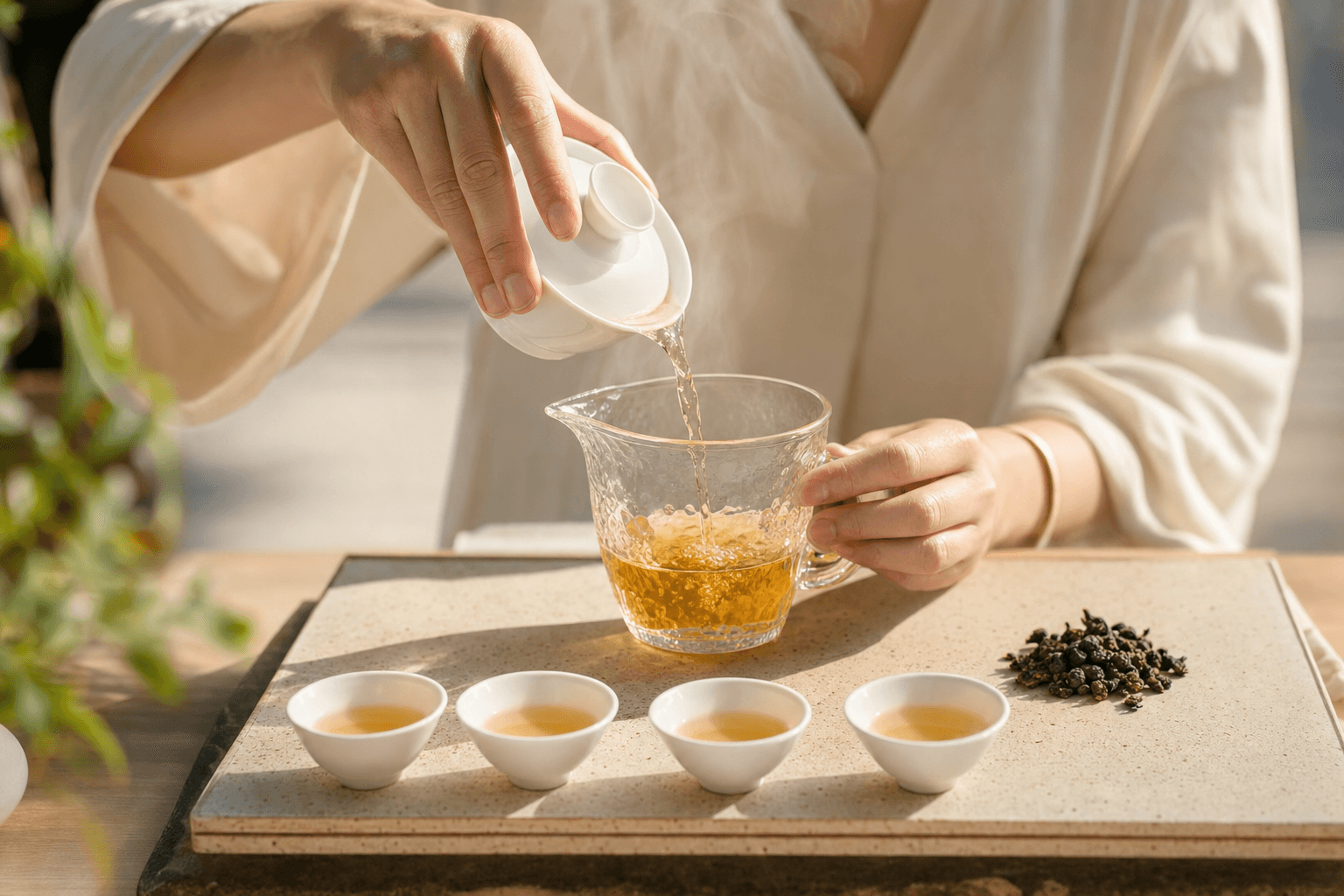
Pu-erh asks for the hottest water you have and rewards patience with generosity. Unlike delicate greens, the dark leaf wants a full rolling boil, 100°C, to open properly. Use plenty of leaf, give it a rinse or two to wake it and clear the dry-leaf dust, then brew in short steeps, pouring the cup off completely each time. A good ripe pu-erh will carry you well past ten infusions, the early cups dark and full, the later ones softer and sweeter, fading slowly rather than dropping off a cliff.
| Water temp | 100°C, a full rolling boil |
|---|---|
| Leaf ratio | 5g / 100ml gongfu, 3g / 150ml in a mug |
| Rinse | Yes, one or two quick rinses |
| First steep | 10 seconds |
| Each steep after | +5 to 10 seconds |
| Infusions | 10 or more |
| Vessel | Gaiwan, clay pot, or any mug |
Gongfu-style parameters for ripe pu-erh. In a mug, use about 3g per 150ml and steep three to five minutes to taste.
If a small pot feels fussy, pu-erh is also the most mug-friendly tea we sell. Drop a few grams into a large cup, top it with boiling water, and let it sit; its low astringency means it stays smooth even if you forget about it for a while. Either way, do not throw the leaf out after one cup. The second and third are often the best.
云Our ripe pu-erh
Three tiers, one mountain
Everything above lives, for us, in one line. Our Yunnan Crown pu-erh is ripe, shou, drawn from the same Yunnan source and graded by the size and wholeness of the leaf into three tiers. The cup they share is the classic one: very dark reddish-brown, distinctly earthy on the nose, lightly roasted across the palate, and slightly sweet to finish, lingering long after the last sip. The grade simply decides how clean and complete the leaf in the tin is.
- Yunnan Crown Reserve. Our first grade, the top of the line, reserving the cleanest and most complete leaf for the deepest, roundest, most polished cup.
- Yunnan Crown Signature. Our second grade, the same earthy-and-sweet character in a leaf one quiet step down from the Reserve, an easy everyday pour.
- Yunnan Crown Select. Our third grade, the unfussy introduction, an honest dark cup for steeping daily while you get to know ripe pu-erh.
Whichever tier you start with, brew it hot, give it a rinse, and let it go round after round. It is the warm, grounding cup a household reaches for after a meal or on a cool evening, and it only gets more familiar the longer it sits on your shelf.
Common questions
What is the difference between sheng and shou pu-erh?
In a line: sheng is raw pu-erh, sun-dried and green, that ages slowly over years and decades; shou is ripe pu-erh, fermented quickly in the making so it tastes aged from the start. Sheng is the cellar-and-wait tea, often bright and bitter when young; shou is the dark, smooth, earthy cup ready to drink today. Our Yunnan Crown line is shou, ripe pu-erh.
Does pu-erh go bad or expire?
Not the way most tea does. Pu-erh has no real expiry; it is made to age, and good pu-erh, stored well, only improves for years and sometimes decades. What can go wrong is bad storage: kept damp it can grow off, and kept beside strong-smelling things it picks up their odours. Stored cool, dry, dark, and away from smells, a cake keeps maturing rather than spoiling. If a pu-erh ever smells sour, sharply musty, or looks visibly mouldy, that is storage gone wrong, not normal aging.
How should I store pu-erh?
Cool, dry, dark, with a little airflow, and far from strong odours. Pu-erh is the rare tea you should not seal airtight; the leaf needs to breathe to keep maturing. Avoid direct sun, damp, and the kitchen, where it will drink in the smell of spices and coffee. A stable shelf at moderate room humidity, in its own clean box or wrapper, is all it asks. There is no rush to drink it.
Why does my ripe pu-erh smell earthy, almost fishy, and is that normal?
It is normal. Ripe pu-erh is made by fermenting the damp leaf in a warm pile, and a young one fresh from that process can smell strongly earthy, even a little fishy or pond-like at first. It is the signature of the fermentation, not a fault, and it fades. Give the leaf one or two quick rinses with boiling water before the first real steep, let the cake breathe, and a few months or a year of rest will mellow it further. Underneath is the deep, sweet, grounding cup pu-erh is loved for.
Is the caffeine in pu-erh high?
Pu-erh sits in the moderate range of other true teas, and well below a same-size mug of coffee. What people notice most is how the lift feels: smooth, warming, and steady rather than sharp, especially with ripe pu-erh, whose long maturing rounds off the edges. The first rinse also pours away a little caffeine before you drink. It makes a fine afternoon or after-meal cup; if you are sensitive, keep your steeps short and your cup earlier in the day. For a fuller breakdown, see our guide to caffeine in tea.
Shop as you read
The teas in this guide


Keep reading
Brew it the traditional way
Single-origin Chinese tea, hand-picked and sealed fresh. Free shipping over $80, and 15% off your first order.