
Roasted · Chestnut · Sweet
Our best of the best, charcoal-roasted long and slow. Ember Crown Reserve takes the same bud-and-first-leaves pluck as our Mountain Crown Reserve, from the same Nantou gardens, then carries it through a deep, patient charcoal bake a green oolong never sees. The cup pours a clear golden brown with a prominent roasted aroma over sweet undertones, an opening note of warm roasted chestnut, and a long sweet-and-toasty finish that lingers at the back of the throat. The bud-only grade gives the roast the finest leaf to work with, the first-grade lot a tea-literate household seals for guests and the cold months. Origin: Central Taiwan · Nantou County · Spring & Winter flushes Tasting: Roasted · Chestnut · Sweet Brew: 95–100°C · 3g / 150ml · 45s first steep, +15s each
Brewing Guide
In Traditional Chinese Medicine, a charcoal-roasted oolong is read as warmer than its green-style sibling — the long bake nudges the tea toward the warming end of the spectrum, which is why central Taiwanese drinkers reach for a roasted cup through the cool months and after a heavy meal. It is said to warm and settle the stomach, support digestion, ease internal damp (湿气), and comfort the body without the chilling edge a fresh green tea can carry.
Modern chemistry tracks the change the roast makes. The long, low charcoal bake mellows the sharper catechins and tannins of the fresh leaf and develops new aromatic and Maillard compounds, while the partial-oxidation polyphenols and the L-theanine of a high-mountain leaf carry through. The first-grade bud pluck gives the roast the most concentrated leaf to work with. None of this is a medical claim. It does explain why a careful drinker describes the roasted cup as both comforting and clear-headed: a gentler, rounder tea than its astringency-forward cousins.
Tradition
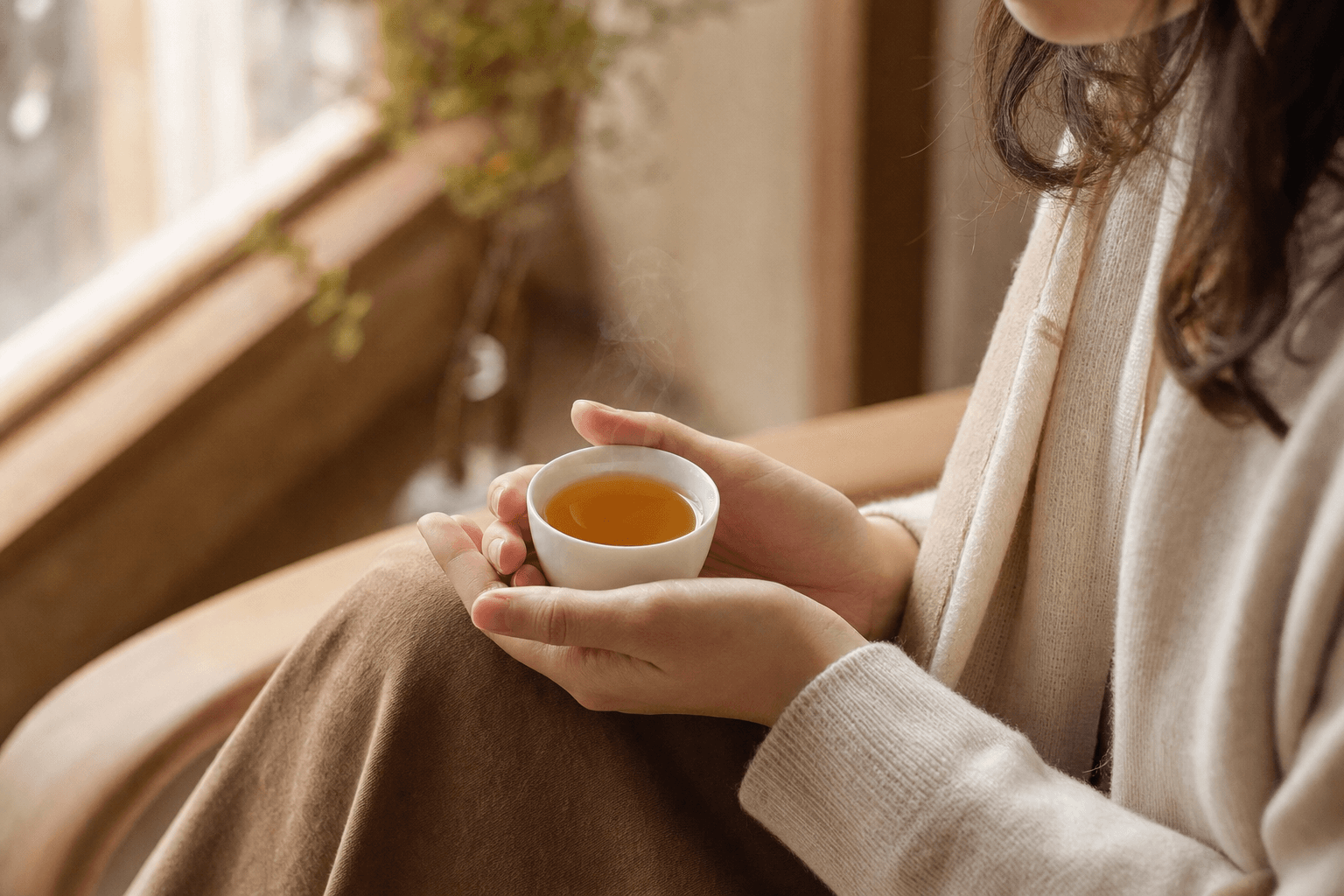
The classic roasted cup poured after a heavy or rich meal — warming enough to settle the stomach and cut through richness without chilling the middle.
Modern lens


The long charcoal bake mellows the harsher catechins and tannins, making for a gentle, low-astringency cup that sits easily after eating.
Tradition
Drunk through the cool seasons in central Taiwan as a warming tonic — said to comfort and "warm" the body without drying it.
Modern lens
Partial-oxidation polyphenols including theasinensin carry through the roast, and the bake develops additional aromatic and Maillard compounds.
Tradition
A roasted high-mountain oolong is the traditional evening cup for unwinding — warming and settling, lifting the head without agitation.
Modern lens
L-theanine from cool-night high-elevation growth carries through the roast, paired with a moderate caffeine dose for steady, non-jittery alertness.
Tradition
Reached for on cold evenings and through winter, when a warm, sweet, settling tea is what the body wants.
Modern lens
The roast shifts the cup toward a fuller, rounder, warmer profile that drinks comfortably hot and lingers sweet.
The Reserve
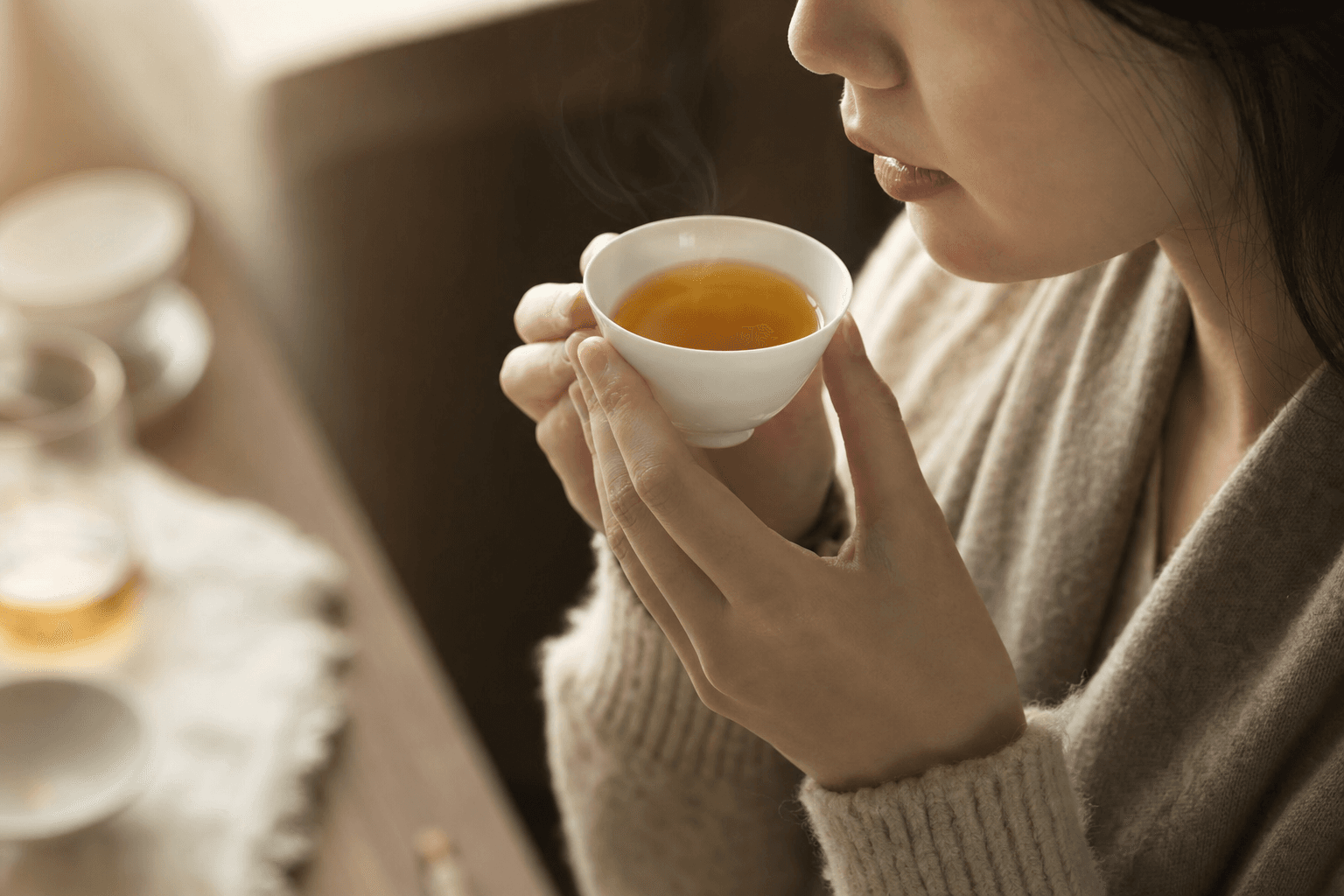
Ember Crown Reserve is the same bud-and-first-leaves pluck as our Mountain Crown Reserve, from the same Nantou gardens and the same spring and winter flushes, carried through a deep, patient charcoal bake a green oolong never sees. Where the green Reserve is held back to keep its jade colour, this leaf is roasted long and slow over charcoal until the cup pours a clear golden brown and the aromatics turn from fresh florals to warm roasted sweetness. It is the tin a tea-literate household opens for the guest it wants to honour through the cool months.
The bake is the whole craft. The roaster works the leaf in stages over low heat, resting it between passes for days at a time, coaxing a prominent roasted aroma over sweet undertones without ever scorching the leaf into bitterness. What reaches the cup is an opening note of warm roasted chestnut, a body that turns to caramel and toasted grain in the middle, and a long sweet-and-roasted finish that settles and lingers at the back of the throat a full minute after the last sip.
Heritage
Taiwan's oolong industry traces back to growers who carried Qing Xin cuttings from Anxi in Fujian to the hills of Nantou in the nineteenth century. The same terraced ridges that give our green oolong its leaf give this one its leaf too. The difference is what happens after the rolling: the long charcoal roast, a tradition central-Taiwanese makers have refined for over a century to carry tea through storage and through the cold half of the year.
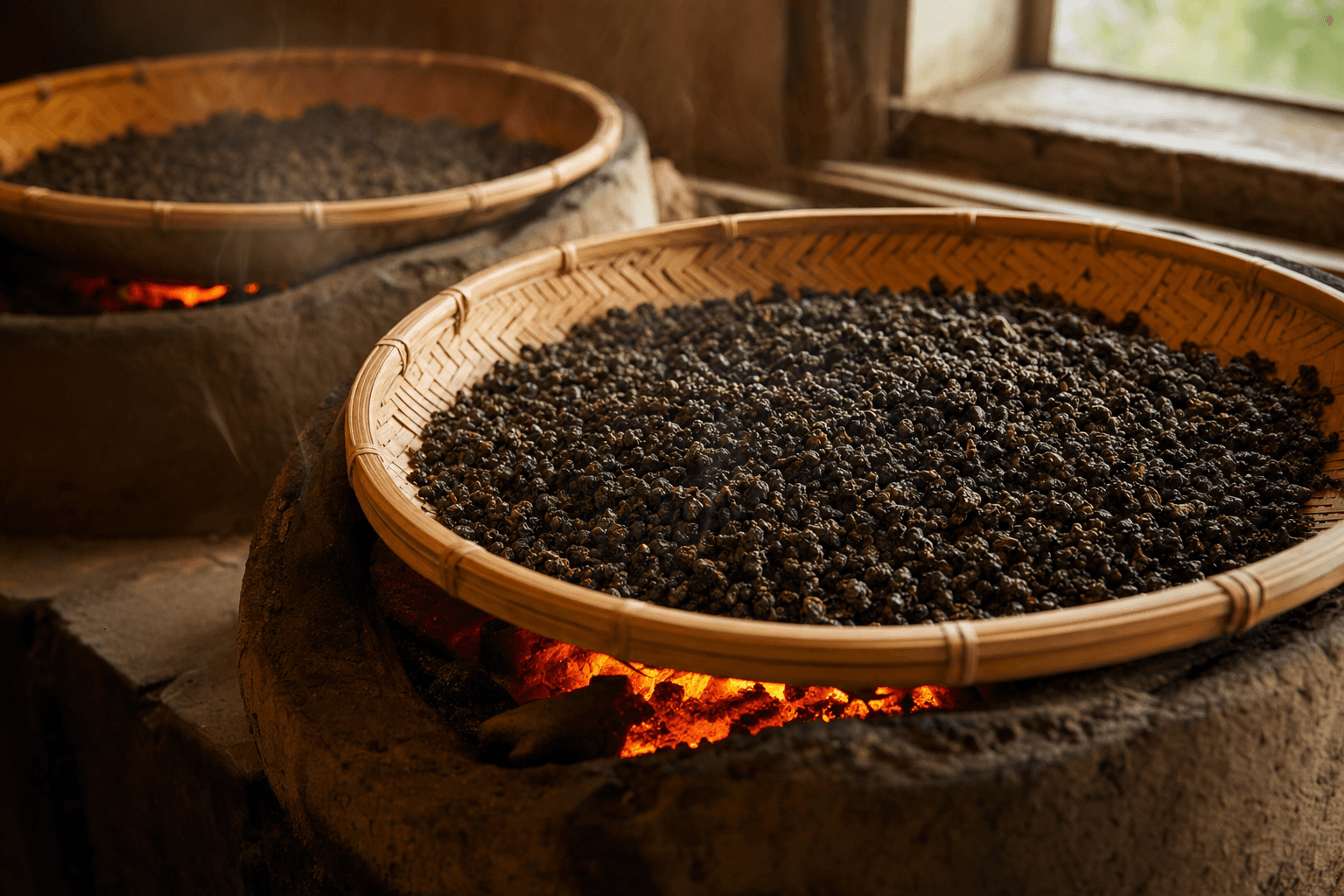
A serious roaster does not rush the bake. The rolled leaf is set in round woven bamboo baskets over a bed of glowing charcoal, roasted at low heat across several passes, then rested for days so the heat settles evenly into the leaf before the next pass. Done well, the roast deepens the sweetness and rounds the body; done carelessly, it flattens the tea into char. The Reserve grade gives the roaster the finest, smallest-cluster leaf to work with, which is why the bud-only lot is the one held for the considered occasion.
In a Chinese tea household the roasted Reserve is a winter cup and a guest cup, poured after a heavy meal or on a cold evening when a warm, sweet, settling tea is what the table calls for. Ember Crown Reserve follows that logic: not the kettle that goes on every morning, but the tin reached for when the cup is meant to matter.
Flavor
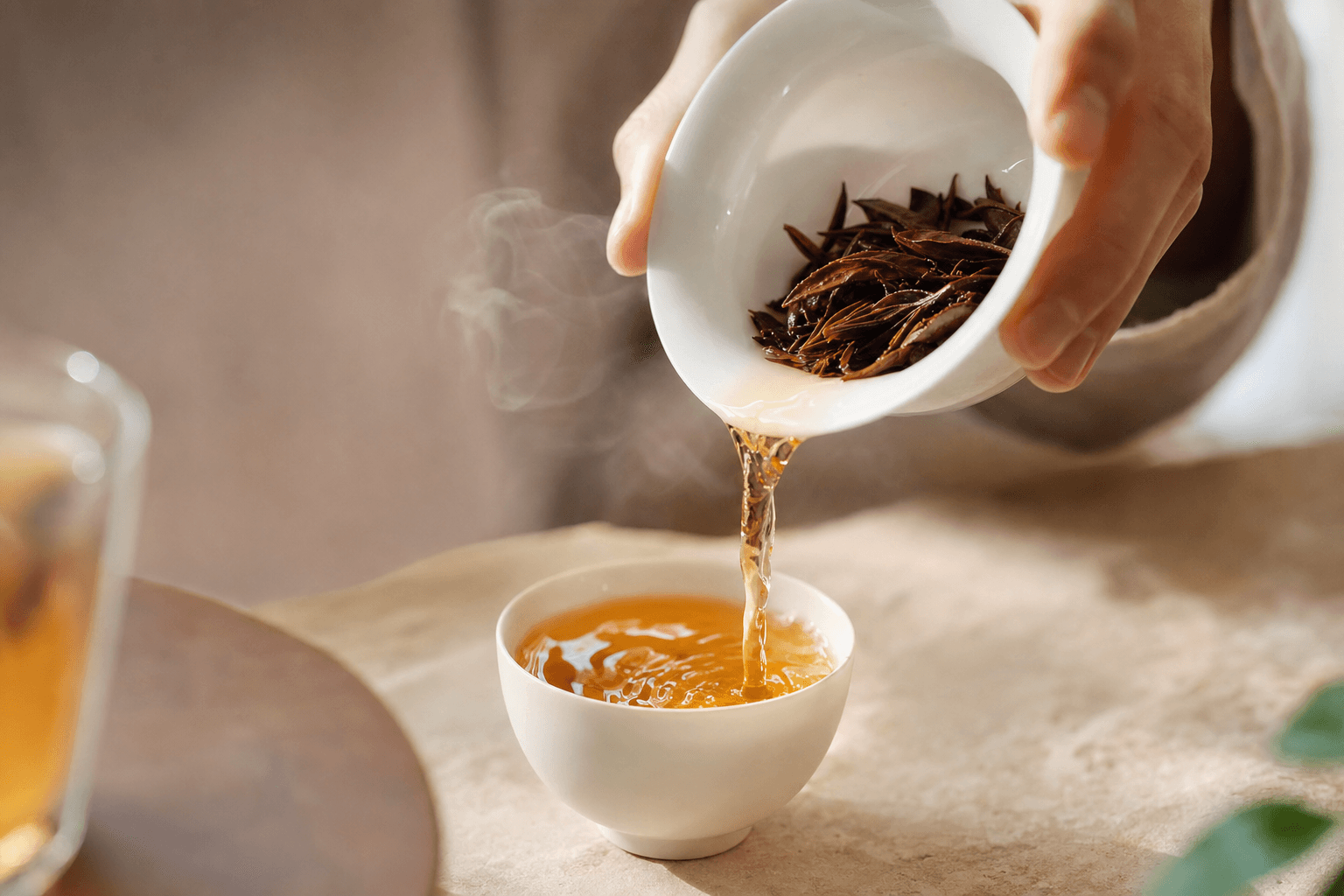
Brew this one hotter than a green oolong: water at a full 95 to 100°C, three grams of leaf to a 150ml pot, a quick rinse to wake the rolled balls, then a forty-five-second first steep adding fifteen seconds to each successive infusion. The liquor pours a clear golden brown, and the steam carries a prominent roasted aroma with a sweet undertone before the cup ever touches the lip.
The arc across the session is the giveaway. The first sip opens on warm roasted chestnut, turns to caramel and lightly toasted grain through the middle, and finishes long, sweet and roasted, the sweetness rising and lingering at the back of the throat. A well-roasted Reserve lot gives seven or eight infusions before the bake recedes and the leaf gives up a last quiet mineral sweetness, and the hui gan (回甘) returns on every cup.
Tasting Notes
A prominent roasted aroma over sweet undertones — warm roasted chestnut and caramel lifting off the rim, the signature of the long charcoal bake on a first-grade leaf.

Roasted chestnut on the entry, turning to caramel and lightly toasted grain through a round, full middle, with no sharpness or char.
Long, sweet and roasted — a returning sweetness (hui gan, 回甘) that settles and lingers at the back of the throat a full minute after the cup is set down.
Across the session韻
Awakening
Rolled balls just beginning to loosen — roasted chestnut and caramel up front, the sweet undertone arriving behind the bake.
Bloom
Leaves fully open. The most expressive cups of the session — chestnut, caramel and toasted grain, round and sweet, all balanced.
Settling
The roast softens and the sweetness comes forward; the mid-palate turns rounder and gently nutty.
Tail
A clean mineral sweetness with the last of the bake — soft, warm, the roasted leaves drinking themselves quietly out.
Awakening
Rolled balls just beginning to loosen — roasted chestnut and caramel up front, the sweet undertone arriving behind the bake.
Bloom
Leaves fully open. The most expressive cups of the session — chestnut, caramel and toasted grain, round and sweet, all balanced.
Settling
The roast softens and the sweetness comes forward; the mid-palate turns rounder and gently nutty.
Tail
A clean mineral sweetness with the last of the bake — soft, warm, the roasted leaves drinking themselves quietly out.


