
Floral · Roasted · Sweet
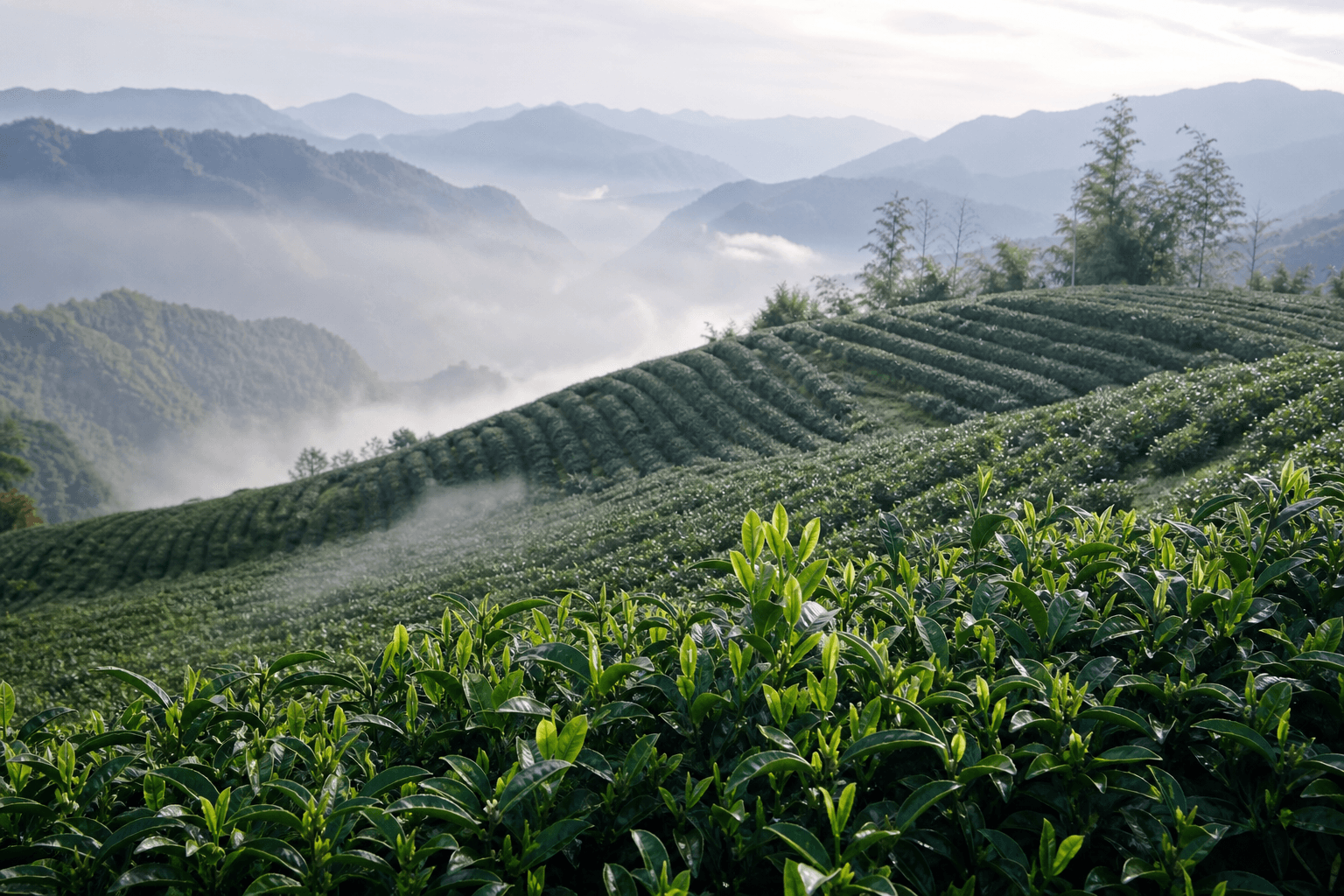
Our best of the best. Mountain Crown Reserve is the top tin in the lineup, the bud-and-first-leaves pluck a tea-literate Chinese household seals for guests and the cup that closes a careful meal. Same Nantou gardens as our Signature and Select, but at the smallest, tightest cluster at the very top of the bush, the pluck of a true first-grade lot. The cup pours pale jade with a clear orchid lift, a quiet bake underneath, and a hui gan (回甘) that returns sweet in the throat a full minute after the last sip. Cool-night growth at altitude concentrates L-theanine and the rare partial-oxidation polyphenol theasinensin, the chemistry behind the calm-alert mouthfeel a serious gao shan drinker reaches for. Origin: Central Taiwan, Nantou County, Spring and Winter flushes Tasting: Floral, Roasted, Sweet Brew: 85 to 90°C, 3g per 150ml, 45s first steep, +15s each
Brewing Guide
In Traditional Chinese Medicine, lightly oxidised oolong sits in the temperate middle of the cooling-warming spectrum — neither chilling the stomach the way a fresh green tea can, nor drying it the way a full black tea might. The light bake nudges the Reserve a half-step warmer than a true green oolong, which is part of why central Taiwanese drinkers reach for it through the cool spring and winter months: it is said to support digestion after a heavy meal, ease internal damp (湿气), and clear the head without leaving the body unsettled.
Modern chemistry lines up surprisingly well with the tradition. Spring and winter pluckings at altitude shift the leaf toward higher L-theanine and a richer amino-acid profile; partial oxidation produces the rare polyphenol theasinensin in addition to the catechins of a green tea; the slow bake mellows the harsh tannins. The Reserve's terminal-bud pluck — the smallest cluster at the top of the bush, where cool-night growth concentrates these compounds most heavily — carries the highest expression of that chemistry in our line. None of this is a medical claim. It does explain why a careful drinker describes the cup as both alert and calm: the chemistry of cool-night high-elevation growth pairs cleanly with the soft mouthfeel of a gentle roast.
Tradition
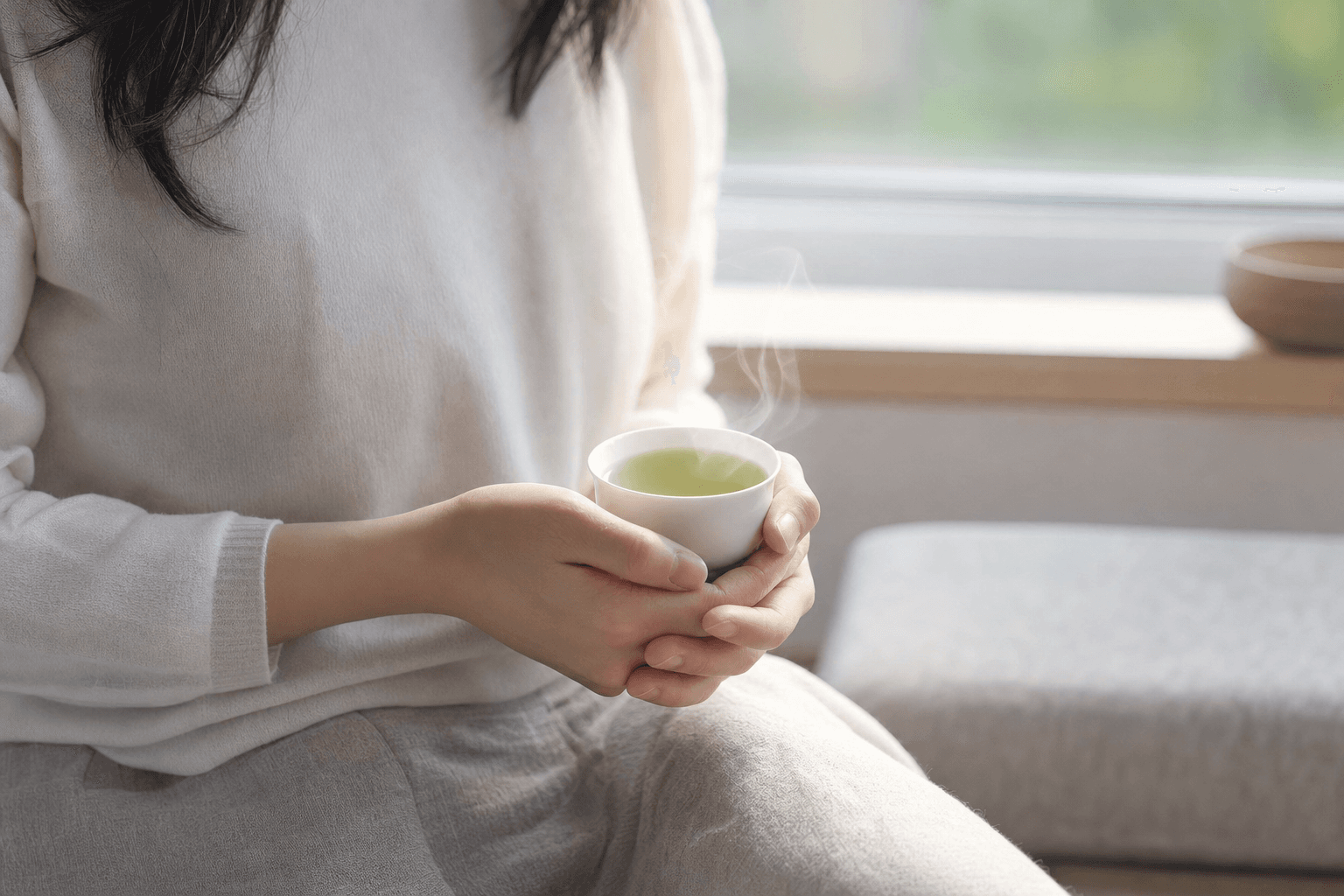
High-mountain oolong is the traditional afternoon cup for long reading or quiet work — a "clearing" tea that lifts the head without agitation.


Modern lens
Bud-and-first-leaves growth at cool-night altitude concentrates L-theanine; paired with a moderate caffeine dose, it produces the steady, non-jittery alertness gao shan oolong is studied for.
Tradition
Drunk daily through the cool seasons in central Taiwan as a general tonic — said to "clear" the body without ever drying it.
Modern lens
Rich in catechins and the rare partial-oxidation polyphenol theasinensin; high-mountain spring and winter Reserve leaf carries a notable antioxidant load tied to slow, altitude-driven growth.
Tradition
The classic cup poured after a long Taiwanese meal — light enough not to weigh the stomach, warm enough to cut through richness without chilling the middle.
Modern lens
Partial-oxidation polyphenols — including theasinensin — have been studied for their role in lipid handling and post-meal blood sugar response.
Tradition
Light, sweet, low in tannin — easy to drink across a full afternoon through Taiwan's humid spring and autumn months.
Modern lens
High amino-acid content and low astringency make for an easy, low-tannin cup that drinks closer to spring water than to a strong infusion.
The Reserve
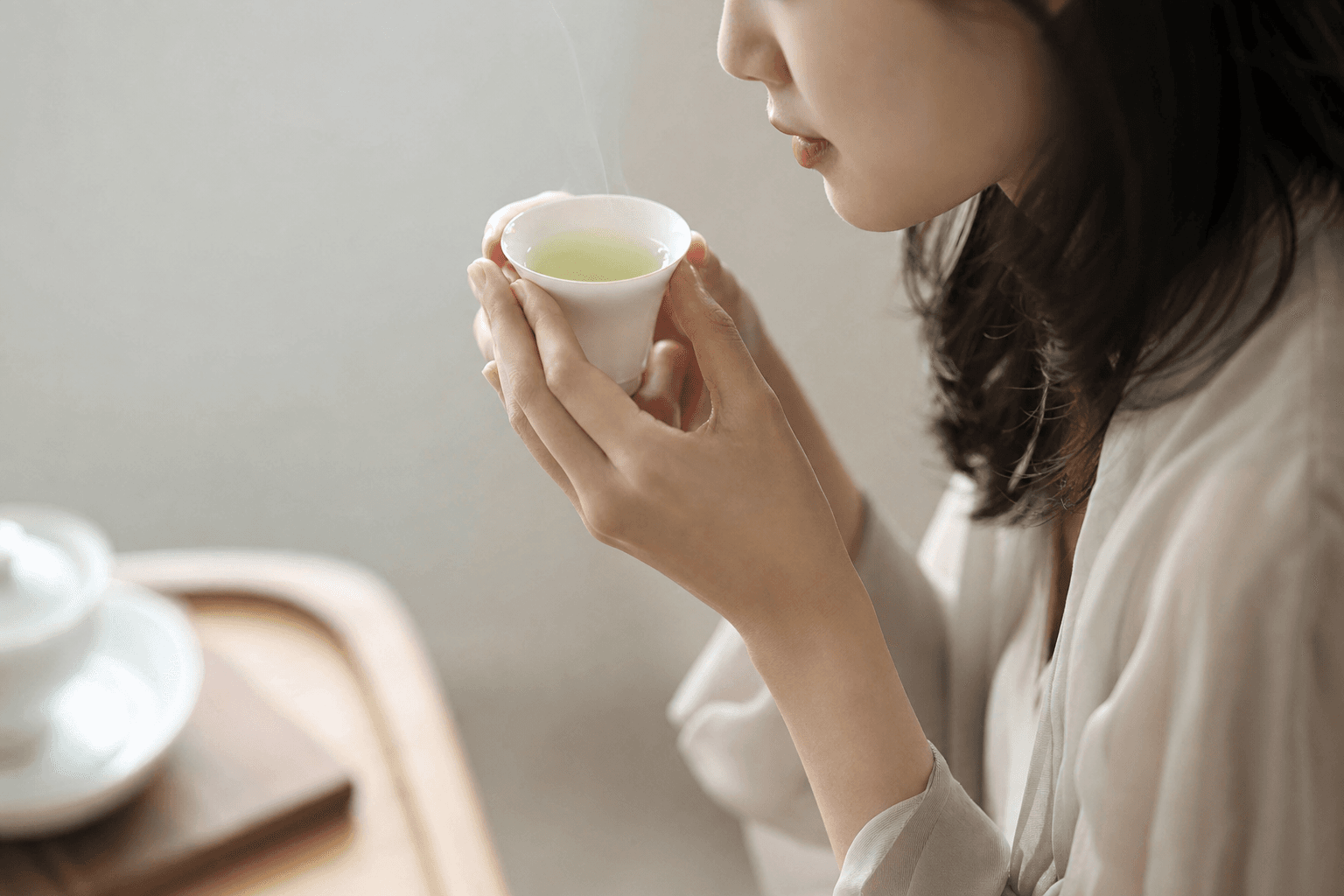
Mountain Crown Reserve is the tin a tea-literate Chinese household seals for guests and the cup that closes a careful meal. From the same Nantou gardens as our Signature and Select — same growers, same spring and winter flushes, same low-slow bake — but at the tightest cluster of leaves at the very top of the bush: the terminal bud and the first one or two leaves below it, the pluck of a true first-grade lot. Yield is the smallest of the three tiers and the labour is the most demanding; what reaches the tin is the cup the family will not pour without a reason.
Oxidation is held back deliberately, so the leaves keep their fresh jade colour and the cup pours pale green-yellow with a clear edge. After rolling, the leaves are passed over a low, slow heat — long enough to round the aromatics and pull a quiet toasted-grain undertone out of the floral nose, short enough that the leaf never crosses into the darker character of a Dong Ding or a Tieguanyin. The maker's hand is in the balance: spring orchard florals on top, warm bread crumb beneath, and a hui gan (回甘) that returns sweet in the throat a full minute after the last sip.
Heritage
Taiwan's modern oolong industry traces back to the early nineteenth century, when growers from Anxi in Fujian carried Qing Xin cuttings across the strait and planted them in the hills of what is now Nantou County. The central tea belt — Lugu, Dong Ding, Shan Lin Xi, the ridges above Sun Moon Lake — became the heart of the industry by the late 1800s, and remains where most of the island's first-grade leaf comes off the mountain each season. The lineage is unbroken: the same cultivar, the same terraced ridges, the same generational families running the harvest.
The two flushes that produce this tea are not arbitrary. Spring leaf, plucked in late April and early May after a long cool winter, carries the highest concentration of L-theanine and the softest aromatics of the year. Winter leaf, picked from late October into early December as the temperature drops again, comes off slower and denser — a cup with more body and a longer cooling finish. A serious producer keeps the spring and winter lots distinct, then blends a small amount of each into the Reserve tin so the tea reads as both bright and round.
In a Chinese tea household, the bud-only Reserve grade is the cup poured for the guest the family wants to honour, the elder visiting from out of town, the meal that warrants attention. The Signature stays out on the counter for the everyday pour; the Reserve waits in the sealed tin. Mountain Crown Reserve follows that domestic logic — not the cup the kettle pours into every morning, but the cup the family reaches for when the cup matters.
Flavor
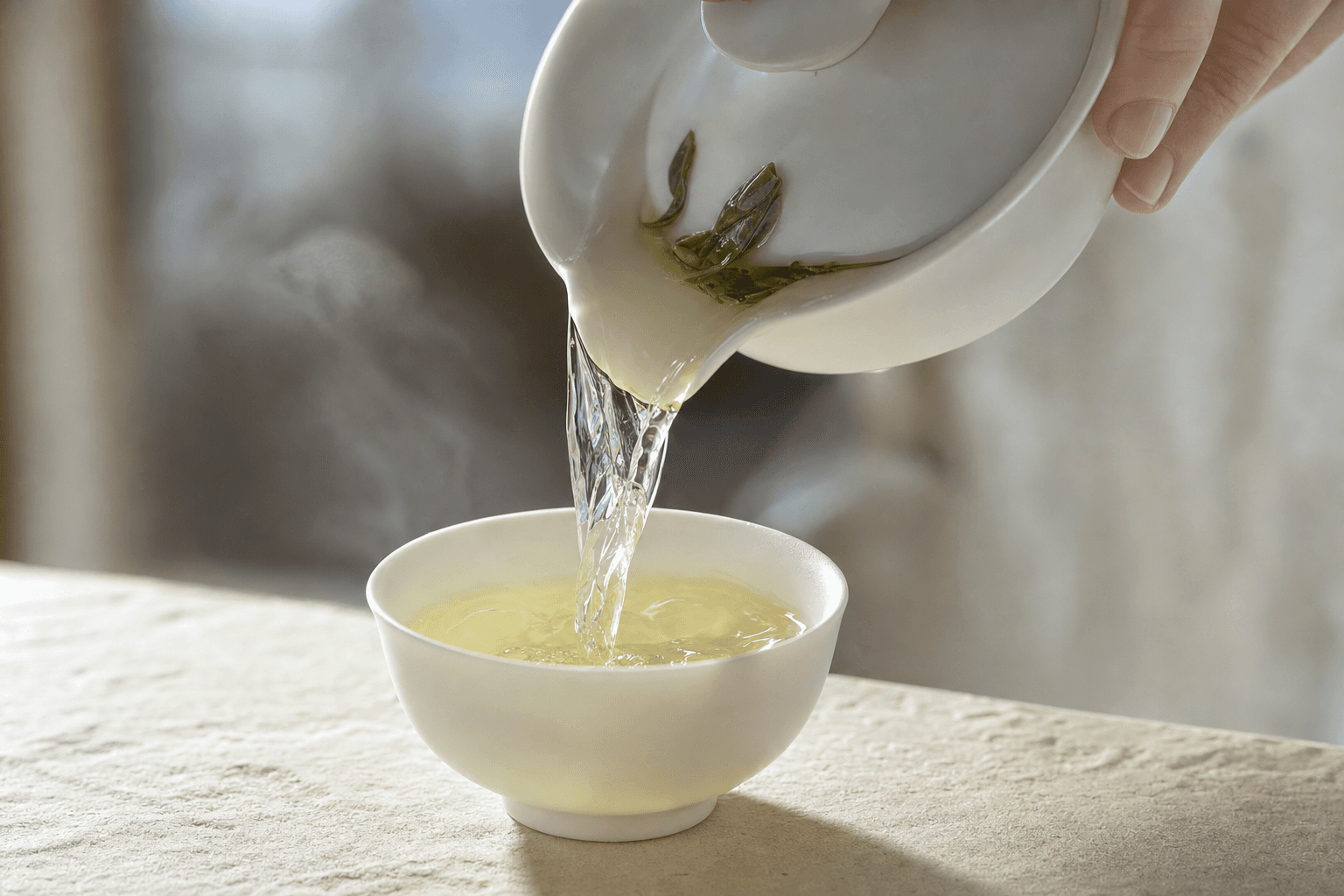
Use water just off the boil — 85 to 90°C, no higher. Three grams of leaf to a 150ml pot, or scale up gongfu to about five grams in a 100ml gaiwan. Give the rolled balls a quick five-second rinse to wake them, then a true forty-five-second first steep, adding fifteen seconds to each subsequent infusion. The liquor pours a clear pale green-yellow, almost luminous, with a steam that lifts orchid and stone-fruit before the cup ever touches the lip.
The arc across a session is the tea's real signature. The first sip carries a brief, almost lemon-like tartness on the entry — the green-oolong tell — that gives way within seconds to a soft floral sweetness and the warm toasted-grain note of the bake. By the third or fourth steep the leaves have opened completely, the liquor is at its most expressive, and the cup tastes simultaneously like spring blossom and lightly roasted nut. A well-made Reserve lot gives seven or eight infusions before the bake recedes and the leaves give up their last quiet, mineral sweetness.
Tasting Notes
Fresh orchid and white stone-fruit lifting off the rim, with a quiet bread-crumb warmth underneath — the signature of the slow bake on the bud-cluster pluck.

A bright lemony tartness on the entry that lasts only a beat before the cup turns soft and floral, then settles into a round, lightly toasted sweetness through the middle.
Long, pure, faintly cooling — the gao shan signature — with a returning sweetness (hui gan, 回甘) that rises in the throat a full minute after the cup is set down.
Across the session韻
Awakening
The rolled balls just beginning to loosen — bright tartness up front, orchid floral arriving over the warm bake.
Bloom
Leaves fully open. The most expressive cups of the session — soft, sweet, stone fruit, toasted grain, all balanced.
Settling
Florals recede; the roast quietly carries the cup, with the mid-palate turning rounder and slightly nutty.
Tail
A clean mineral sweetness with the last of the bake — soft, water-like, the Reserve leaves drinking themselves quietly out.
Awakening
The rolled balls just beginning to loosen — bright tartness up front, orchid floral arriving over the warm bake.
Bloom
Leaves fully open. The most expressive cups of the session — soft, sweet, stone fruit, toasted grain, all balanced.
Settling
Florals recede; the roast quietly carries the cup, with the mid-palate turning rounder and slightly nutty.
Tail
A clean mineral sweetness with the last of the bake — soft, water-like, the Reserve leaves drinking themselves quietly out.


