
Floral · Roasted · Sweet
The most famous oolong in China, from Anxi, the town that grows the finest Tie Guan Yin in the world. Semi-oxidised and lightly roasted, the tightly rolled leaves open in the cup to a clear yellow-green liquor with a high floral aroma over gentle roasted undertones. The flavour is strong yet smooth, and the aftertaste is faintly sweet and fresh, lasting long after the sip. Steep in a Yixing pot or covered cup, and the leaves give many infusions, each one opening a little further. Origin: Anxi, Fujian, China · traditional roast Tasting: Floral · Roasted · Sweet Brew: 85 to 90°C · 3g / 150ml · 3 to 5 minutes · many infusions
Brewing Guide
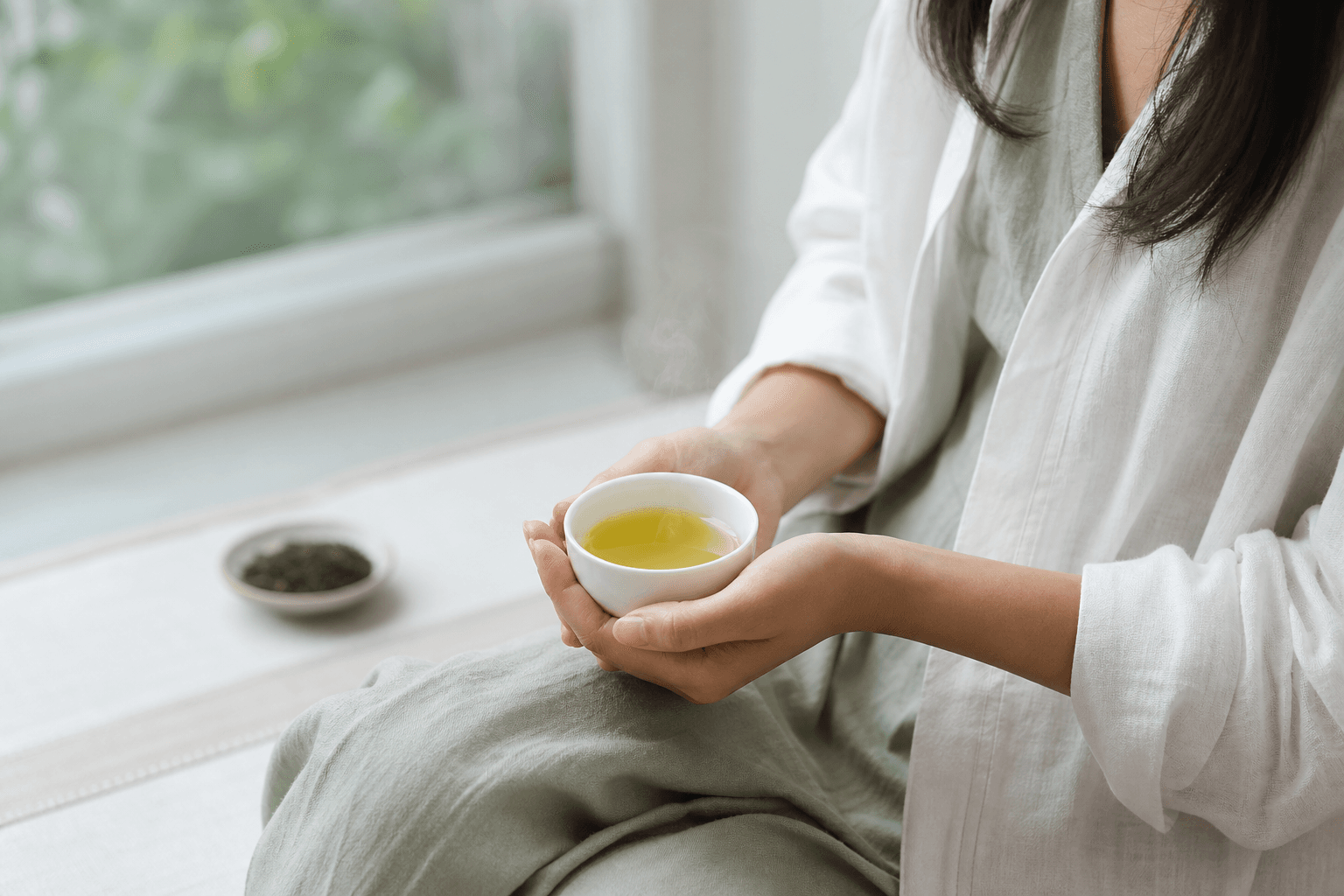
As a semi-oxidised tea, Tie Guan Yin sits between green and black, and Chinese tea culture has long treated oolong as the balanced, everyday cup: warming without being heavy, drunk after a meal to settle the stomach and clear the palate. The light roast keeps it gentle while preserving the bright, lifting character of the leaf.
In modern terms oolong carries the same family of polyphenols and catechins as other true teas, the compounds most often linked to its reputation as a metabolism-and-digestion cup, alongside a moderate caffeine level paired with L-theanine for a steady, clear-headed lift. None of this is a medical claim, but it is why a pot of Tie Guan Yin is the tea so many reach for after eating.
Tradition
Oolong is the after-meal cup in Chinese tea culture, drunk to cut through richness and keep the body light.
Modern lens
Oolong tea carries the polyphenols and catechins most often studied in connection with metabolism and fat digestion.


Tradition
A warming, balanced tea traditionally poured after a meal to settle the stomach and aid digestion.
Modern lens
The light roast and semi-oxidation make for a smooth, low-astringency cup that sits easily after eating.
Tradition
A clearing, lifting cup, reached for to sharpen the mind through a long afternoon.
Modern lens
A moderate caffeine level paired with L-theanine gives a steady, calm-alert focus without a sharp edge.
Tradition
Drunk daily as a clean, refreshing cup that keeps the body in balance.
Modern lens
Like all true tea, it is rich in catechins and polyphenols, the well-studied tea antioxidants.
Iron Goddess of Mercy
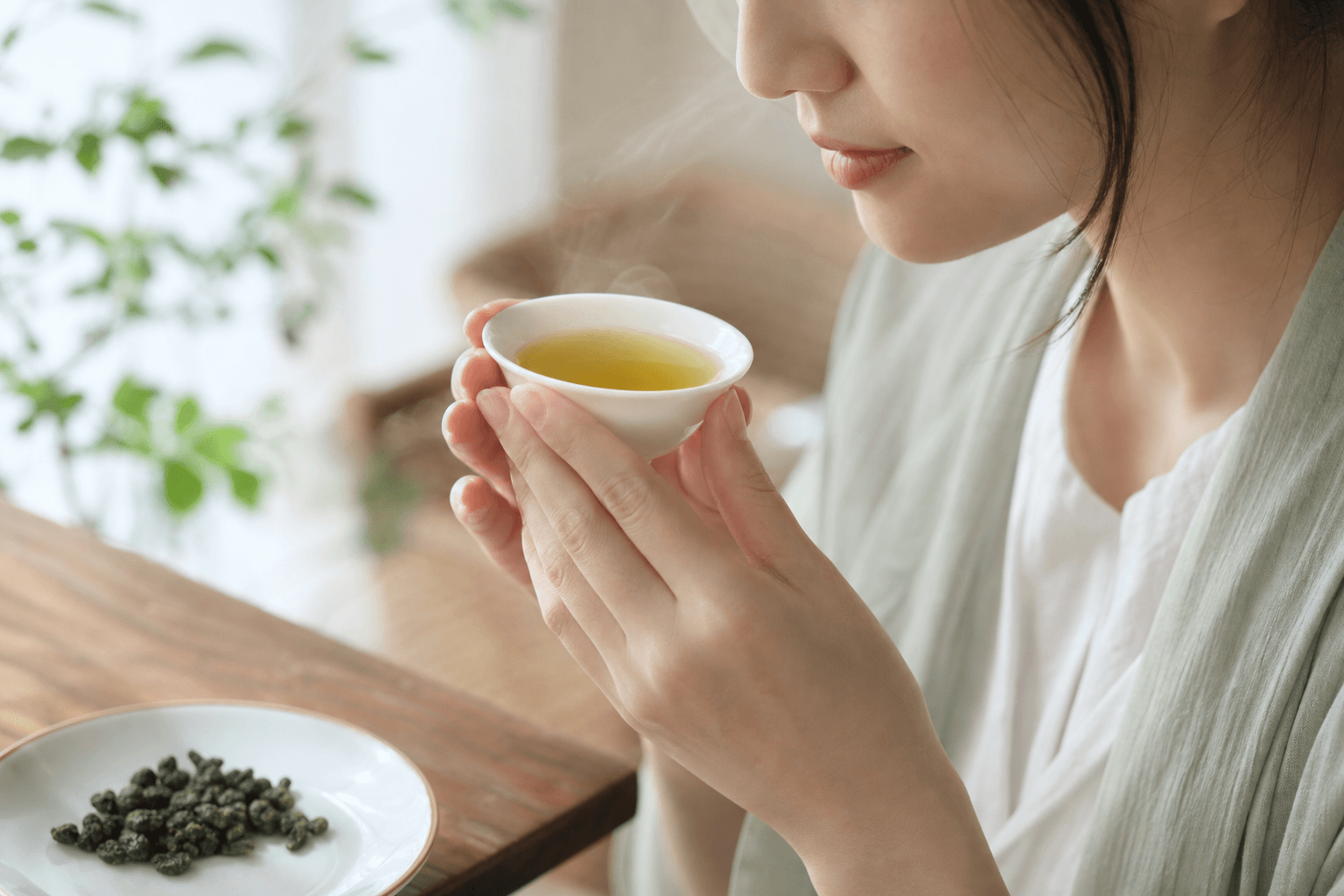
Tie Guan Yin, the Iron Goddess of Mercy, is the most celebrated oolong in China, and the finest of it comes from Anxi, a hill town in the south of Fujian Province. Anxi has grown Tie Guan Yin for nearly three centuries, and the name still sets the standard the rest of the tea world measures itself against.
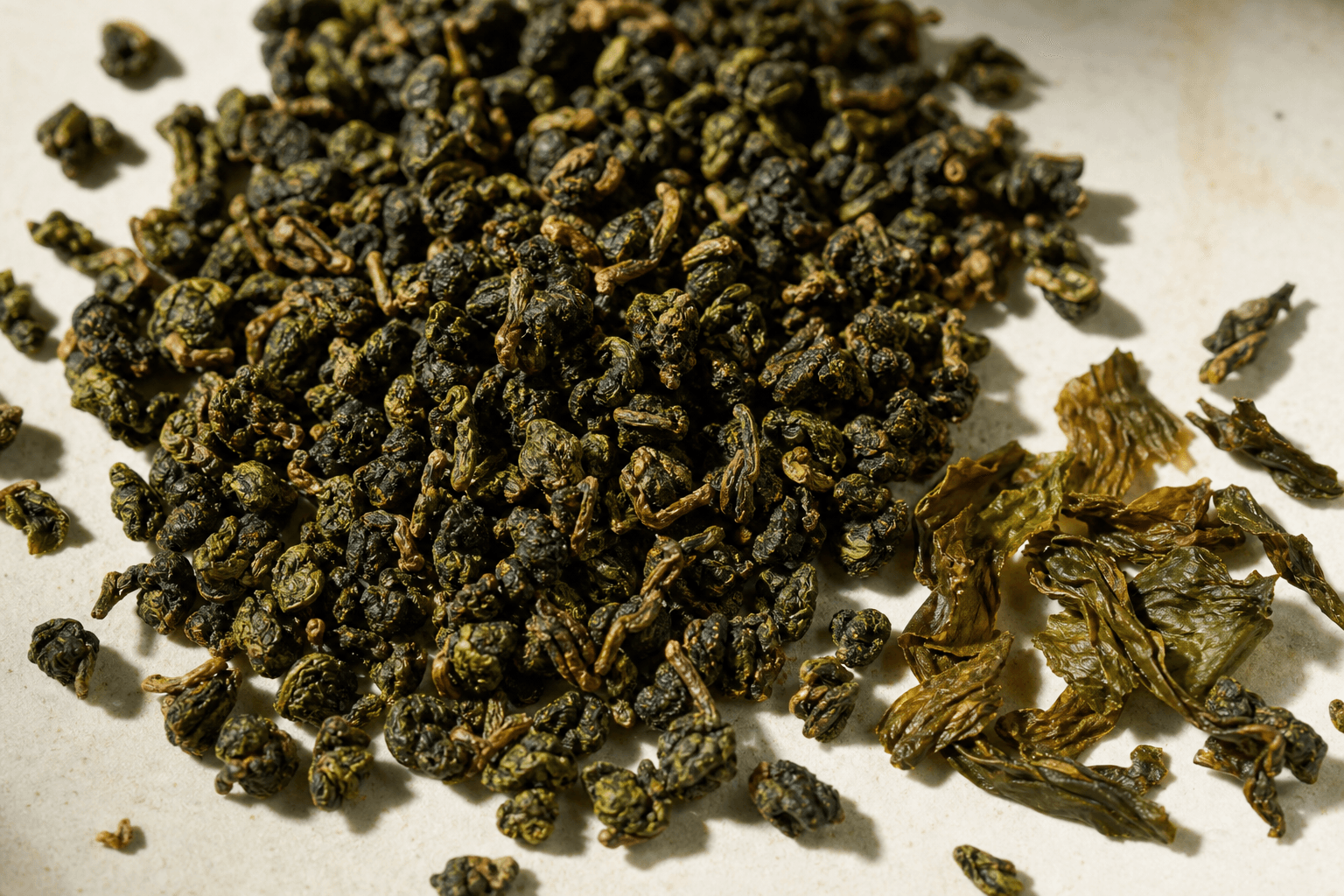
Ours is a traditional-style Tie Guan Yin: semi-oxidised, then lightly roasted, the leaves rolled into tight nuggets that open slowly in the cup. It pours a clear yellow-green, with a high orchid-like floral aroma carried over gentle roasted undertones, a strong but smooth body, and a sweet, fresh aftertaste that lingers long after you set the cup down.
The Legend
Tie Guan Yin takes its name from a legend told in Anxi. A poor but devout farmer named Wei passed a run-down temple each day on his way to the fields, its iron statue of Guanyin, the goddess of mercy, neglected and dusty. Having no money for repairs, he simply swept the temple and kept incense lit, year after year.
One night the goddess appeared to him in a dream and spoke of a treasure behind the temple. There he found a single tea shoot, which he took home and nurtured. The cuttings grew into bushes whose tea was like nothing else in the region, dark and heavy as iron in the hand, and so the tea was named for the Iron Goddess who had revealed it.
Whatever the truth of the story, Anxi has grown Tie Guan Yin since at least the 1700s, and the craft that made it famous remains: careful semi-oxidation to draw out the orchid florals, then a measured roast that rounds the cup and gives it the warm, sweet depth that sets a true Anxi Tie Guan Yin apart.
Flavor
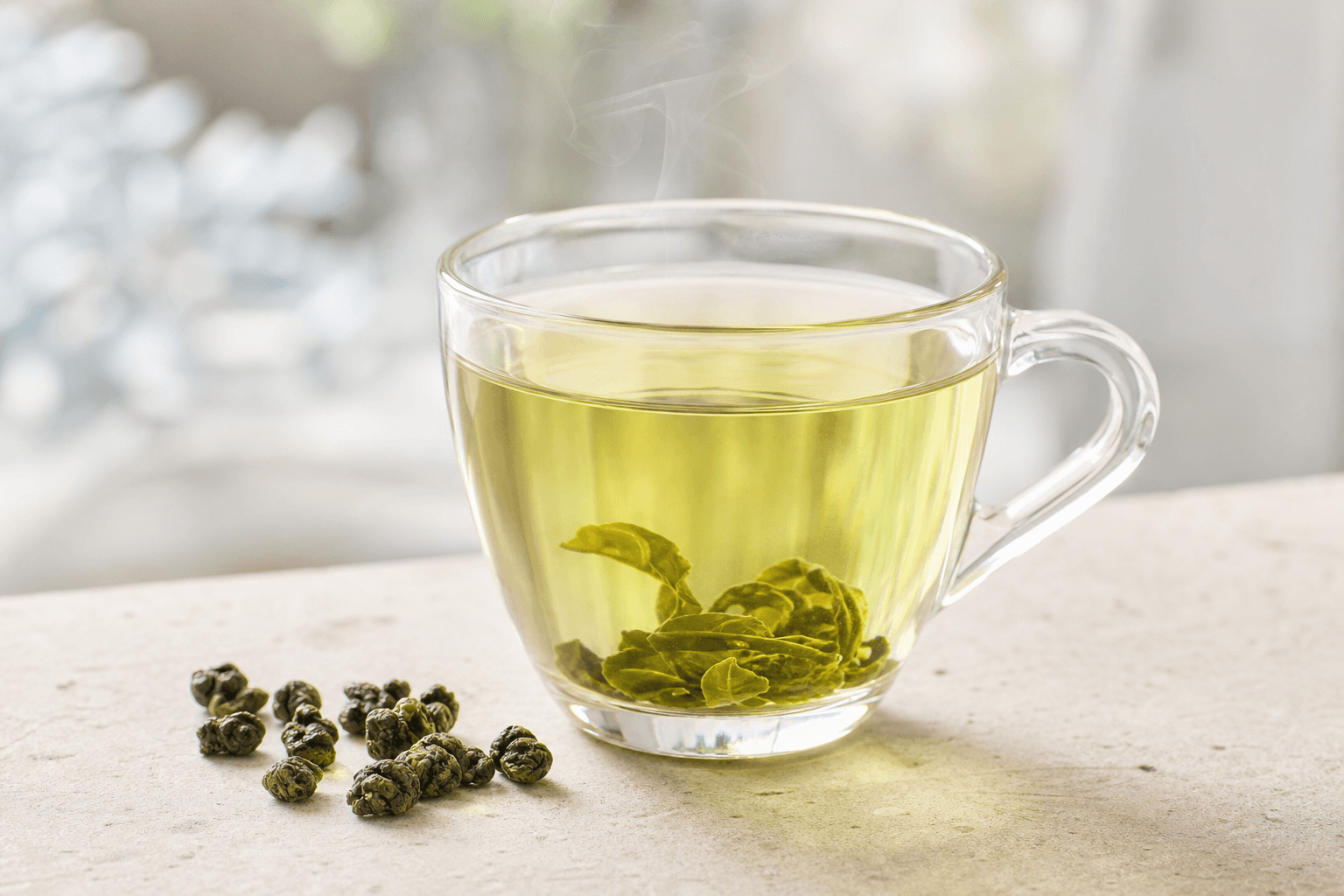
Tie Guan Yin rewards hot water and a generous hand with the leaf. Steep around 85 to 90°C, using about three grams to 150ml, three to five minutes for a simple cup. Traditionally it is brewed gongfu style in a small Yixing clay pot half-filled with leaf, a first steep of forty-five seconds to a minute and each later steep a little longer; brewed this way the leaves give many infusions.
The aroma is high and floral, orchid and gardenia over a gentle roasted warmth. The liquor is a clear yellow-green, the body strong yet smooth and never harsh, and the aftertaste is the signature: faintly sweet and fresh, returning at the back of the throat and lasting long after the sip. The tightly rolled leaves open a little further with each steep, the florals easing forward as the roast settles back.
Tasting Notes
High orchid-and-gardenia floral over a gentle roasted warmth, the hallmark fragrance of an Anxi Tie Guan Yin.

Strong yet smooth, a clear yellow-green liquor with a full, rounded body and no harshness.
Faintly sweet and fresh, a returning sweetness at the back of the throat that lingers long after the sip.
Across the session韻
Opening
The tight nuggets begin to unfurl, the first cup high and floral with the roast just behind it.
Full body
The leaves open fully, the cup at its strongest and smoothest, orchid florals and roasted warmth in balance.
Sweet tail
The roast settles back and a clean, sweet floral note carries the later infusions.
Opening
The tight nuggets begin to unfurl, the first cup high and floral with the roast just behind it.
Full body
The leaves open fully, the cup at its strongest and smoothest, orchid florals and roasted warmth in balance.
Sweet tail
The roast settles back and a clean, sweet floral note carries the later infusions.


