桂花 · Origins & Stories
Osmanthus: The Scent of Autumn
For a few weeks each year, southern China smells of apricot and honey. The story of the tiny golden flower that has perfumed Chinese tea for a thousand years.
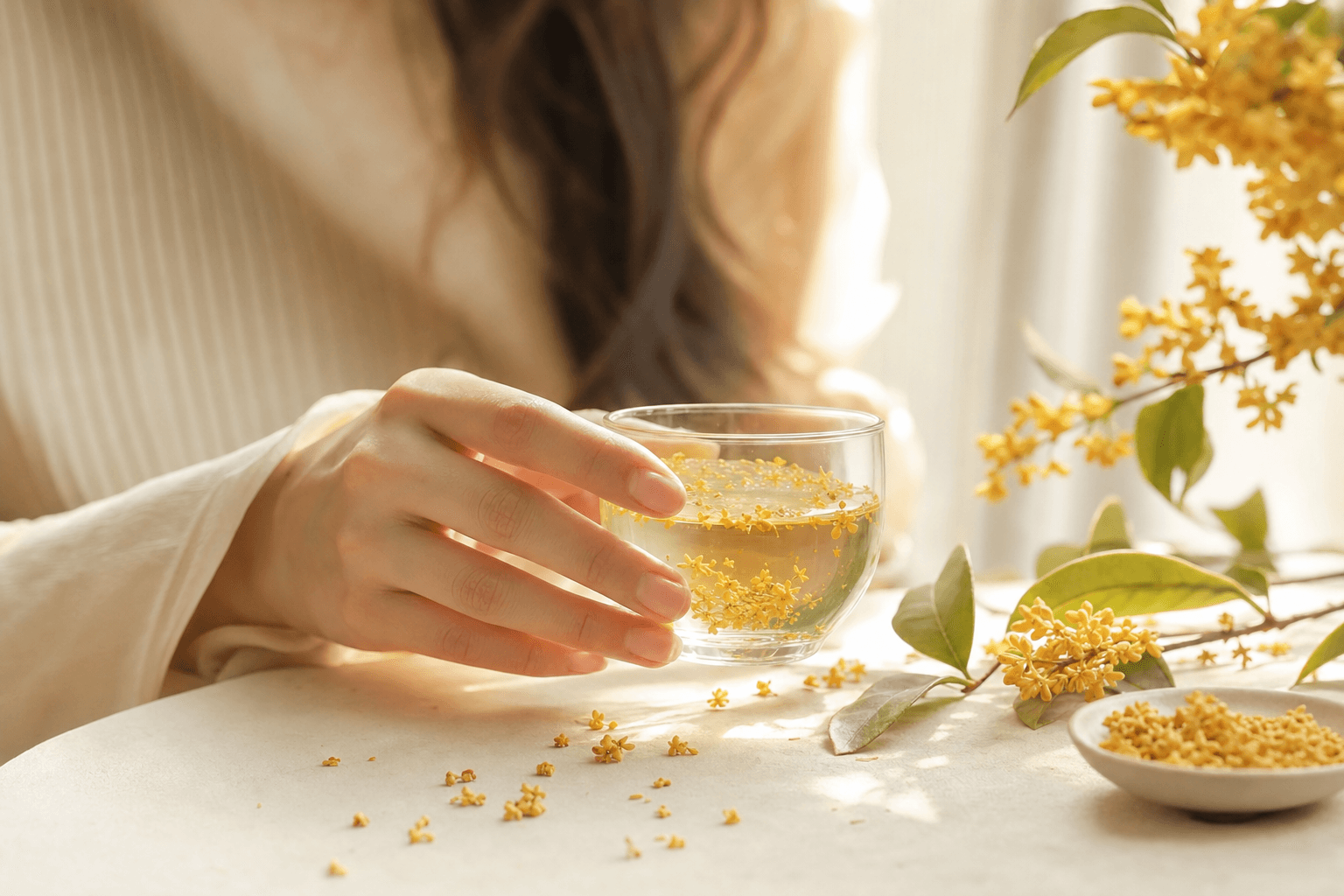
Ask anyone who grew up in southern China what autumn smells like, and many will give the same answer: osmanthus. For a few short weeks in September and October the air turns to apricot and honey, drifting out of courtyards and off roadside trees, settling over wet markets and tea tables alike.
You almost always smell it before you see it. The blossoms are too small to notice from across a street, yet their perfume can stop you mid-step. For millions of people that scent is not a memory of the season. It is the season.
桂Guì huā
The golden flower
Osmanthus, guì huā, is a small evergreen, glossy-leaved and unhurried, that southern Chinese gardens have prized for more than two thousand years. Its flowers grow in tight little clusters pressed against the stem, each blossom barely larger than a grain of rice, in shades that run from pale cream to a deep apricot gold.
What it gives up in size it returns, many times over, in fragrance. A single mature tree can perfume an entire courtyard, and a lane planted with them becomes, for a few weeks each autumn, almost overwhelming in the best possible way. The bloom is brief, roughly September into October, and that brevity is part of why it is so loved. Like the best things about any season, it arrives, fills the air, and is gone.
月Lore & longing
Moon, wine, and the scholar's branch
Osmanthus blooms exactly when the Mid-Autumn Festival falls, and the two have been bound together for centuries. Families gather under the year's brightest moon to share mooncakes and pour osmanthus wine, guì huā jiǔ, a sweet liqueur steeped with the flowers. The same blossoms sugar countless cakes, jellies, and syrups across the south, so that for a few weeks the season can be tasted as easily as it is smelled.
The flower belongs to the moon in legend, too. Chinese folklore sets a great osmanthus tree on the moon, and beneath it a man named Wu Gang condemned to chop forever, the trunk healing itself with every stroke, an endless autumn labor read into the lunar shadows. The word carries earthly ambition as well. To pluck osmanthus from the Toad Palace once meant to pass the imperial examinations, so the golden flower became a quiet emblem of scholarly success, given and wished for at every turn.
It leaves only its fragrance behind, and is, simply, first among the flowers.
窨The craft
How a flower becomes tea
Osmanthus does not so much flavor a tea as haunt it. The technique is called scenting, and it is closer to perfumery than cooking. Fresh blossoms are layered through finished tea leaves and left together overnight, while the dry leaf, naturally porous and thirsty, drinks the fragrance straight out of the air around it. By morning the spent flowers are sifted away, and only the scent stays behind, held in the leaf.
Once is rarely enough. For a fine scented tea the cycle is repeated over several nights, fresh blossoms each round, the leaf taking on a little more perfume every time while the petals themselves are always removed. It is slow, seasonal, costly work, beholden to flowers that open for only a few weeks of the year. That difficulty is exactly why a deeply scented tea is uncommon, and why one worth the name is worth seeking out.
茉What we pour
The same craft, in jasmine
We do not carry an osmanthus tea today. But if its perfume is what calls to you, what you are really drawn to is the art of scenting itself, and that art is very much alive in our jasmine, made in the identical tradition: fresh blossoms layered with green tea, again and again, until the leaf carries the whole of the flower's fragrance and none of its petals.
Jasmine is picked in spring as a tender green tea, then held until high summer, when the buds are gathered and open at dusk at their most fragrant. Leaf and blossom are layered together overnight and the spent flowers lifted out at dawn, and for our finest that cycle runs seven times or more. Three teas carry it: hand-rolled Pearl Jasmine, scented seven times over and rolled into pearls that unfurl in the cup, and the Taiwan-grown Huatan Reserve and Huatan Signature, both built on young, slim spring leaves and a sweet floral lift over a clean green base.
Scented the old way
Two places to start, both made by layering fresh blossoms through green tea night after night. The full jasmine line waits at the foot of this guide.


泡Keep the perfume
Brewing a scented cup
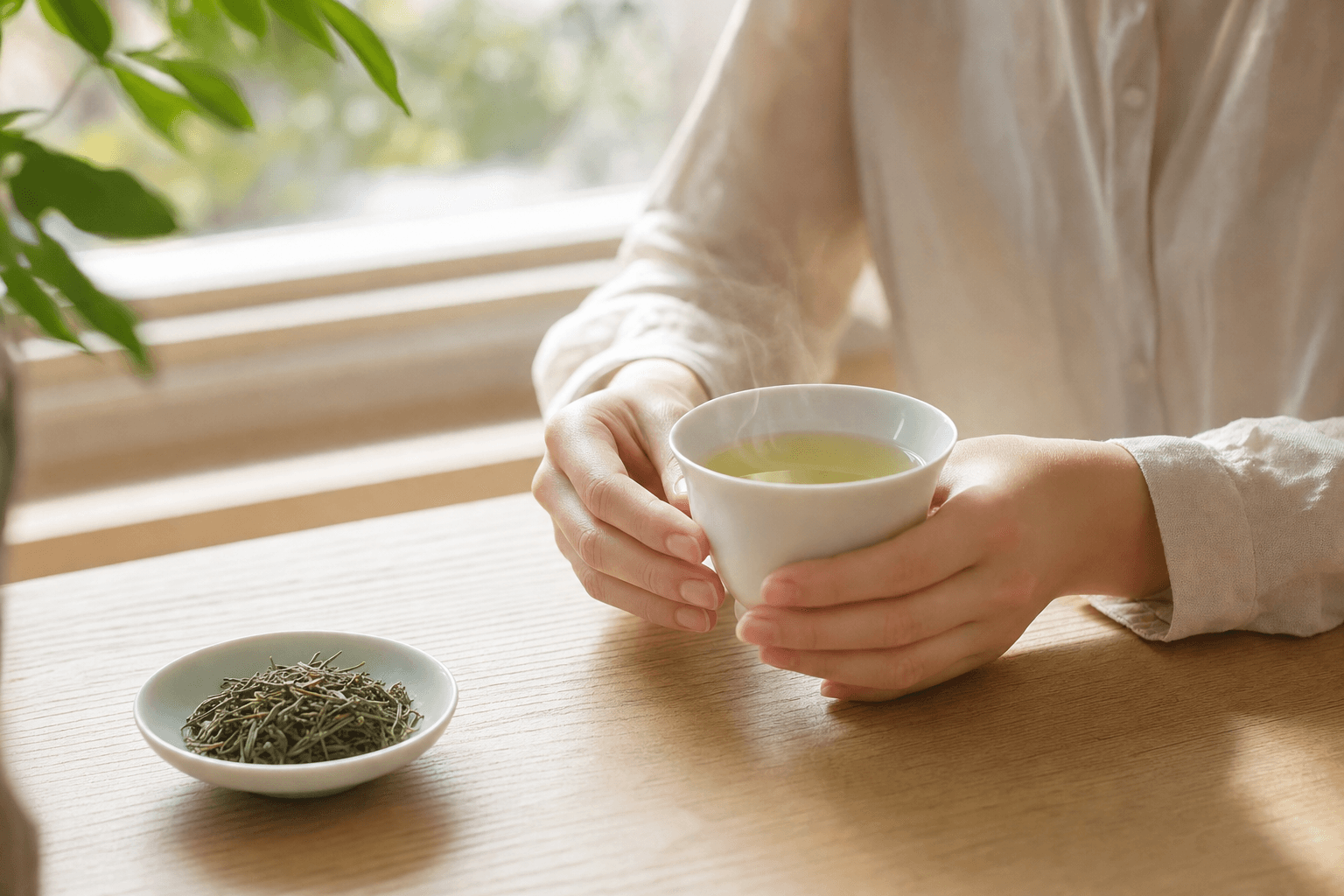
A scented green tea is delicate, and the fragrance is the first thing to leave if you scald it. Treat it the way you would any fine green tea: cooler water, a gentle hand, and short steeps that coax the perfume out instead of boiling it off. A covered glass cup is a quiet pleasure here, letting you watch the leaf open while the scent gathers under the lid.
| Water | 75–85°C, never boiling |
|---|---|
| Leaf | 3g per 150ml |
| Steep | 3 to 5 min, short |
| Infusions | Three or more |
Our jasmines prefer the cooler end, around 70 to 80°C. Hotter water or more leaf means a shorter steep.
Common questions
What does osmanthus taste and smell like?
Osmanthus is one of the most distinctive scents in the Chinese autumn: ripe apricot and honey, with a sweet, almost peach-like warmth and a soft floral edge. It reads as rich and golden rather than sharp, which is why it works so beautifully in wine, sweets, and scented tea.
Do you sell an osmanthus tea?
Not at the moment. We would rather recommend something we can stand behind than label a product loosely. Because osmanthus tea is made by scenting tea with fresh flowers, our jasmine is the truest match we carry: it is scented in exactly the same tradition, fresh blossoms layered with green tea over many nights.
How is scented, or flower, tea actually made?
Fresh blossoms are layered through finished tea leaves and left together overnight, so the porous dry leaf absorbs the fragrance from the air around it. The next day the spent flowers are sifted out, leaving only the scent in the leaf, and for a fine tea the process is repeated over several nights with fresh flowers each round. The petals are removed, the perfume stays.
Is scented tea caffeinated?
Yes. A scented tea like jasmine is built on a real tea base, in our case a young green tea, so it carries the moderate caffeine of green tea along with L-theanine, the amino acid behind green tea's calm, steady kind of alertness. The flowers add fragrance, not caffeine.
Shop as you read
The teas in this guide

Keep reading
Brew it the traditional way
Single-origin Chinese tea, hand-picked and sealed fresh. Free shipping over $80, and 15% off your first order.