Aged · Honey · Smooth
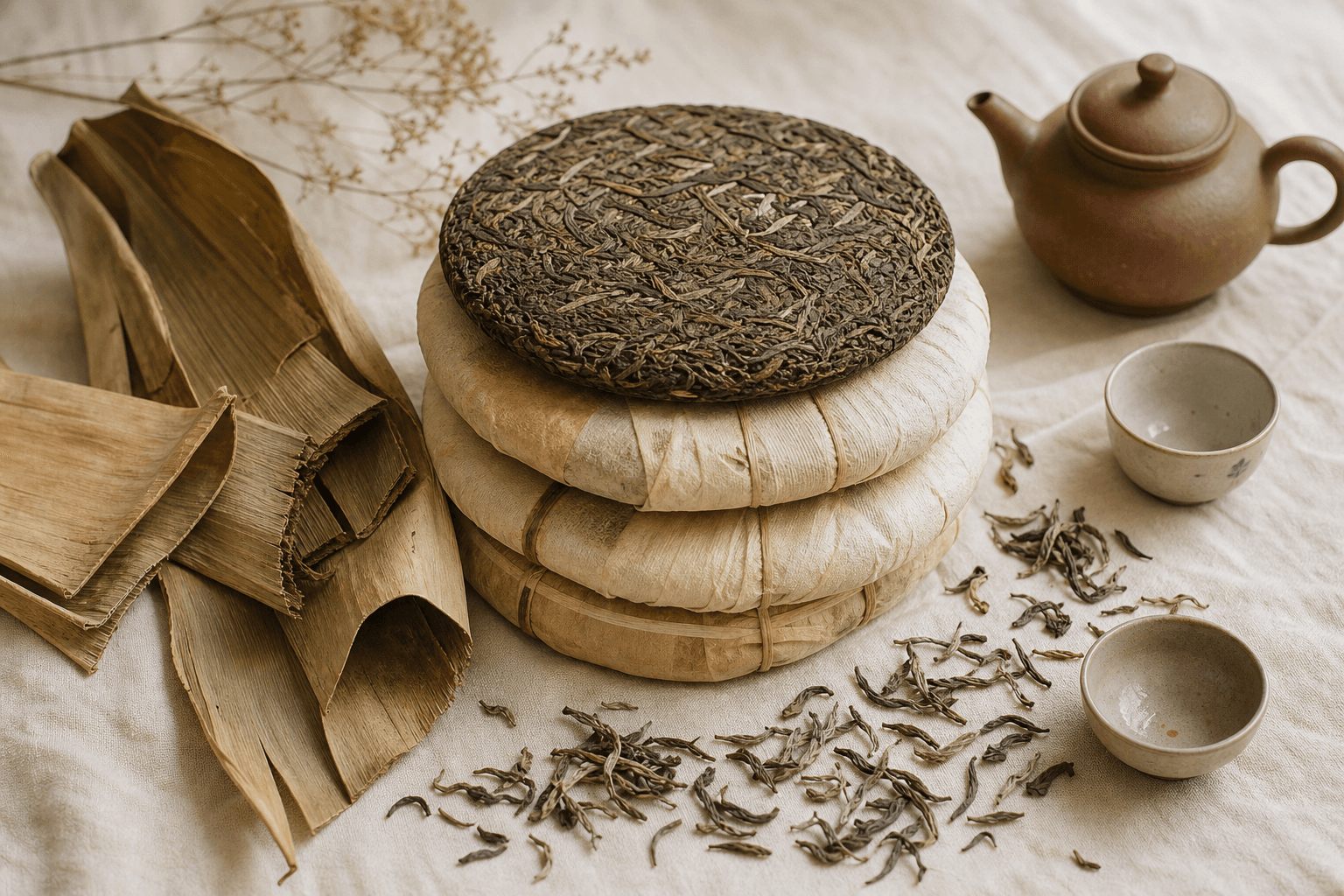
Raw pu-erh pressed into a 200g cake from a Menghai-region spring harvest, now ten years into its slow transformation. Youthful astringency has mellowed; what remains is honey, tobacco-leaf sweetness, and a long cooling finish.
Brewing Guide
In Traditional Chinese Medicine, raw pu-erh is read as cooler in nature than its ripe sibling — clearing rather than warming, said to descend qi, ease the residue of fatty meals, and clean the channels. Mid-aged sheng like this one occupies a middle register: cool enough to refresh, settled enough not to disturb the stomach, with a vitality that older drinkers describe as "moving" — a tea that wakes the body without rushing it.
Modern analysis of aged sheng shows a tea still chemically transforming on the shelf. Catechin levels drop with age while gallic acid, theabrownins, and a long list of microbial-modified polyphenols rise. Studies of pu-erh consumption have associated it with effects on lipid metabolism, gut microbial diversity, and cholesterol handling. None of this is a medical claim — but it does explain why, after a heavy meal, a cup of sheng feels less like a drink and more like a reset.
Tradition
Long drunk after rich meals in Yunnan and Guangdong to descend stagnant qi and cut through oily food — the canonical after-dinner tea.
Modern lens
Polyphenols and microbial metabolites unique to pu-erh are studied for their effect on gut motility, bile flow, and short-chain fatty-acid production.
Tradition
Traditional Yunnan households drink aged sheng daily as a tonic against the heaviness that accumulates with age and diet.
Modern lens
Pu-erh consumption has been associated in multiple human studies with reductions in LDL cholesterol and serum triglycerides.
Tradition
Considered "alive" tea — said to nourish the middle and restore the digestive fire without the warming weight of fully fermented styles.
Modern lens
Aged sheng is rich in soluble fiber, gallic acid, and microbially modified compounds studied for their prebiotic effect on gut flora.
Tradition
A tea for long afternoons of work or study — grounding, cooling, and steady, without the lift-and-crash of unaged green leaf.
Modern lens
Caffeine paired with high L-theanine content; the body of compounds in aged sheng releases more gradually than in young raw or green teas.
The Tea
This is sheng pu-erh — raw, unfermented, sun-dried — pressed into a 200-gram cake from a Menghai-region spring harvest in 2015. Where shou pu-erh is rushed through a wet pile to mimic decades in months, sheng is left to its own devices. The leaves are pan-fixed lightly, sun-dried on bamboo mats (a step Yunnan growers call sha qing), then stone-pressed into a disc and shelved. From there, time does the work that fire never could.
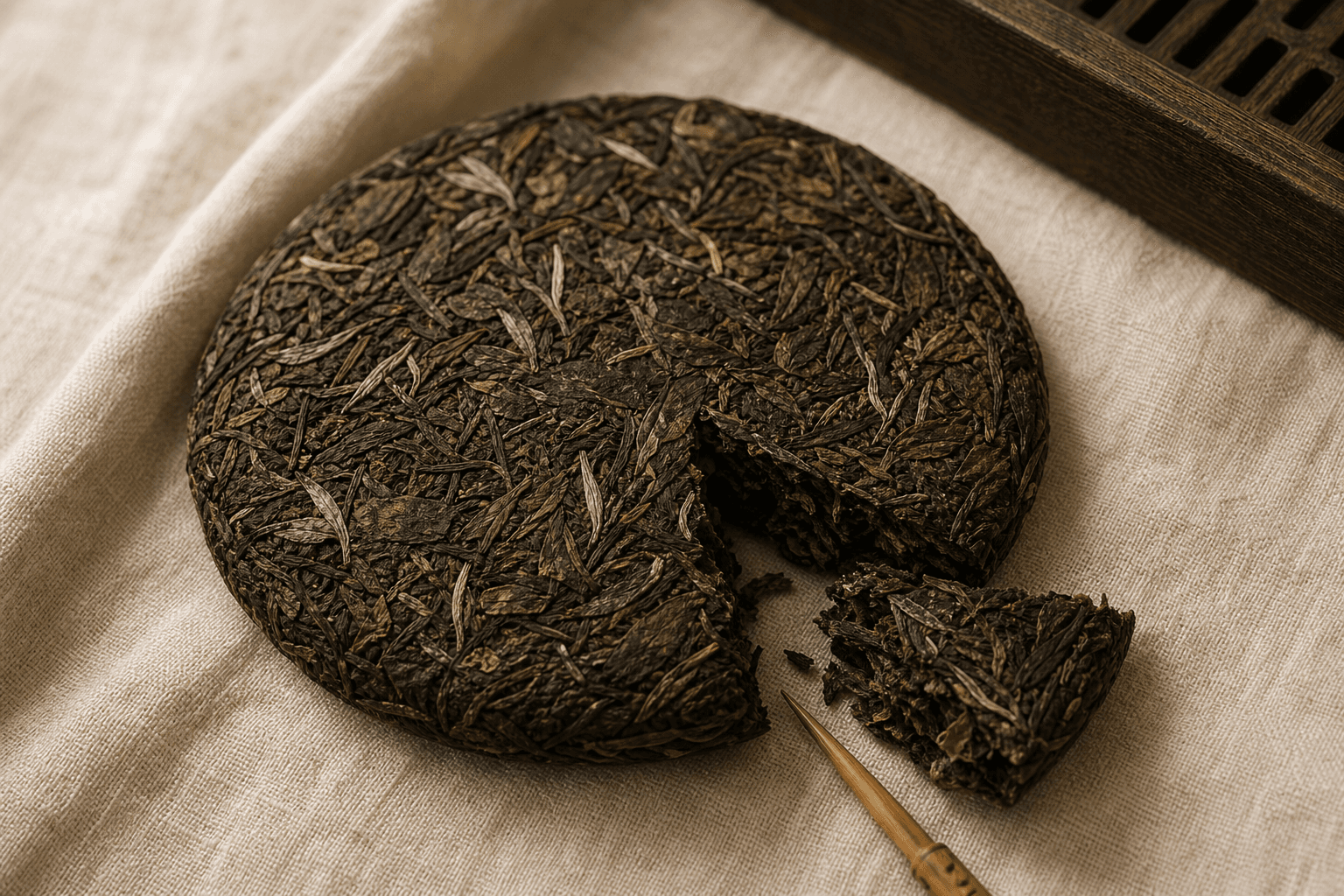
Ten years on, the cake reads like a tea in its first peak window. The bright, almost stinging astringency of young sheng has rounded; the green has gone toward gold. What you can see in the disc is the maker's hand: large assamica leaves still recognizable in the press, stems and silver tips visible across the face, the compression firm enough to age slowly but loose enough to pry apart with a knife.
History & Origins
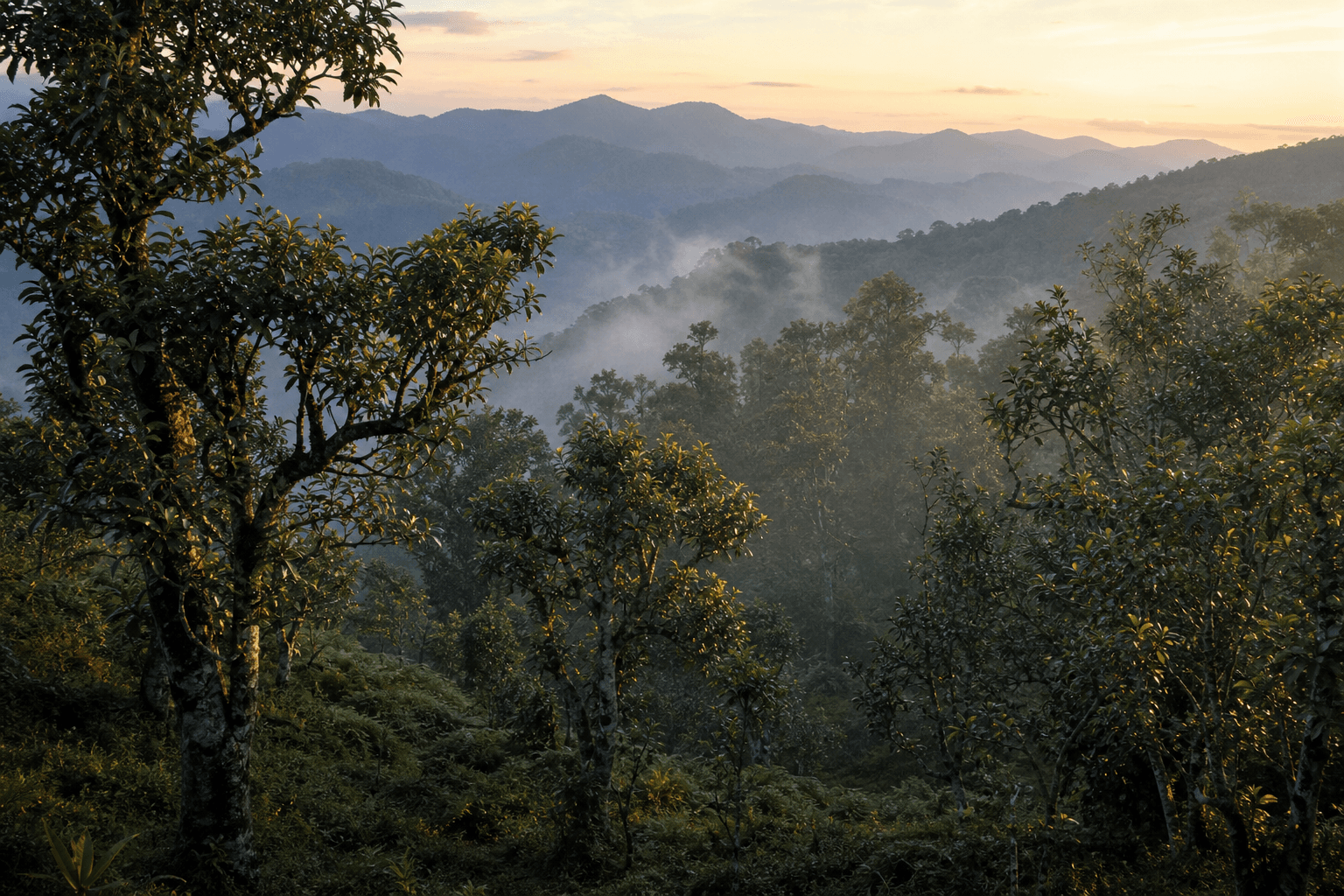
Pu-erh tea takes its name from the trading town of Pu'er in southern Yunnan, the historical clearing-house for the caravans of the Ancient Tea Horse Road. For a thousand years, the leaves that fed those caravans came from a single subspecies — Camellia sinensis var. assamica, Yunnan's broad-leaf tea tree, which has grown wild and cultivated in the southern prefectures since long before written record. Menghai, southwest of Pu'er proper, is the heartland: warm, humid, mineral-rich red soil, and old-growth gardens that have been picked for generations.
The modern style is younger than the tradition. The Menghai Tea Factory, founded in 1940 and nationalized after 1949, codified the recipes that drinkers now treat as canonical — the 357-gram beeng cha, the 250g and 200g pressings, the bamboo-leaf wrapping, the recipe numbers that still appear on every wrapper. Their 1973 sister-factory invention of wet-piling produced shou pu-erh; everything not put through the pile remained sheng — raw, alive, and slow.
A cake like this one is built for the long view. Stored clean, dry, and unscented, it takes five to ten years to shed its youthful bite, another decade or two to settle into mid-age, and several more to enter the antique territory that fuels the collector market. 2015 is now in its first drinkable window — old enough to have softened, young enough to still hold the floral lift that disappears in older vintages. It is the year a sheng cake first becomes itself.
Flavor
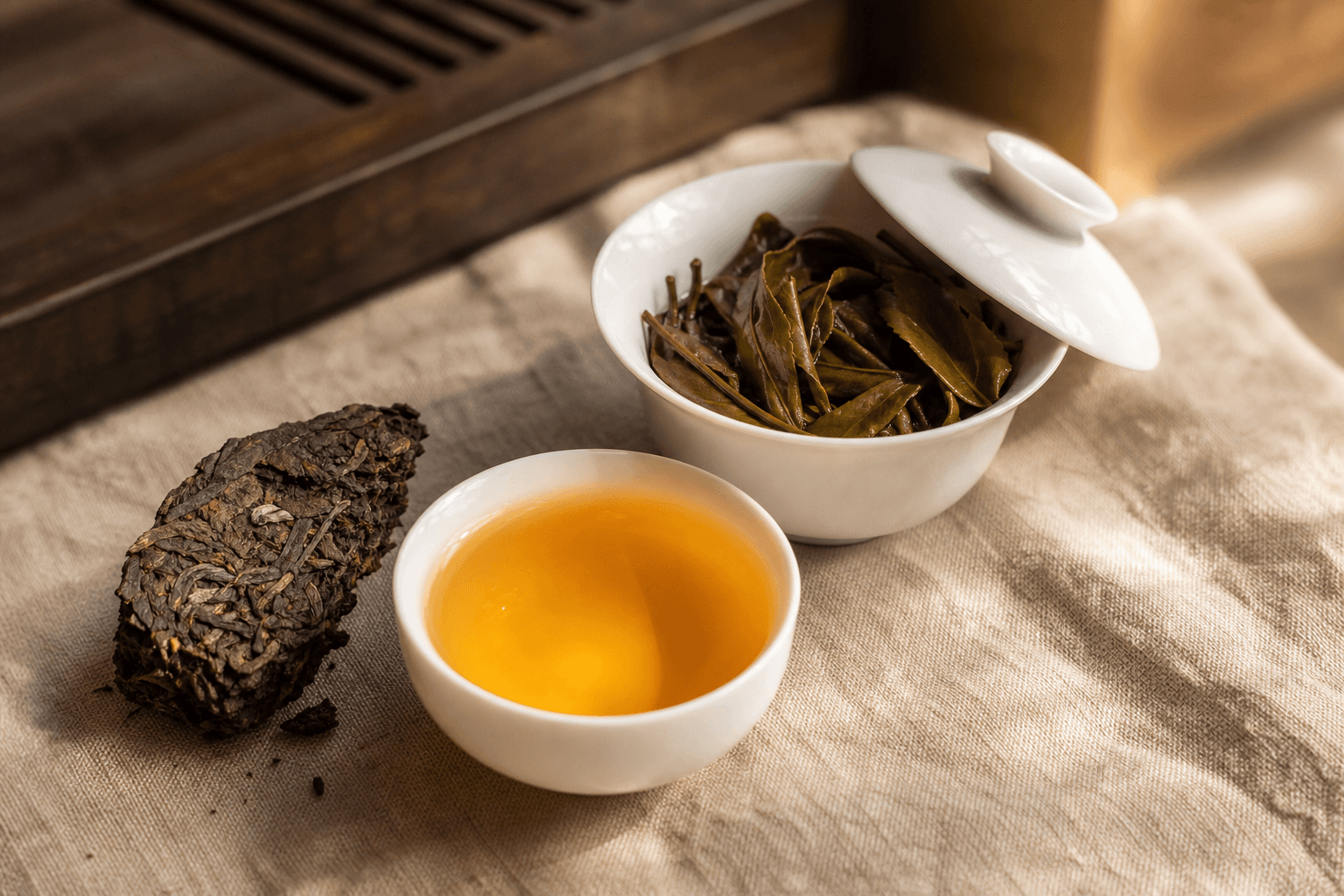
Brew gongfu. Five grams of leaf to a hundred millilitres of 95-degree water — just shy of a hard boil, hot enough to coax the assamica open without scorching the now-mellowed astringency. Begin with a ten-second rinse to wake the cake, decant, then pour a true fifteen-second first steep. The liquor comes out pale gold-to-amber, clear as cider, with a thin oil-slick sheen that good aged sheng tends to carry.
The arc across eight to twelve infusions is unhurried. Early steeps are honeyed and faintly floral; the middle cups deepen toward dried apricot and tobacco leaf, with the leaf's native bitterness folding in as a structural note rather than a flaw. Past the seventh or eighth pour the cup turns sweet and clean, with the cooling throat sensation Chinese drinkers call qing liang gan rising up the back of the palate after each swallow.
Soft entry, then a gentle structural bitterness — the assamica leaf showing itself — wrapped in a viscous honey-water sweetness with a faint mineral salinity that grounds the cup.
The signature is hui gan: a long returning sweetness that builds in the throat after each sip, paired with qing liang gan, a cool menthol-like sensation that lingers in the breath.
Across the session
Honey-forward and floral, the leaves still uncoiling — the cup tastes lighter than it looks.
Apricot, tobacco leaf, and a structural bitterness that gives the sweetness somewhere to lean.
The throat opens; qing liang gan arrives clearly. Sweetness pulls forward as bitterness recedes.
Clear, water-bright, faintly mineral. The leaves give up their last quiet honey notes.