Earthy · Floral · Deep
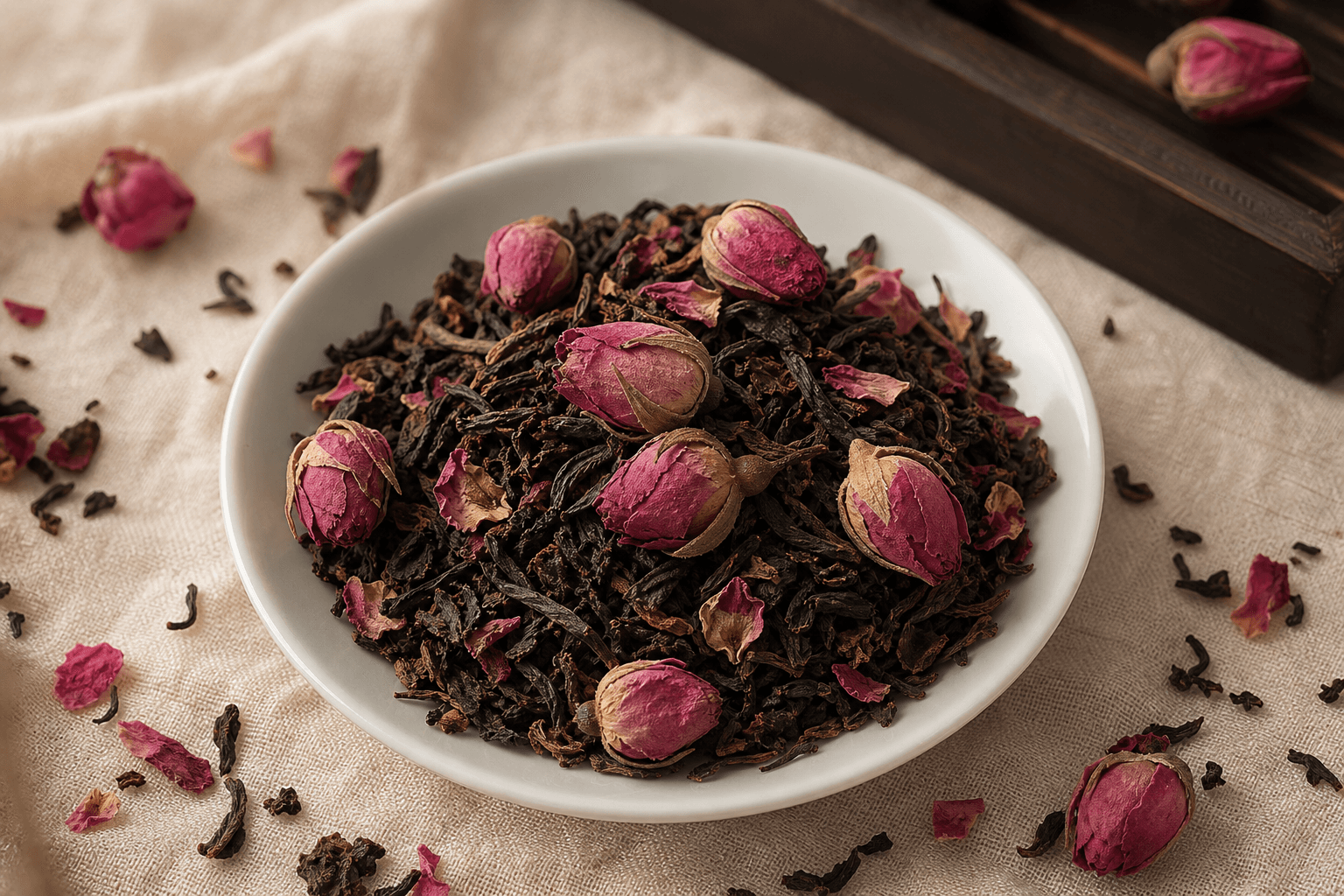
Aged shou pu-erh blended with dried rose petals from Pingyin. The earthy depth of fermented tea meets the delicate sweetness of heirloom roses — a pairing that has graced Chinese tea tables for centuries.
Brewing Guide
In Traditional Chinese Medicine, shou pu-erh is classified as warming and grounding — said to support the spleen and stomach, descend stagnant qi, and cut through the residue of rich food. Rose, by contrast, is a "moving" ingredient: it disperses stuck liver qi and is traditionally drunk to ease emotional heaviness. Together they make a cup considered both digestive and calming, which is why it shows up so often after a long meal.
Modern research lines up surprisingly well with the old framing. Fermented pu-erh is unusually rich in theabrownins and statin-like lovastatin analogues produced during wet-piling; rose petals carry geraniol, citronellol, and a heavy load of phenolic antioxidants. None of this is a medical claim — but it does explain why the cup feels the way it does.
Tradition
Warms the middle burner and disperses food stagnation — the after-dinner cup of choice in Cantonese tradition.
Modern lens
Statin-like compounds and microbial metabolites from wet-piling are studied for their effect on gut motility and lipid handling.
Tradition
Rose is said to "move blood" and is drunk through winter to brighten complexion and support menstrual ease.
Modern lens
High geraniol and phenolic content; rose tea has been studied for anti-inflammatory and antioxidant activity at the cellular level.
Tradition
Aged shou is grounding without being sedating — the classic cup for long study sessions and slow afternoons.
Modern lens
Lower in catechins than green tea but rich in theabrownins; the caffeine arrives gentler, paired with L-theanine.
Tradition
Long drunk in Yunnan and Guangdong as a daily tonic against the heaviness of fatty foods.
Modern lens
Multiple studies associate regular pu-erh consumption with improvements in LDL cholesterol and triglyceride profiles.
The Tea
Rose Pu-erh is not a single tea but a careful conversation between two ingredients with very different temperaments. The base is shou pu-erh — a fully fermented dark tea from Yunnan, aged six years in clay before blending. The accent is whole-bud Pingyin rose, hand-picked at first light when the oils are still asleep in the petals.
The ratio matters. Too much rose and the cup tilts toward perfume; too little and the earth of the pu-erh swallows it whole. We blend at roughly nine parts tea to one part rose by weight, then rest the mixture for thirty days before tinning so the petals can breathe their oils into the leaf.
History & Origins
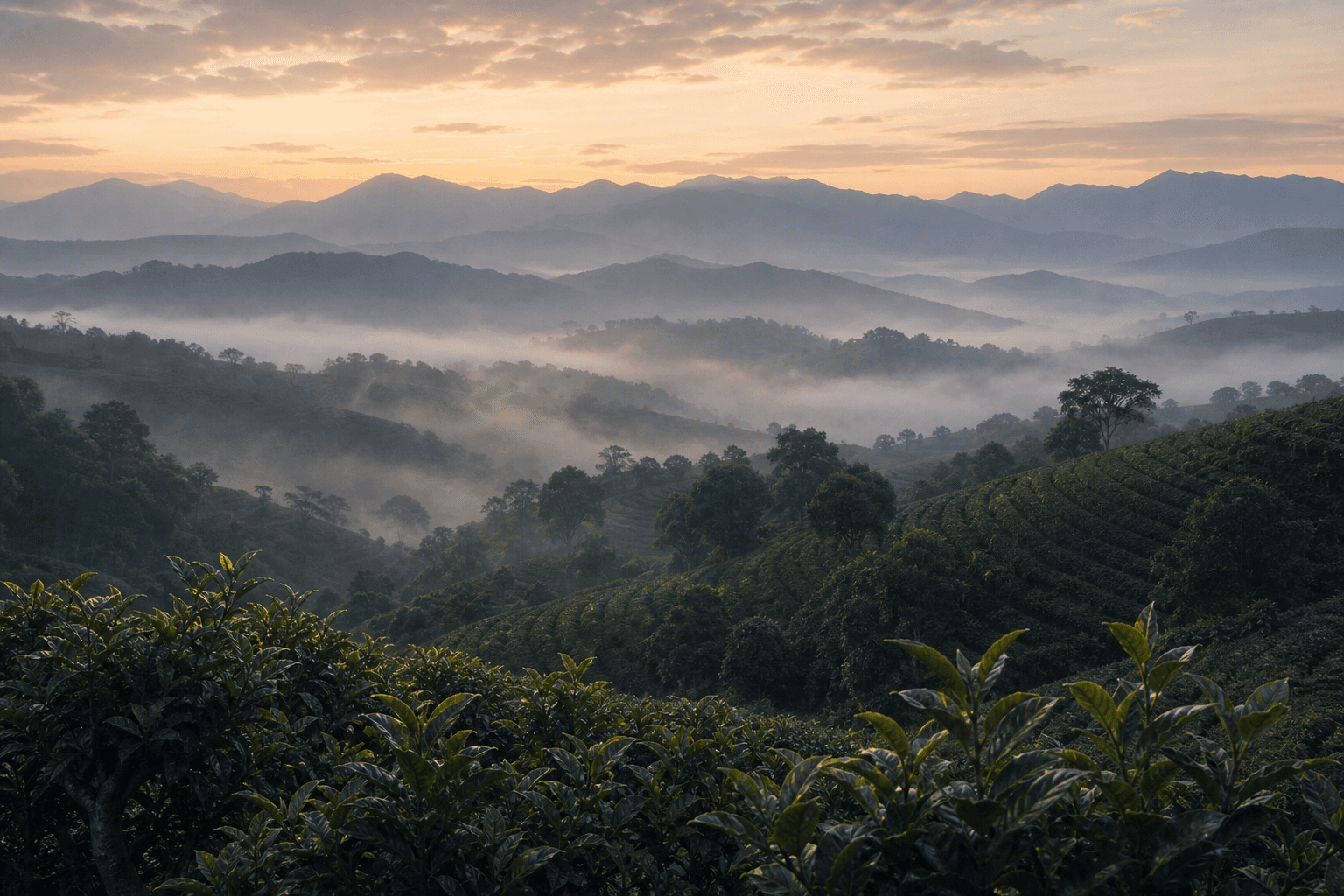
Pu-erh tea takes its name from the trading town of Pu'er in southern Yunnan, where caravans on the Ancient Tea Horse Road first pressed sun-dried Yunnan leaf into cakes for the long ride north. Shou — "ripe" — pu-erh is the modern half of the tradition: a 1973 Kunming Tea Factory innovation that uses controlled wet-piling (wo dui) to coax decades of fermentation into a few months. The result is the deep, woody, mushroom-forest character drinkers now associate with the style.
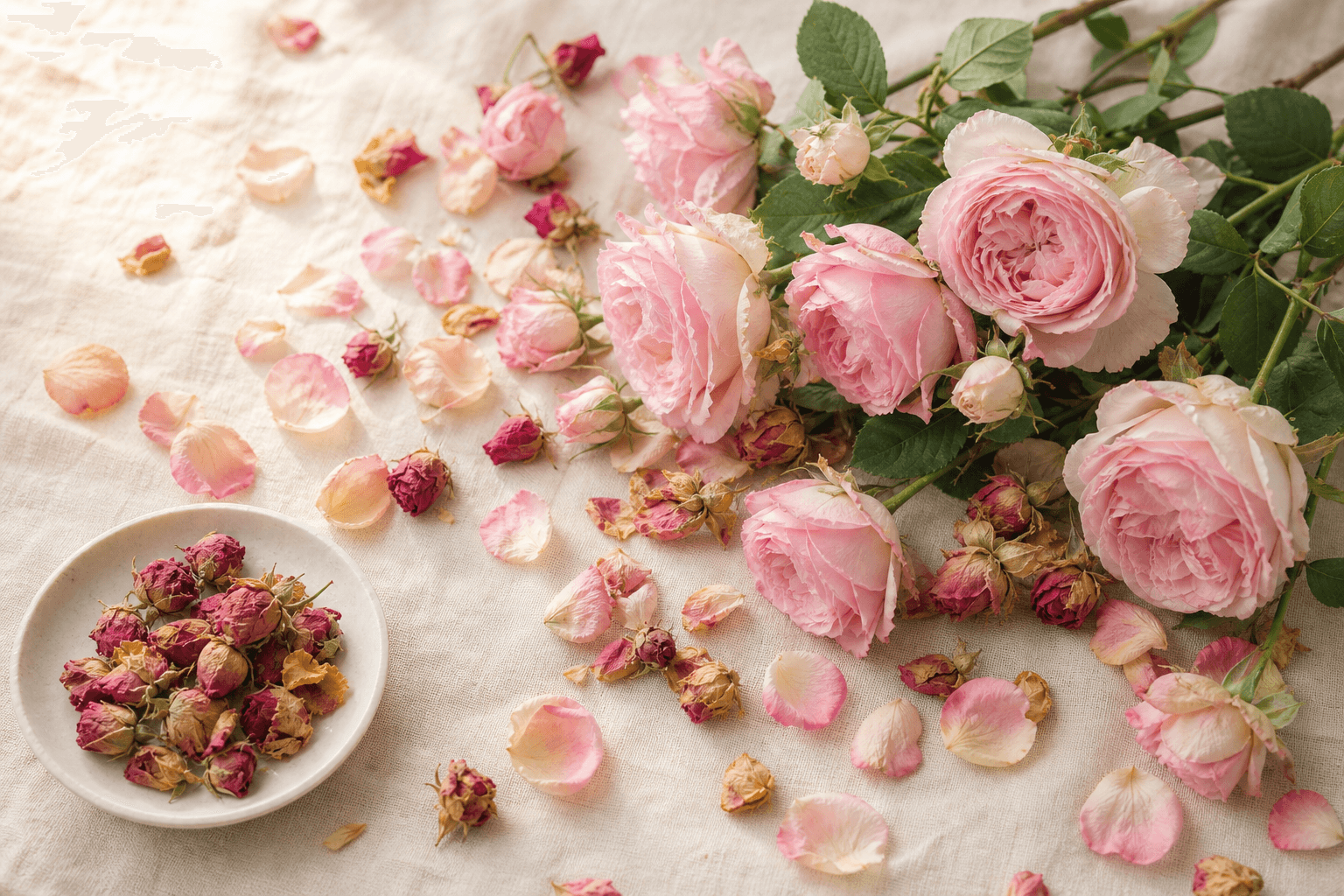
The roses come from a different geography entirely. Pingyin County in Shandong — over 1,500 miles from the pu-erh gardens — has cultivated heirloom Mei Gui roses for more than 1,300 years, since the Tang dynasty. The Pingyin variety is prized for its high oil content and a sweetness that survives drying intact, which is exactly what a pairing with shou pu-erh asks for.
Blending the two is a more recent invention — early-twentieth-century teahouses in Guangdong began scenting aged pu-erh with dried rose to soften the wet-pile character for southern palates. The combination stuck because it works: the rose smooths the earthy edge without masking it, and the tea, in turn, gives the rose somewhere to rest.
Flavor
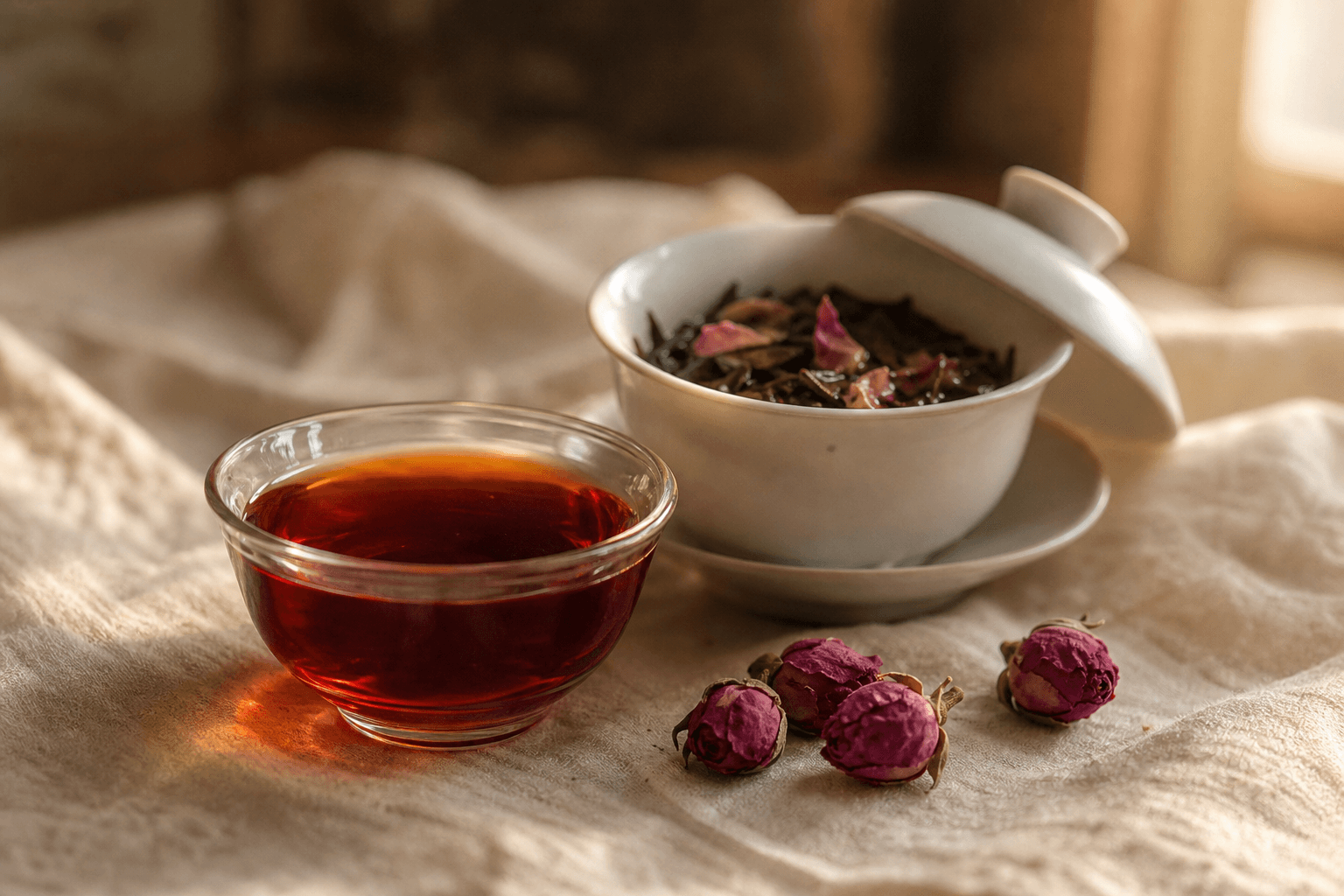
The first infusion arrives quietly. Pour 100°C water onto five grams of leaf, give it a fifteen-second rinse to wake the cake, then a true twenty-second steep. The liquor pours mahogany-dark with a clear ruby edge — a sign of well-aged shou with no off-pile funk.
Across eight to ten infusions the cup shifts. Earlier steeps lean into the rose; later steeps surrender it and let the pu-erh's own sweetness — dried date, damp wood, a faint cocoa — take the lead. Brew it gongfu and the arc is theatrical; brew it Western and the same notes simply blur softer.
Velvety on the body, no astringency to speak of. Sweetness of dried date and longan settles in the middle, carried on a mineral undertow that reads as pure Yunnan terroir.
Long, cooling, slightly herbal. The signature is hui gan — a returning sweetness that builds steep over steep and lingers on the breath after the cup is set down.
Across the session
Rose forward, the pu-erh still loosening — the sweetest cups of the session.
Earth and floral in balance. Cocoa and dried date emerge under the rose.
Rose recedes; the pu-erh's woody mineral character takes the cup.
Soft, sweet, water-like — the leaves finally giving up their last quiet notes.