Buttery · Floral · Cream
Tightly rolled jade oolong from the cloud forests of Alishan — high elevation gives it a hallmark sweet, buttery body and a finish like fresh cream over orchid. The poster tea of Taiwanese gao shan oolong.
Brewing Guide
In Traditional Chinese Medicine, lightly oxidised oolong sits between green and black tea on the cooling-warming axis — neither cold enough to chill the middle nor warm enough to dry it. Gao shan teas in particular are valued for their qing — a "clearing" quality said to lighten the head, ease the chest, and lift stagnant heat without leaving the body unsettled. The classic cup for an afternoon that needs focus without agitation.
Modern analysis of high-mountain oolong tracks the old framing reasonably well. Cooler nights at altitude shift the leaf chemistry: more L-theanine and free amino acids, fewer harsh catechins, a notable share of the rare polyphenol theasinensin produced during partial oxidation. None of this is a medical claim — but it does explain why the cup feels gentle and clear-headed rather than jittery, and why drinkers reach for it with the same instinct they once reached for the mountain itself.
Tradition
Lightly oxidised oolong has been drunk daily through southern Fujian and Taiwan as the after-meal cup — cutting through richness without weighing the stomach down.
Modern lens
Studied for its theasinensin and partial-oxidation polyphenol profile, both associated with lipid handling and post-meal blood sugar response.
Tradition
Considered a "clearing" tea — said to disperse internal heat and brighten the complexion when drunk through warm humid months.
Modern lens
Rich in catechins and L-theanine; high-mountain oolongs carry a notable antioxidant load tied to elevation-driven polyphenol density.
Tradition
Gao shan tea is the classic afternoon cup — clear-headed and gently lifting, the right pour for long reading or quiet work.
Modern lens
Unusually high L-theanine from cool-night growth pairs with a moderate caffeine dose; the combination is well-studied for steady, non-jittery alertness.
Tradition
Drunk all day through Taiwan's humid summers as the everyday cup — light enough not to overheat, sweet enough to need no sugar.
Modern lens
Low astringency and high amino-acid content make for an easy, low-tannin cup that drinks closer to spring water than to a strong infusion.
The Tea
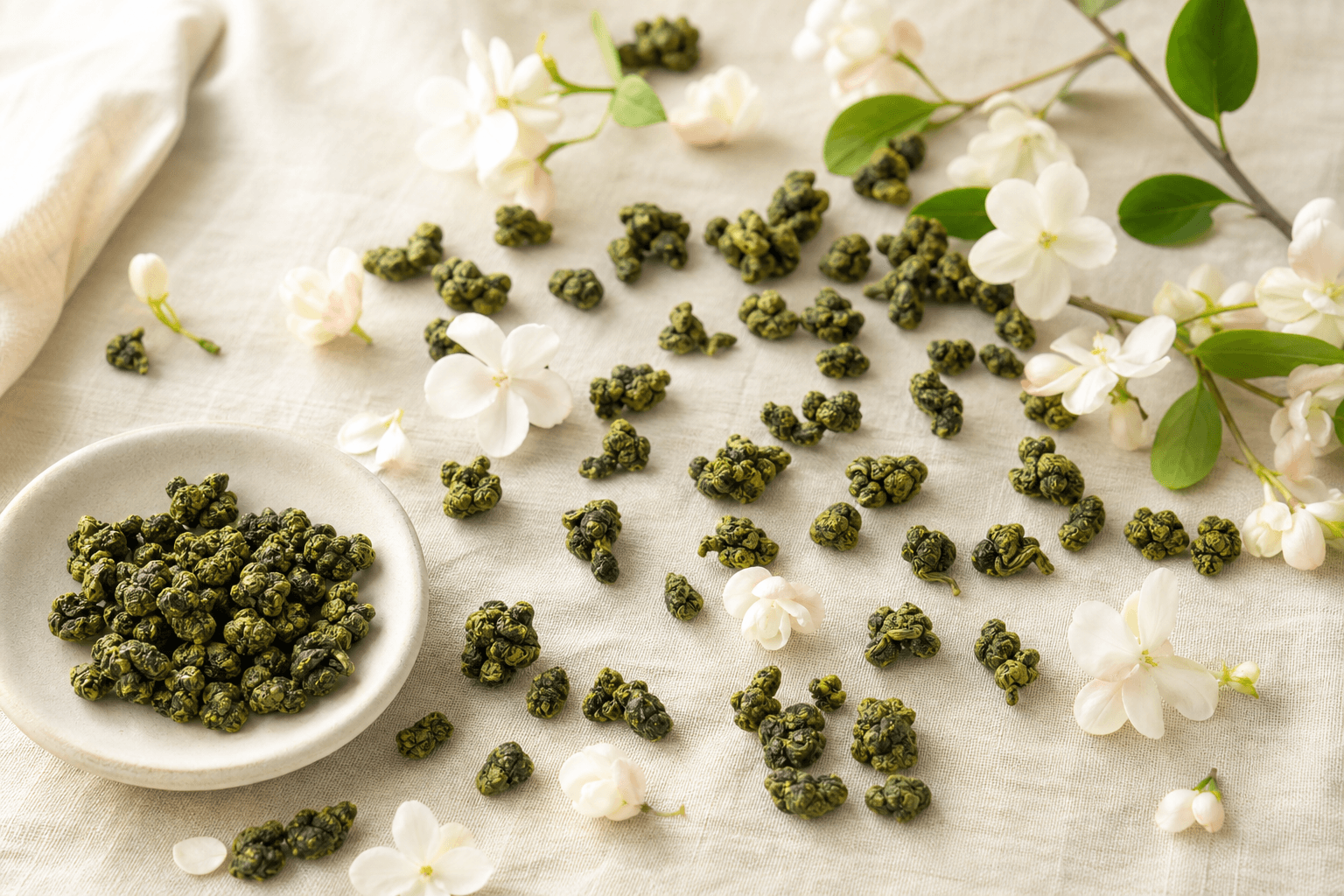
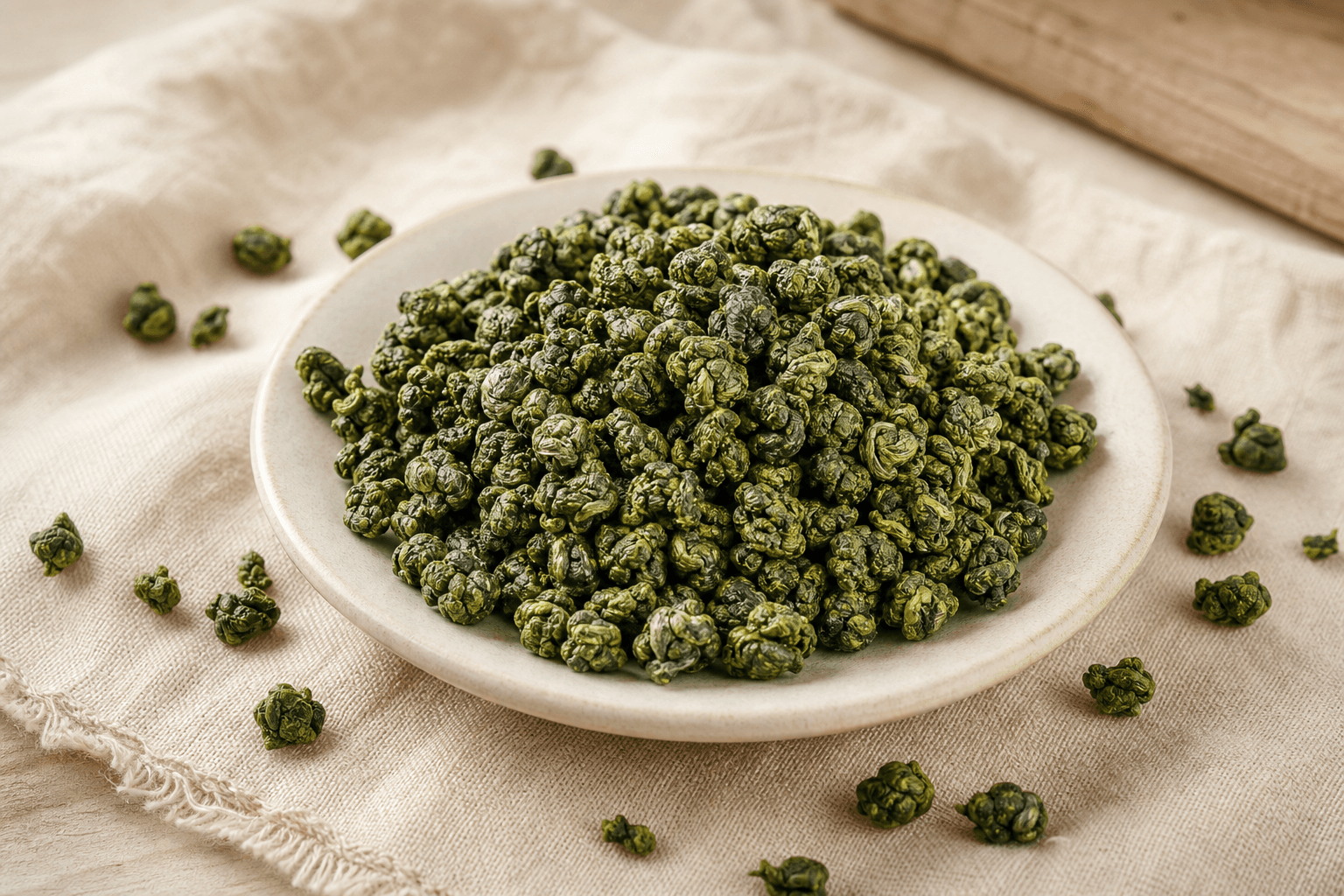
Ali Shan is the poster tea of Taiwanese gao shan cha — high-mountain oolong grown between roughly 1,000 and 1,600 metres in the cloud forests of the Alishan range, in Chiayi County. The cultivar is almost always Qing Xin, a small-leaf varietal prized for its delicate aromatics and creamy mouthfeel. Plucked young, lightly oxidised, low-roasted, then rolled tight into jade-green pellets that look almost too neat to be a tea leaf.
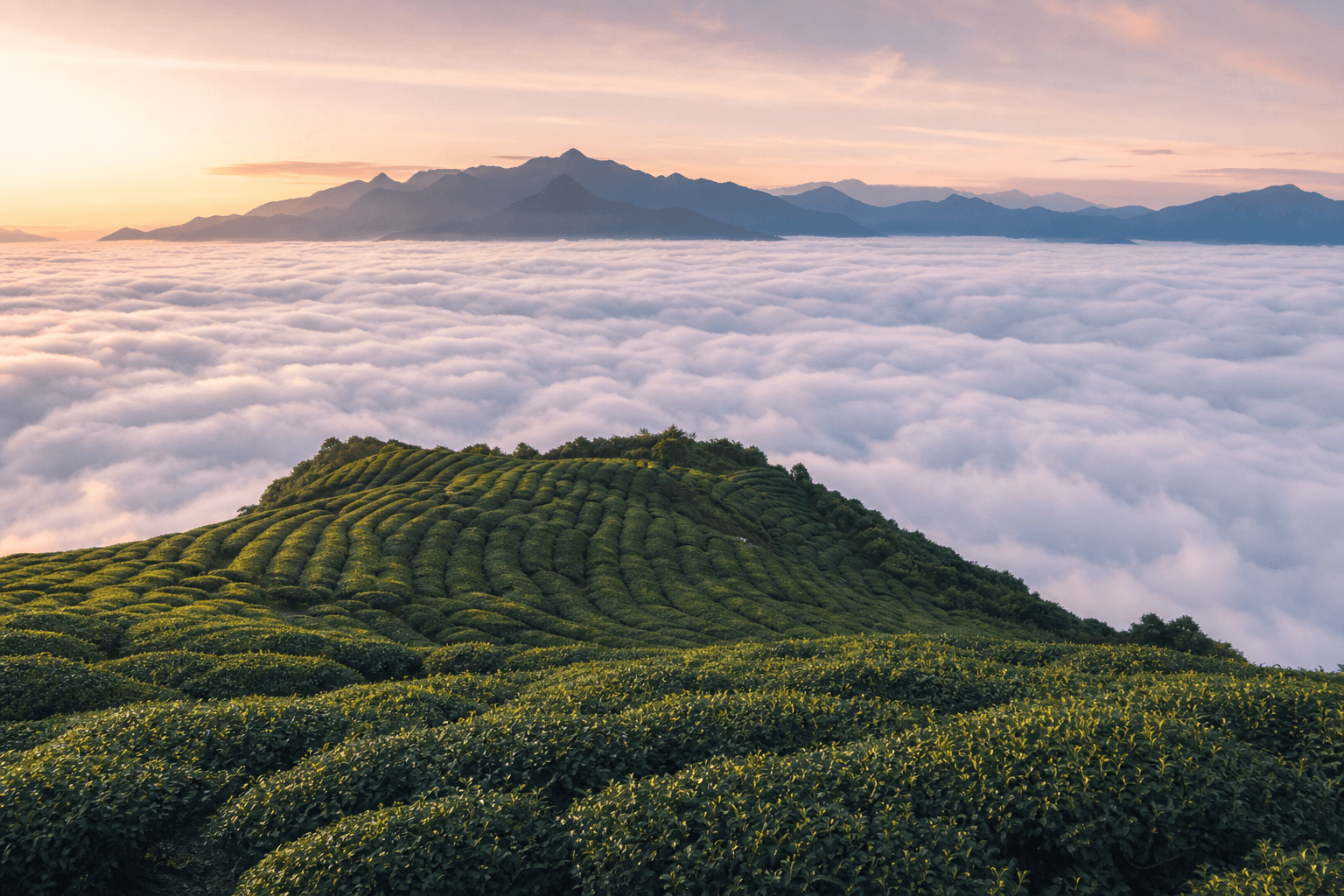
Elevation is the maker. Cooler nights and slow growth mean the bushes accumulate amino acids — chiefly L-theanine — instead of the bitter polyphenols that thrive at lower altitudes. The leaf comes off the mountain sweet, soft, faintly floral. The hand of the producer is the second factor: the tightness of the roll, the timing of the bruising, the lightness of the final bake. A good Ali Shan should taste like the mountain it grew on.
History & Origins
Tea has been grown in Taiwan since Fujianese settlers brought cuttings across the strait in the early nineteenth century, but the high-mountain industry is much newer. After 1949, when the island's economy reorganised around export agriculture, the tea trade modernised quickly — first in the lowland hills, then climbing. Alishan itself only became a recognised tea region in the early 1980s, as growers pushed up into the cloud belt looking for the cool nights that produce sweeter, less astringent leaf.
The Alishan range is better known to most travellers as a national scenic area: a forested ridge of red cypress, dawn cloud-seas, and the famous mountain railway that climbs up from the Chiayi plain. The same geography that makes the sunrise viewpoint famous makes the tea what it is — daily mist banks rolling between the peaks, sharp diurnal temperature swings, mineral-rich volcanic soils, and a growing season slowed by altitude.
The processing style is borrowed but local. Rolled-ball oolong was developed in Anxi, Fujian, for Tieguanyin in the late nineteenth century, and Taiwanese makers adopted the form for high-mountain leaf in the latter half of the twentieth. The balls are larger and looser than mainland Tieguanyin, the oxidation lighter, the roast almost absent. What emerges is a tea that shares Tieguanyin's shape but reads completely differently in the cup — where Anxi leans orchid and toasted nut, Alishan leans cream, butter, and mountain air.
Flavor
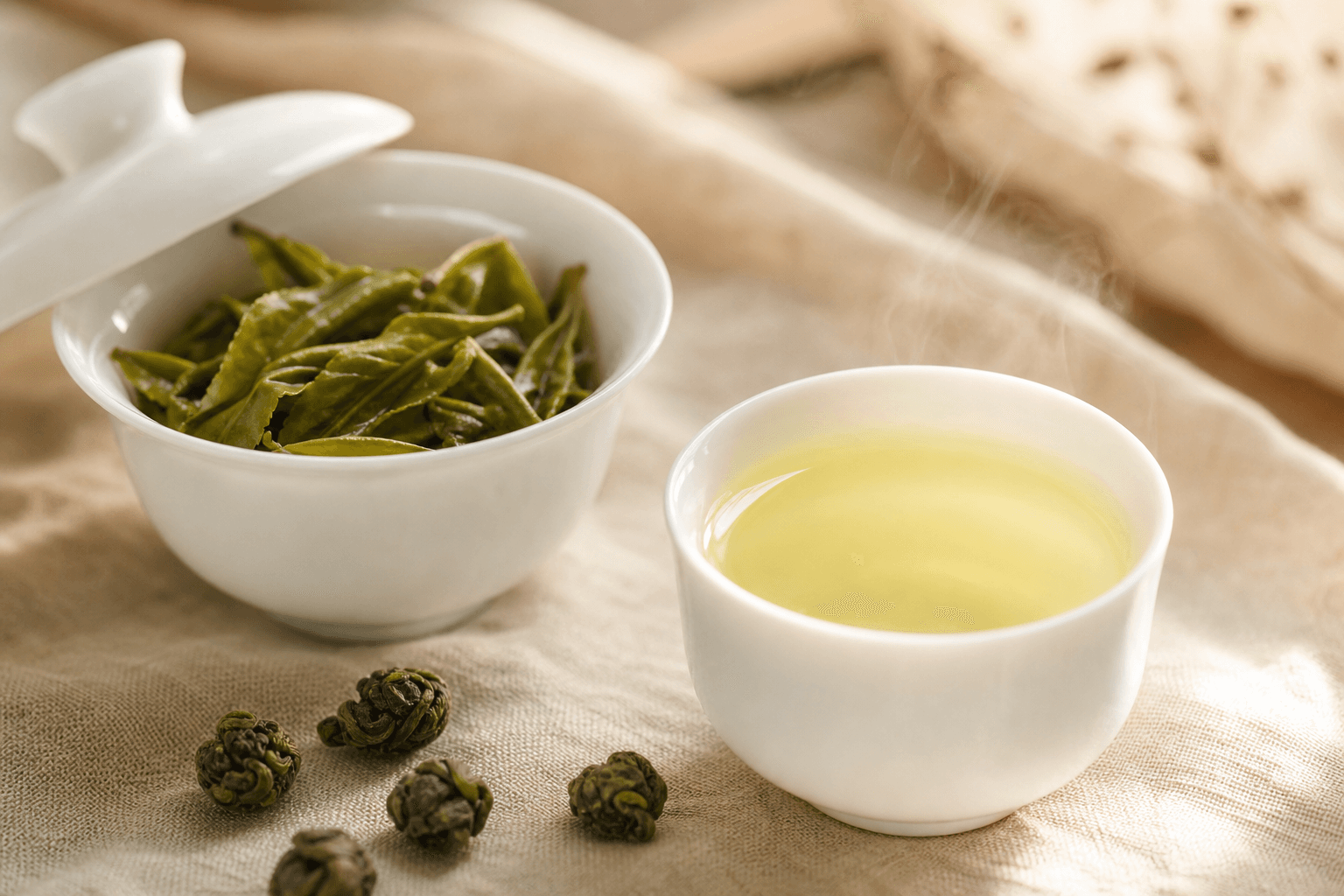
Brew it at 90°C — water any hotter punishes the delicate aromatics. Five grams of leaf to a 100ml gaiwan, a quick five-second rinse to coax the balls open, then a true twenty-five-second first steep, adding ten seconds to each subsequent infusion. The liquor pours pale jade-yellow, almost luminous, with a steam that smells of warm milk and fresh-cut orchid before the cup ever touches the lip.
The leaves unfurl slowly. By the third infusion the tightly-rolled balls have opened into surprisingly large whole leaves — bright fresh green, supple, almost wet-looking. A well-made Ali Shan gives eight or more clean steeps; the cream and butter recede gradually across the session and a brighter, greener, more vegetal note rises in their place. Every cup ends with a long cool finish that drifts back as sweetness on the breath a minute later.
Buttery and round on the tongue with no astringency, sweet through the middle in the way of sugarcane water, lightly floral rather than perfumed.
Long and cool, faintly mineral, with a sweetness that returns on the breath — the gao shan signature — minutes after the cup is set down.
Across the session
The balls just beginning to loosen — soft, milky, the first hint of orchid arriving over warm cream.
Leaves fully open. The cup is at its most expressive — buttery, floral, lightly vegetal, with the sweetest mid-palate of the session.
Cream recedes and a brighter green note steps forward. The liquor stays sweet but turns more transparent.
A clean, water-soft finish — mineral, faintly grassy, the leaves giving up their last quiet infusions.