Malty · Sweet · Cocoa
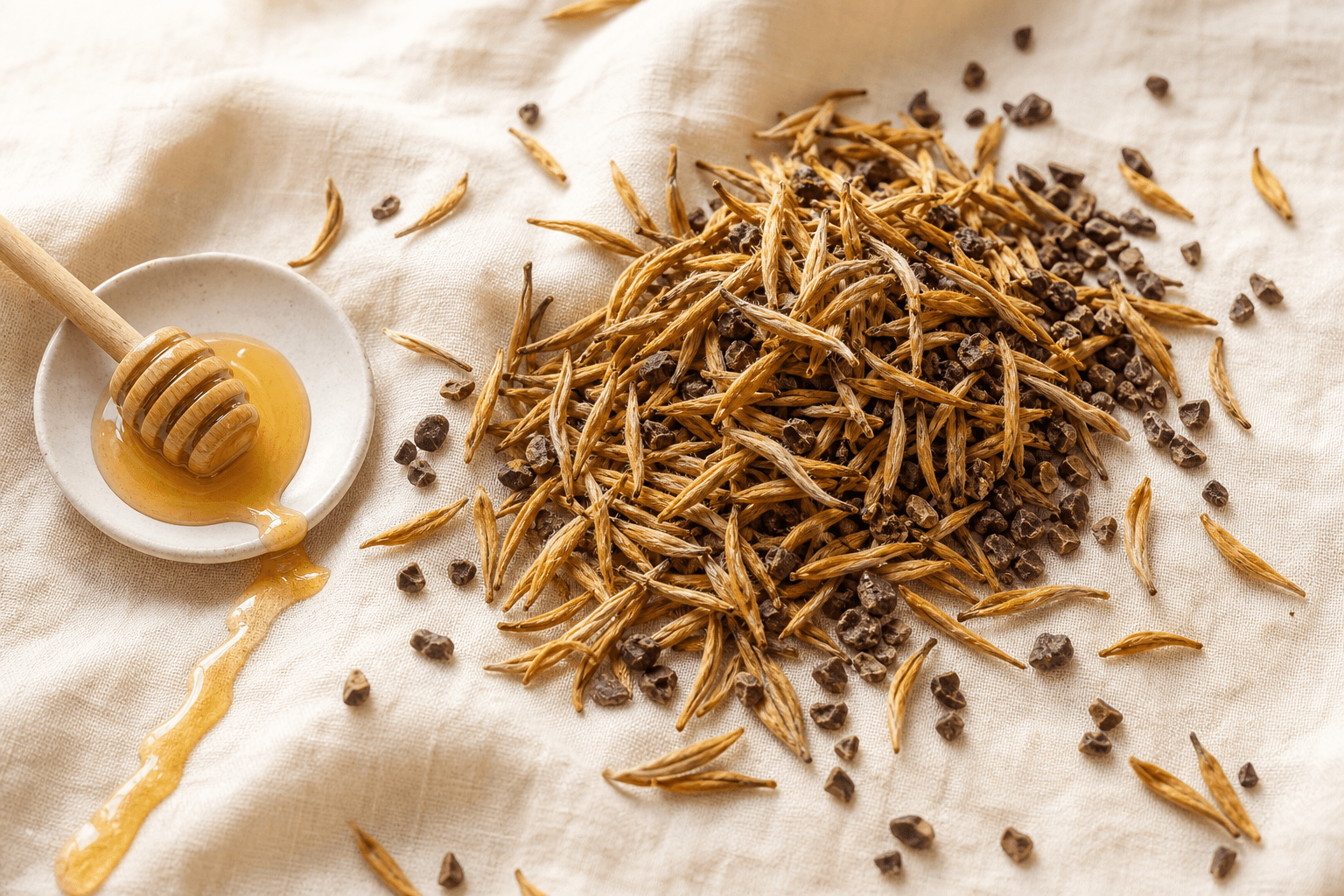
All-golden-tip black tea from Yunnan's old-growth assamica trees. Honey-malt body, silky texture, and a cocoa finish — perhaps the most beginner-friendly Chinese black on the table.
Brewing Guide
In Traditional Chinese Medicine, Dian Hong is classified as warming — fully oxidized black teas are considered yang in nature, supporting the spleen and stomach, gently encouraging circulation, and warming the middle burner on cold mornings. It is the tea of choice in Yunnan for breakfast and for the chilled hours after a long mountain hike. Unlike green tea, which is cooling and can sit heavy on an empty stomach, a Yunnan black is traditionally drunk first thing — alongside or even before food.
The phytochemistry of fully oxidized assamica leaf is distinct from small-leaf black teas. The oxidation produces theaflavins and thearubigins — the orange-red and brown polyphenols responsible for the color and the body — alongside a moderate caffeine load softened by L-theanine, the amino acid abundant in young buds. None of this is a medical claim — but it explains why the cup wakes the drinker without the sharp edge of coffee, and why a mug of it on a cold morning genuinely does feel like it warms from the inside out.
Tradition
Yang in nature, said to warm the middle burner and circulate qi — the morning cup of choice in mountain Yunnan through winter.
Modern lens
Caffeine and theaflavins together produce a gentle vasodilatory warming effect; the cup measurably raises peripheral skin temperature in cold conditions.
Tradition
Drunk at first light to "open the day" — a tonic for the lungs and a lift for the spirit before food, in the Yunnan rural tradition.
Modern lens
Moderate caffeine paired with L-theanine from the young buds; the lift is steady rather than spiky, with no jitter and a softer come-down than coffee.
Tradition
Warms the spleen and stomach, eases the heaviness of fatty breakfasts — the classic morning companion to a Yunnan mantou or rice porridge.
Modern lens
Theaflavins and thearubigins are studied for effects on lipid handling and gut motility; black tea is associated with reduced post-meal bloat in clinical trials.
Tradition
Daily consumption in Yunnan and Guangdong long credited with steadying the heart and easing the chest in older drinkers.
Modern lens
Multiple cohort studies associate regular black tea drinking with improved endothelial function and modest reductions in LDL cholesterol over time.
The Tea
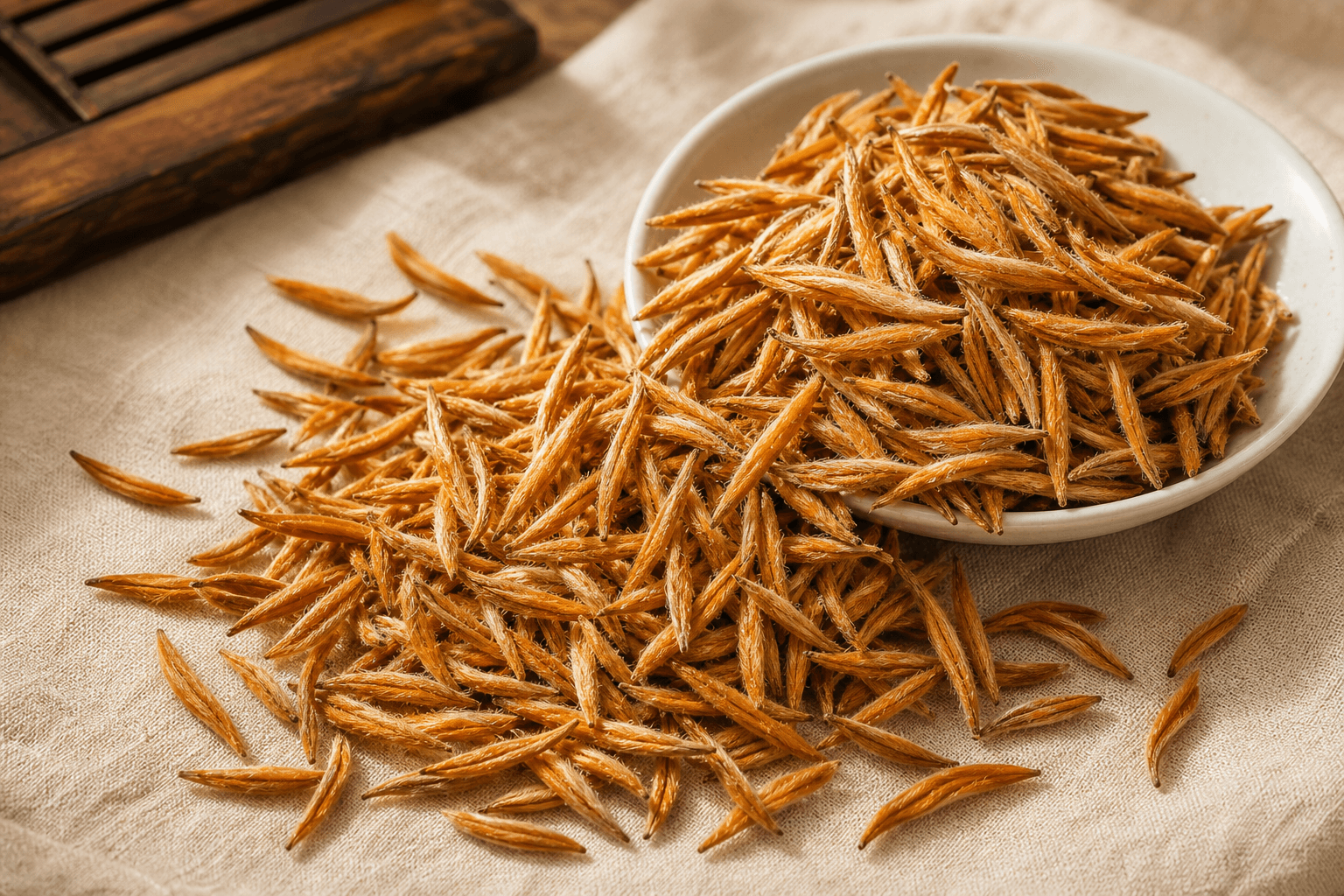
Dian Hong Gold Buds — Jin Ya — is the all-tip premium grade of Yunnan black tea. Where most black teas are a mix of leaves and the occasional golden bud, this one is the bud alone: long, slender, downy, the color of warm copper and amber-orange across the entire pile. The leaves come from old-growth Camellia sinensis var. assamica — the broad-leaf tea tree native to Yunnan, the same species the region presses into pu-erh. Picked young, in early spring, before the leaf has had a chance to open.
The processing is traditional Chinese gongfu black tea — withered indoors, hand-rolled to bruise the cell walls, oxidized fully on bamboo trays under controlled humidity, then dried slowly at low heat to keep the down on the buds intact. A skilled maker leaves a cup of liquor that is honey-malt sweet, silky on the body, and finishes with cocoa rather than the brisk astringency of an Indian Assam from the same plant species. The hand on the leaf is everything — quiet, patient, unhurried.
History & Origins
Dian Hong is young by Chinese tea standards — born in 1939, not centuries ago. Until the late 1930s Yunnan made green tea and pu-erh; the famous black teas of China came from Anhui (Keemun) and Fujian (Lapsang, Bohea). When the Second Sino-Japanese War cut the eastern export ports off from the world, the tea bureau in Kunming sent a master named Feng Shaoqiu south to the Fengqing and Lincang hills with a brief: build a black tea industry from the assamica trees already growing there, fast, for the British market.
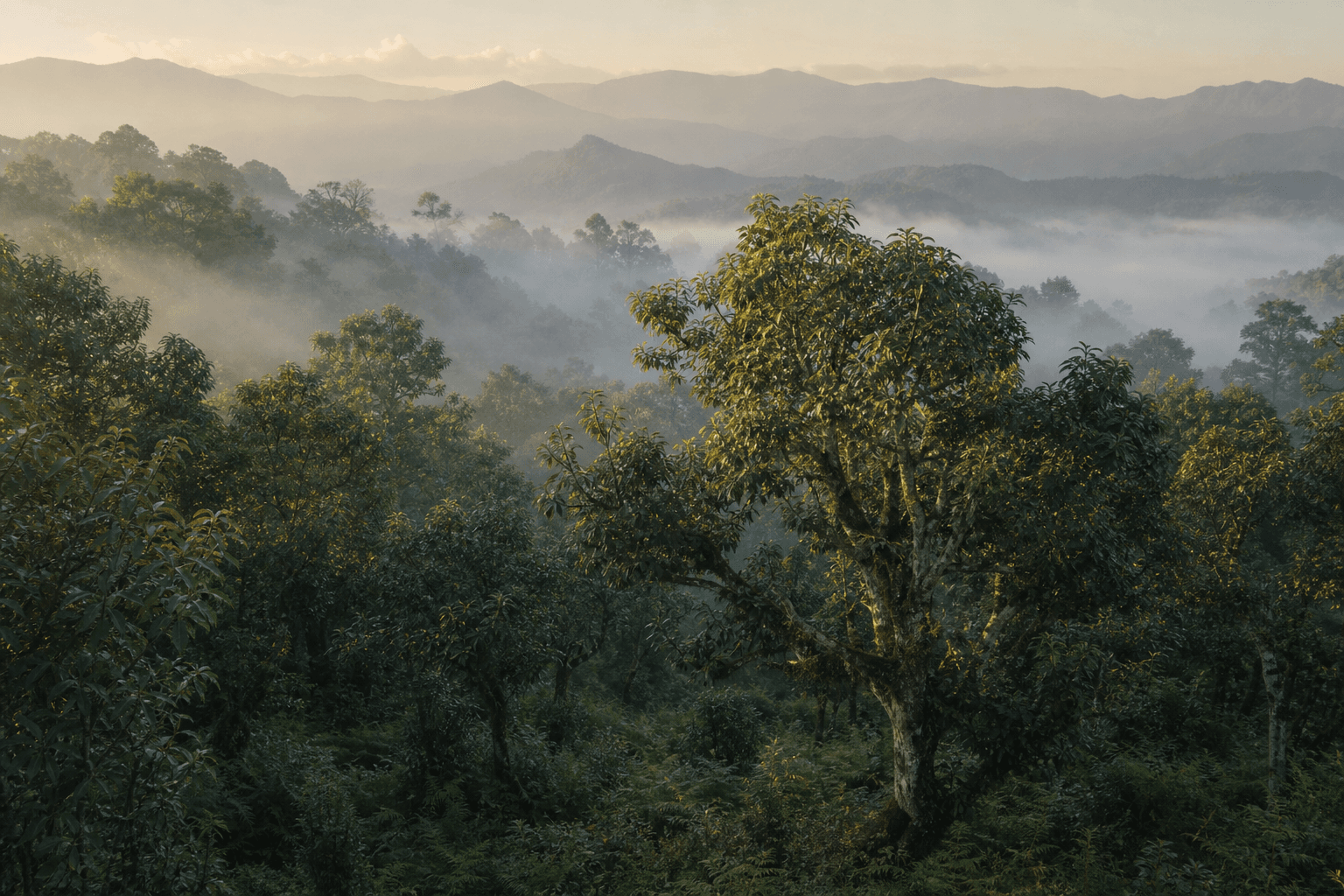
The terroir was already in place. Yunnan's southwest is the ancestral home of the tea plant — old-growth assamica trees, some of them centuries old, grow on misty subtropical hillsides between 1,500 and 2,000 meters. The leaves are larger and thicker than the small-leaf sinensis var. sinensis bushes of Anhui or Zhejiang, and they carry more of the polyphenols that, fully oxidized, become the malt-and-cocoa character of a good Yunnan black. "Dian" is the old poetic name for Yunnan; "Hong" is red — the Chinese name for what the West calls "black" tea, after the liquor color, not the leaf.
The Gold Buds grade — Jin Ya — emerged later, as makers refined the early-spring picking standard. Selecting only the unopened bud, with no leaf at all, gave a cup softer and sweeter than the leaf-and-bud blends, and visually unmistakable: an entire tin of copper-orange tips. It is now the showpiece of the Dian Hong tradition, and the easiest entry point to Chinese black tea for a drinker raised on milky English breakfast — there is simply nothing harsh in it.
Flavor
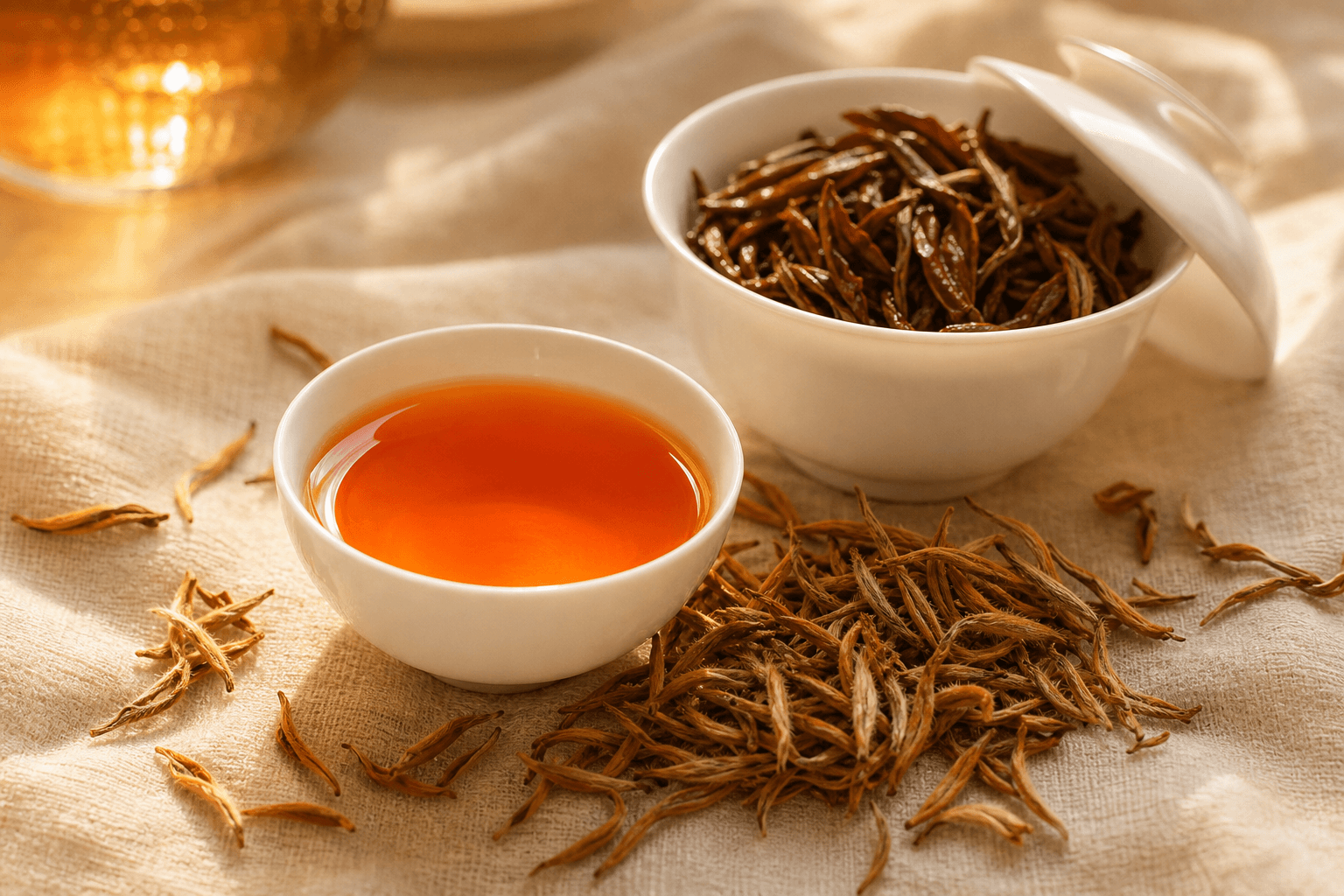
Brew at 90°C — a touch cooler than a black tea drinker might expect, because the buds are tender and a full boil scorches the down right off them. Four grams to a 100ml gaiwan, a quick five-second rinse, then a true twenty-second first steep. The liquor pours bright amber-red, almost glowing where the light catches it, with a clean clarity that says the leaf was rolled gently and dried slowly.
Across six to eight infusions the cup walks a slow arc. The opening cups are honey-malt forward, with a silkiness on the tongue that distinguishes Yunnan black from anything outside China. The middle cups deepen into cocoa and a faint warm spice, sometimes a whisper of sweet potato. The tail goes soft and clean — never bitter, never astringent — leaves that surrender their sweetness right to the bottom of the session.
Silky and round — almost cream-thick on the body — with no astringency at all. Sweetness arrives early, malt-forward, and slides into a soft cocoa heart by the third sip.
Long, smooth, gently warming. The cup leaves a cocoa-and-caramel aftertaste on the back of the palate that lingers for minutes after the cup is set down.
Across the session
Bright amber liquor, malt and honey forward — the buds giving up their sweetness in a rush.
Color deepens toward red-amber; cocoa and warm spice take the middle of the cup.
Softer, slower, with a caramelized-sugar character emerging on the finish.
Pale gold, gentle, a clean sweet water — the leaves saying their last quiet words.