Chestnut · Sweet · Smooth
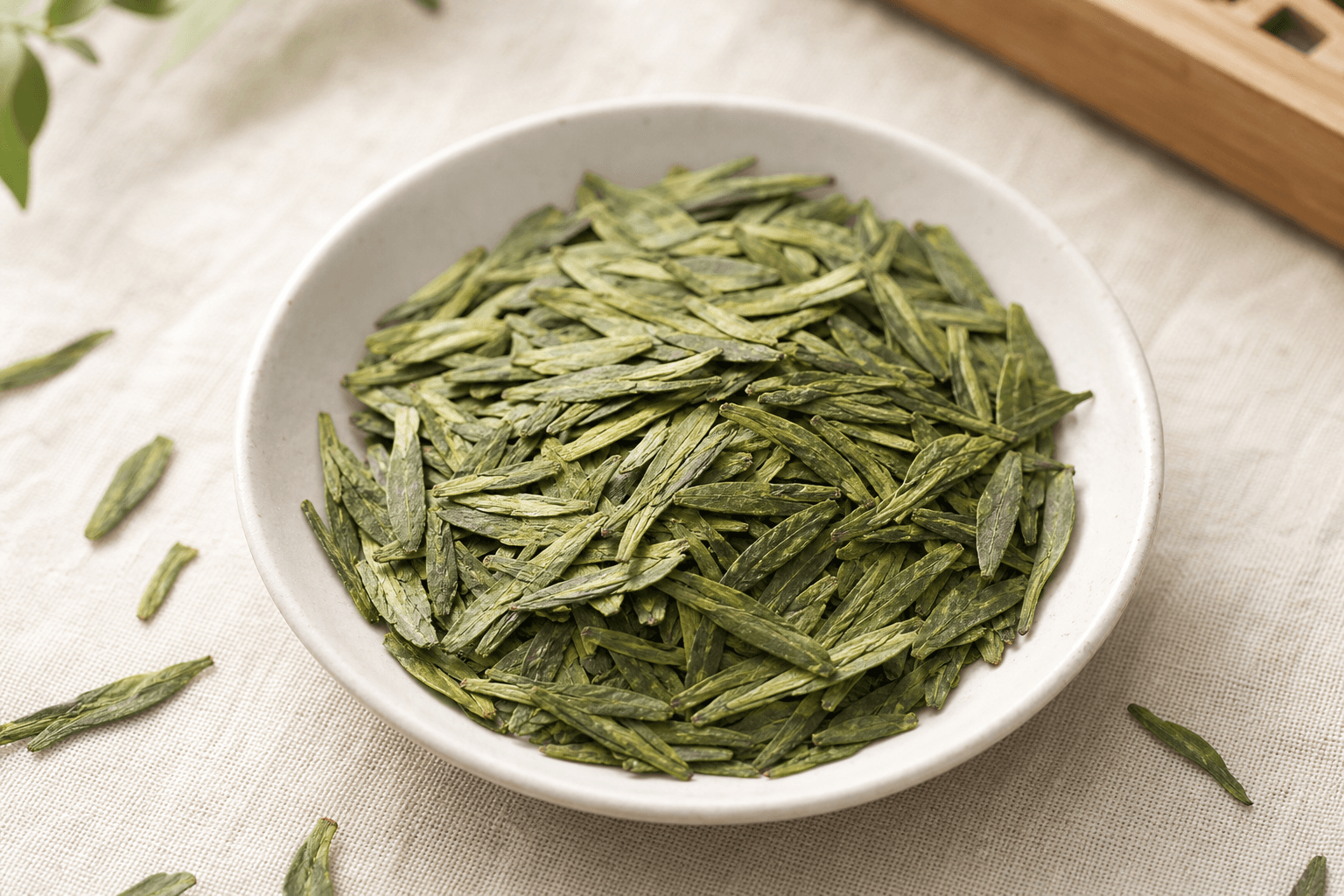
Pan-fired Long Jing from the hills around Hangzhou's West Lake — flat, lance-shaped leaves the colour of jade with the scent of toasted chestnut. The first spring harvest delivers a clean, vegetal sweetness that has defined Chinese tea for a thousand years.
Brewing Guide
In Traditional Chinese Medicine green tea is classified as cooling and clearing — said to settle internal heat, brighten the eyes, and lift the head after heavy meals. Long Jing in particular has been drunk through the Jiangnan spring as a seasonal tonic, the cup that follows the long damp winter and prepares the body for warmer months. Scholars favoured it for the way it sharpened thought without unsettling sleep, and it is still the tea of choice in southern study halls and quiet afternoons.
Modern analysis explains some of the old framing. Pre-Qing Ming Long Jing is unusually high in EGCG and other catechins — the early-spring leaves accumulate them through cool slow growth — and carries a generous load of L-theanine alongside its modest caffeine. The combination is the source of the calm, alert focus drinkers describe. None of this is a medical claim, but it is why the cup feels the way it feels.
Tradition
Drunk through the Jiangnan spring as a clearing tonic — the cup that "wakes the year" after a damp winter, said to brighten complexion and eyes.
Modern lens
Pre-Qing Ming Long Jing is unusually rich in EGCG and other catechins, the polyphenols most studied for their cellular antioxidant activity.
Tradition
The scholar's tea — favoured in southern study halls for sharpening attention without unsettling sleep or warming the body.
Modern lens
High L-theanine alongside a modest caffeine load is associated with calm, sustained alertness rather than the jittery edge of stronger stimulants.
Tradition
Taken after rich meals to "lift the head" and disperse the heaviness of fatty food — the standard Hangzhou after-lunch cup.
Modern lens
Catechins, particularly EGCG, have been studied for their effect on fat oxidation and basal metabolic rate in regular drinkers.
Tradition
Classified as cooling and clearing in TCM — said to settle internal heat, calm a busy mind, and refresh the senses on a humid day.
Modern lens
The L-theanine and EGCG pairing is associated in studies with measurable shifts in alpha-wave activity, the brain pattern of relaxed attention.
The Tea
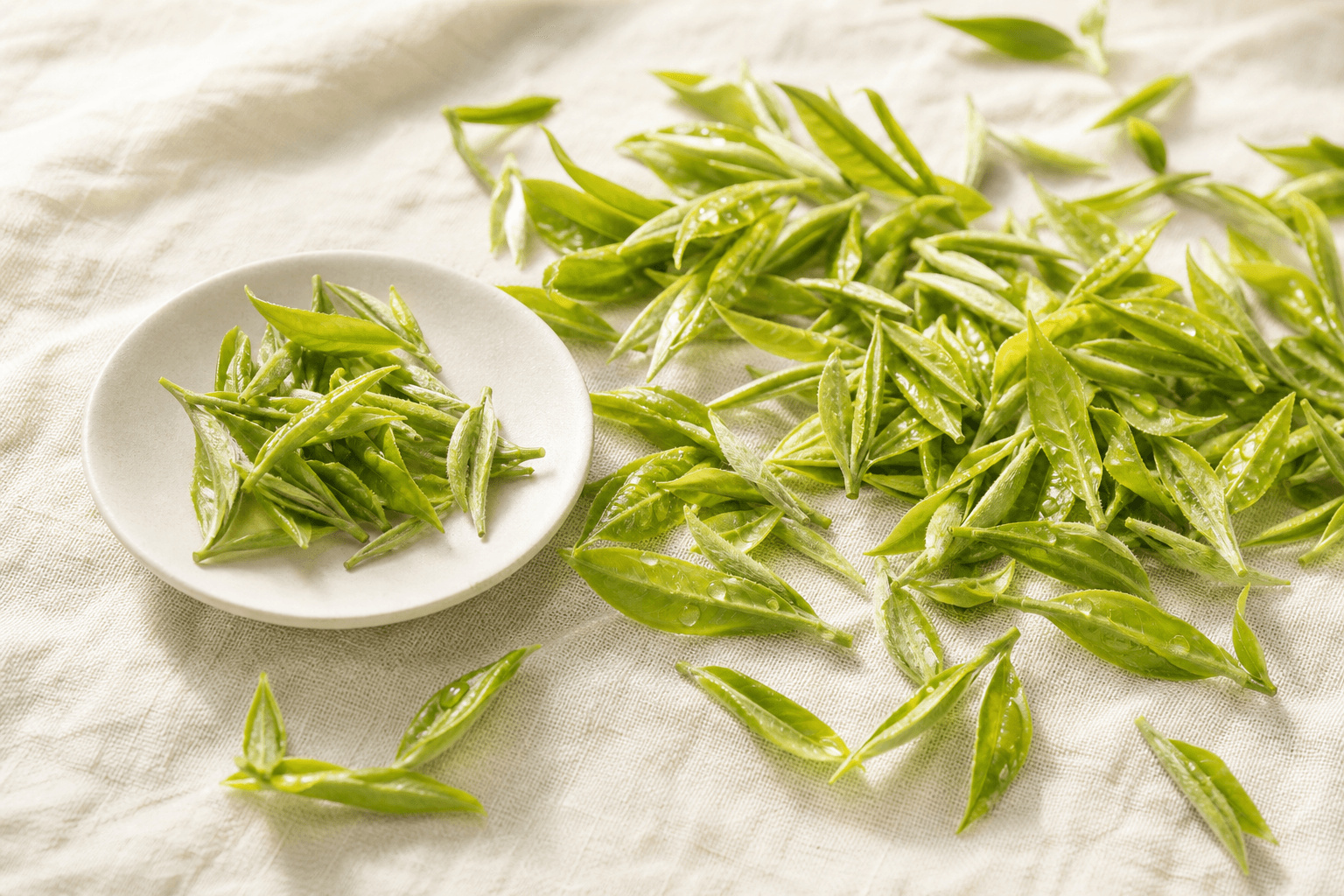
Dragon Well — Long Jing in Mandarin — is the tea that taught the rest of China what a green tea could be. The leaves are flat, smooth, and lance-shaped, the colour of polished jade with a faint silver down still clinging to the bud. Each one is the youngest growth of the season, plucked as a single bud with one leaf attached, before the spring has truly opened the bushes for the year.
What makes Long Jing Long Jing is the hand of the maker. The leaves are pan-fired in a hot wok by feel — chao qing, "fixing the green" — pressed flat against the metal in ten distinct hand movements that drive off moisture and lock the chestnut sweetness in. A skilled fryer trains for years before they are trusted with first-flush leaf, and a single kilogram of finished tea takes a full afternoon at the wok.
History & Origins
The tea takes its name from a small spring on the slope of Wengjia Hill outside Hangzhou, where a Song dynasty drought is said to have been broken by a dragon coiled beneath the water. Monks at the nearby Hugong Temple were already roasting tea in the Tang, but it was during the Song that Long Jing emerged as a distinct style, and during the Ming — once steamed compressed cakes had given way to loose leaf — that the pan-firing technique we know today took its mature form.
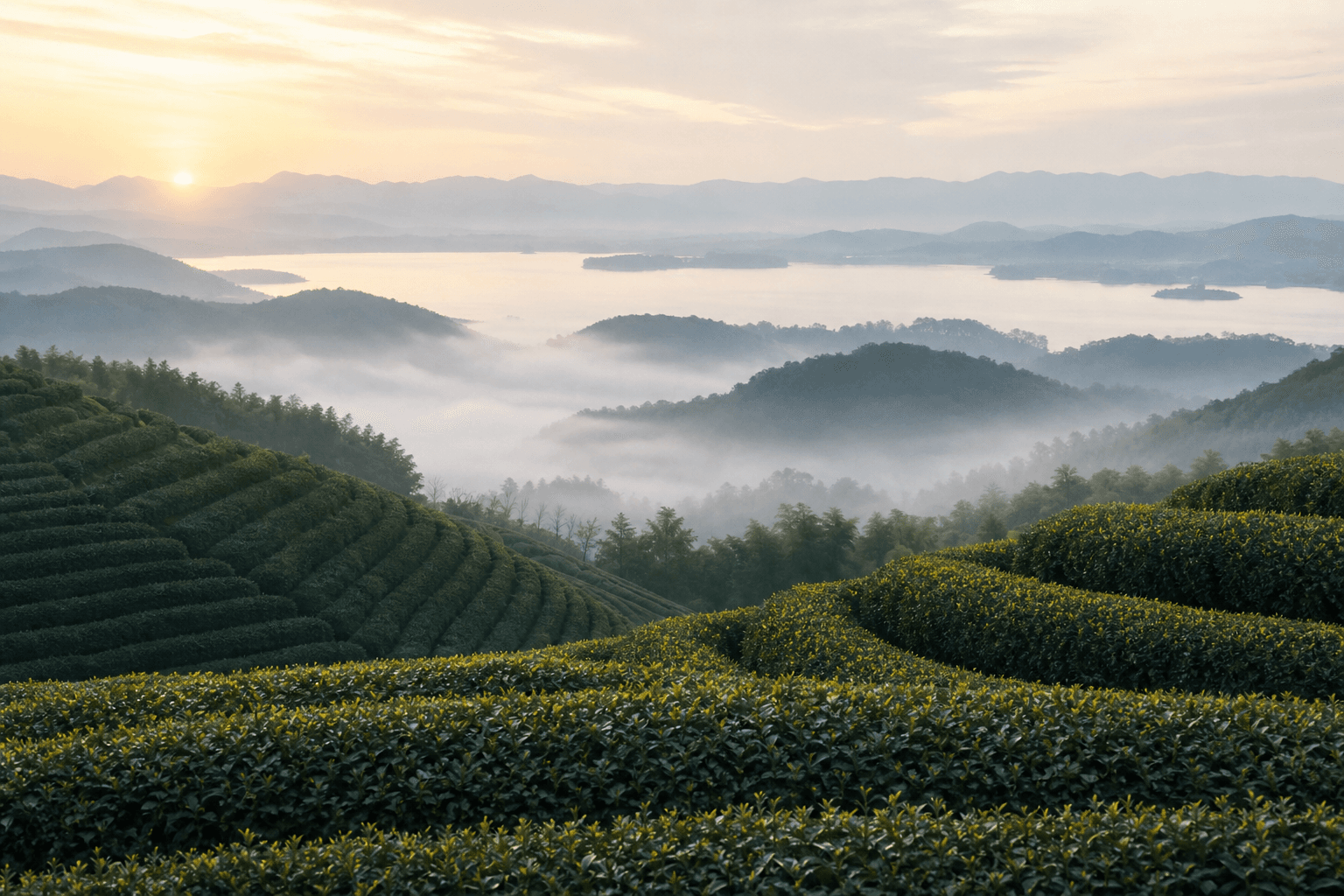
The terroir is unusually compact. Authentic Xi Hu Long Jing comes from a handful of villages tucked into the mist-belt around West Lake: Shi Feng (Lion Peak), Mei Jia Wu, Weng Jia Shan, Yun Qi, Hu Pao. Lion Peak is the most prized — a north-facing slope of weathered, mineral-rich soil where the morning fog lingers late and the leaves grow slowly through the cool spring. Mei Jia Wu, in the valley below, gives a softer, greener cup. The same cultivar grown a county away tastes recognisably different.
In 1762 the Qianlong emperor visited Hugong Temple and, the story goes, was so taken with the tea that he marked eighteen bushes in front of the temple as imperial property. Those eighteen bushes still stand, fenced and harvested as a ceremonial relic. The emperor's real legacy is more practical: his patronage fixed Long Jing's status as the first tribute tea of China, and the pre-Qing Ming harvest — picked before the Tomb Sweeping festival in early April — has been the most expensive cup in the country for nearly three hundred years.
Flavor
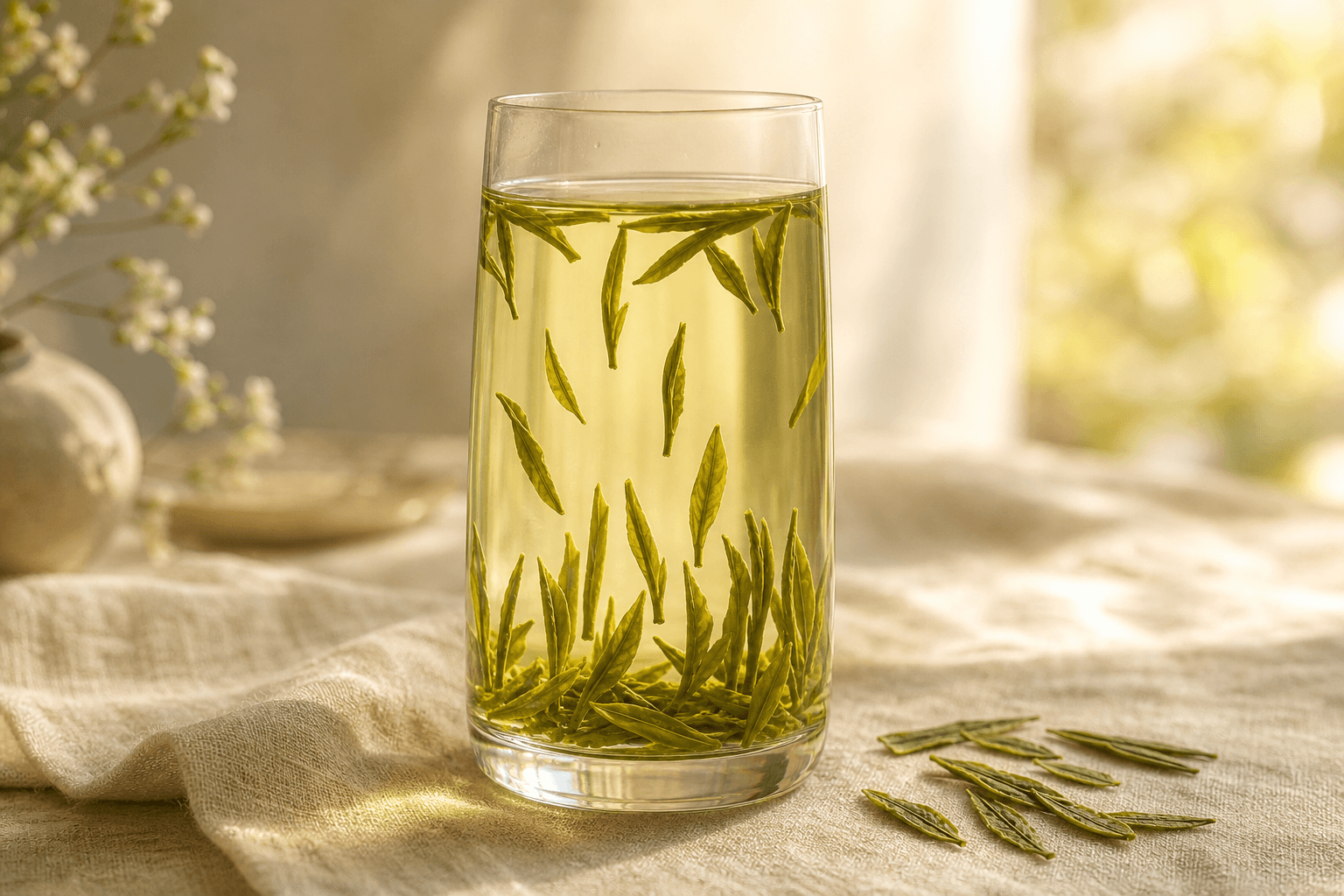
Long Jing is one of the few Chinese teas traditionally brewed in a tall clear glass. There is no gaiwan ritual here — only three grams of leaf in a hundred millilitres of water at eighty degrees, watched as the buds rise, hover, and slowly sink upright like miniature spears. The first steep runs sixty seconds; each subsequent infusion adds thirty. Pour the water down the side of the glass, never directly over the leaves, or the chestnut note scorches.
The liquor is pale yellow-green, almost colourless against white porcelain, with a faint clarity that makes the cup feel more like spring water than tea. Across three or four infusions the cup opens from a tight nutty sweetness into something rounder and more vegetal, then quietly fades. Long Jing is not built for ten steeps; it is built for the first three, and the first is the most beautiful.
Smooth and slightly buttery on the tongue, with the signature roasted-chestnut sweetness running underneath a fresh snap-pea note. No astringency, no bitterness, just a gentle minerality from the West Lake soil.
Cool and lingering, with a returning sweetness that settles in the back of the throat — hui gan in its quietest form. The empty glass smells of warm bread for several minutes.
Across the session
Buds rise and sink. Chestnut and orchid in their cleanest, most defined form.
The cup fills out — buttery body, snap-pea sweetness, the terroir mineral comes forward.
Vegetal notes round into something closer to fresh almond. The chestnut quiets.
Light and water-sweet. The leaves have given everything; what remains is impression.