Wine · Cocoa · Orchid
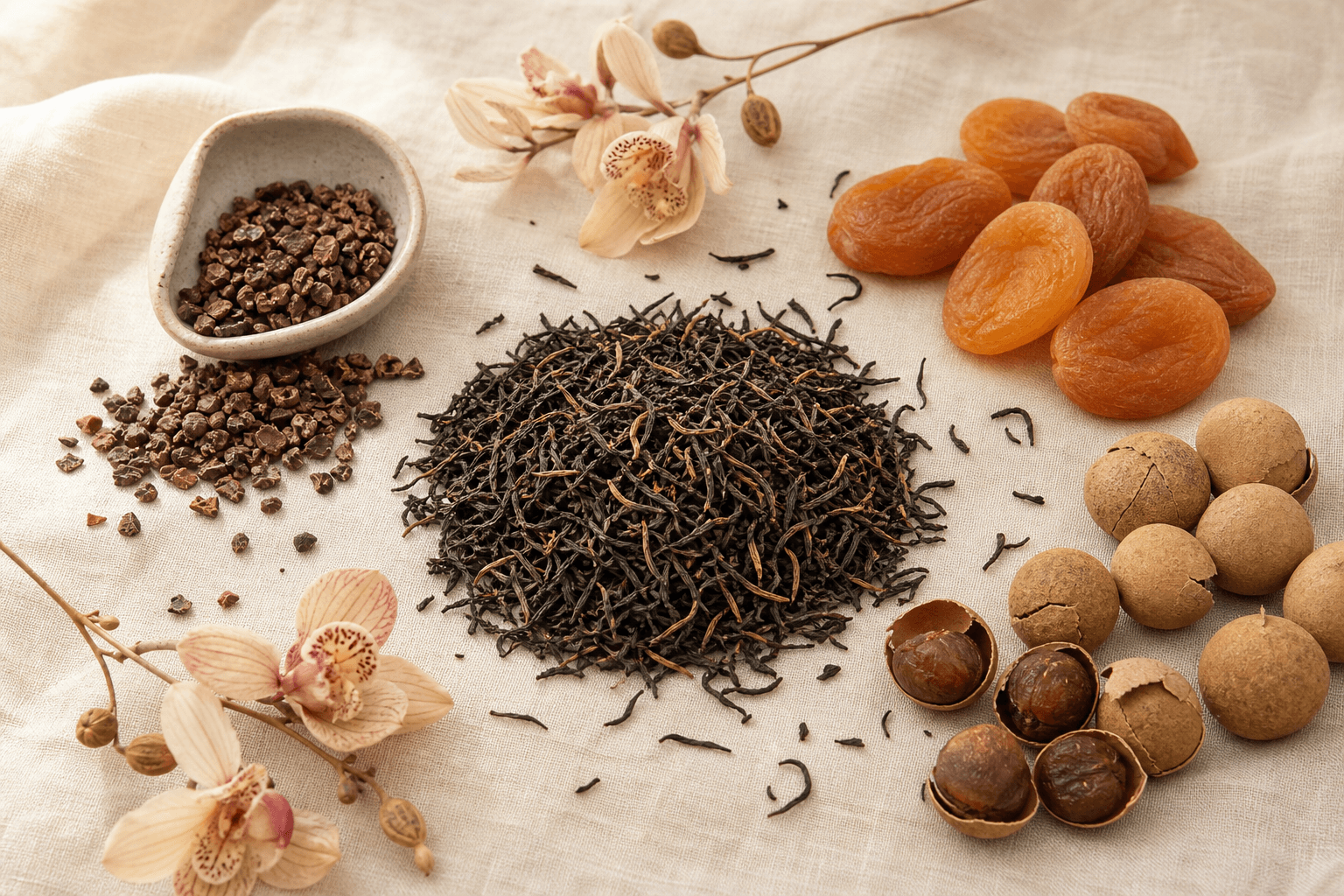
The premium bud-set grade of Keemun — Anhui's most famous black tea and the original heart of English Breakfast blends. Wine-like depth, soft cocoa, and a faint orchid lift on the finish.
Brewing Guide
In Traditional Chinese Medicine, fully-oxidised black teas like Keemun are considered warming and gently tonifying — said to support the spleen and stomach, dispel cold, and aid the smooth descent of food after a heavy meal. Hong cha was the everyday cup of the cooler southern Anhui winters, kept warm in clay pots through the afternoon and poured against damp and chill. Its long popularity in Britain — milk added, drunk through grey weather — sits comfortably in the same logic.
The modern lens reads the same notes through different vocabulary. Black tea's long oxidation converts the leaf's catechins into theaflavins and thearubigins, the pigments responsible for the wine-red liquor and a growing body of cardiovascular and metabolic research. Caffeine is moderate, paired with L-theanine for an even, focused lift. None of this is a medical claim — but it does explain why a cup of Keemun has felt the way it has, to so many people, for so long.
Tradition
Hong cha was long drunk daily in Anhui as a warming, circulation-moving cup — the after-meal pour against cold and damp.
Modern lens
Theaflavins and thearubigins formed during oxidation are studied for their association with improved LDL cholesterol and vascular function.
Tradition
A morning and afternoon cup in the Qimen countryside — warming, focusing, drunk before the long walk to the fields.
Modern lens
Moderate caffeine paired with L-theanine produces an alert-but-calm state; less of the spike-and-crash arc of coffee.
Tradition
Dark teas were considered tonifying — restoring after illness, drunk through winter to keep the body even.
Modern lens
Rich in oxidised polyphenols and the pigment compounds unique to fully-fermented black teas; routinely studied for cellular antioxidant activity.
Tradition
Drunk after rich meals to descend stagnant qi and ease the stomach — the reason it sits so well alongside Western breakfast food.
Modern lens
Black-tea polyphenols are associated with healthier gut microbial profiles and modulation of post-meal lipid handling.
The Tea
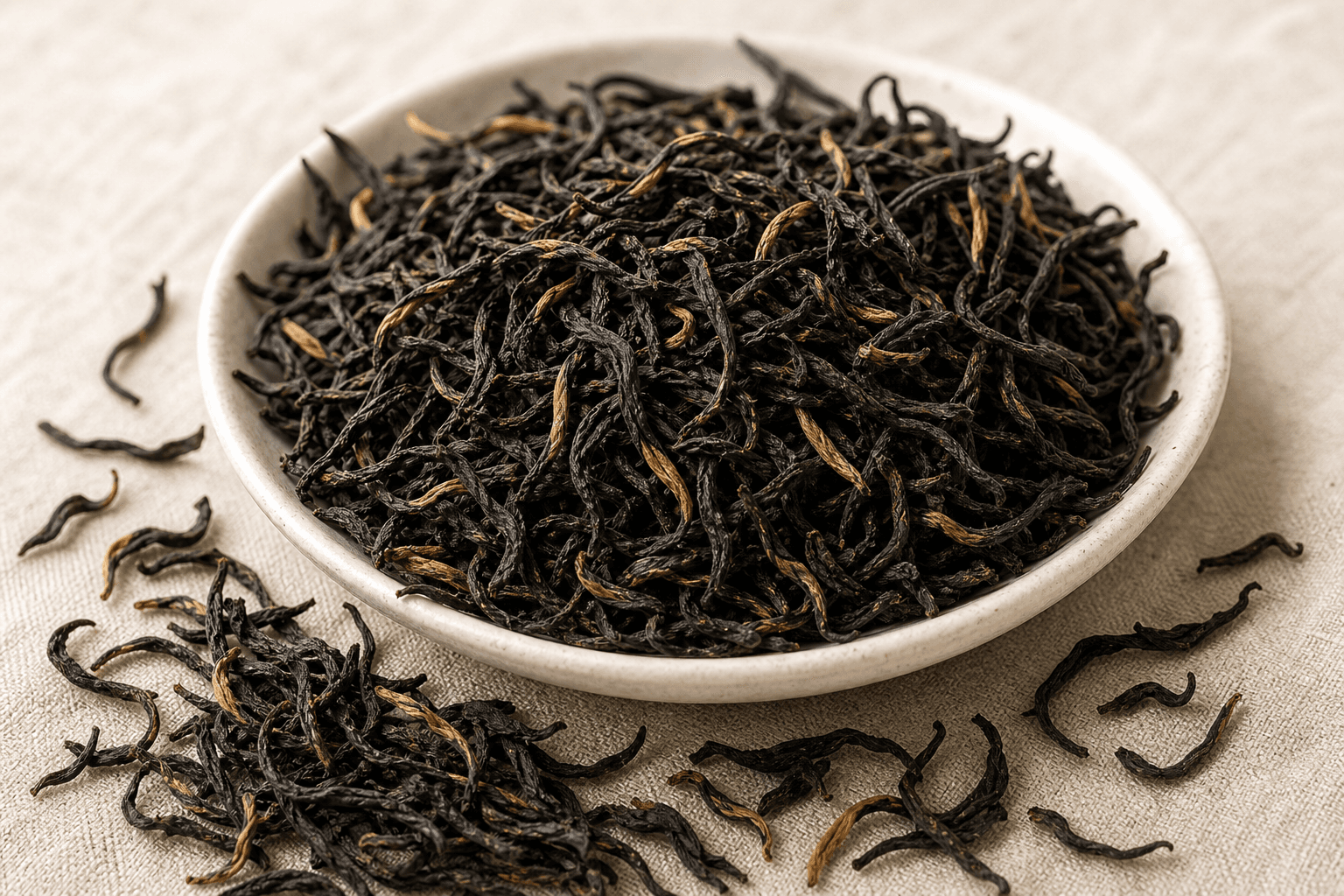
Keemun Hao Ya is the premium bud-set grade of Qi Men Hong Cha, the most celebrated black tea ever to come out of China. The leaves are slim, tightly twisted, and almost lacquer-black, threaded throughout with the slender golden tips that give the grade its name — hao ya, "downy bud." Held to the light they catch a copper sheen; warmed in the hand they release the first hint of the so-called Qi Men aroma: wine, soft cocoa, a curl of orchid behind both.
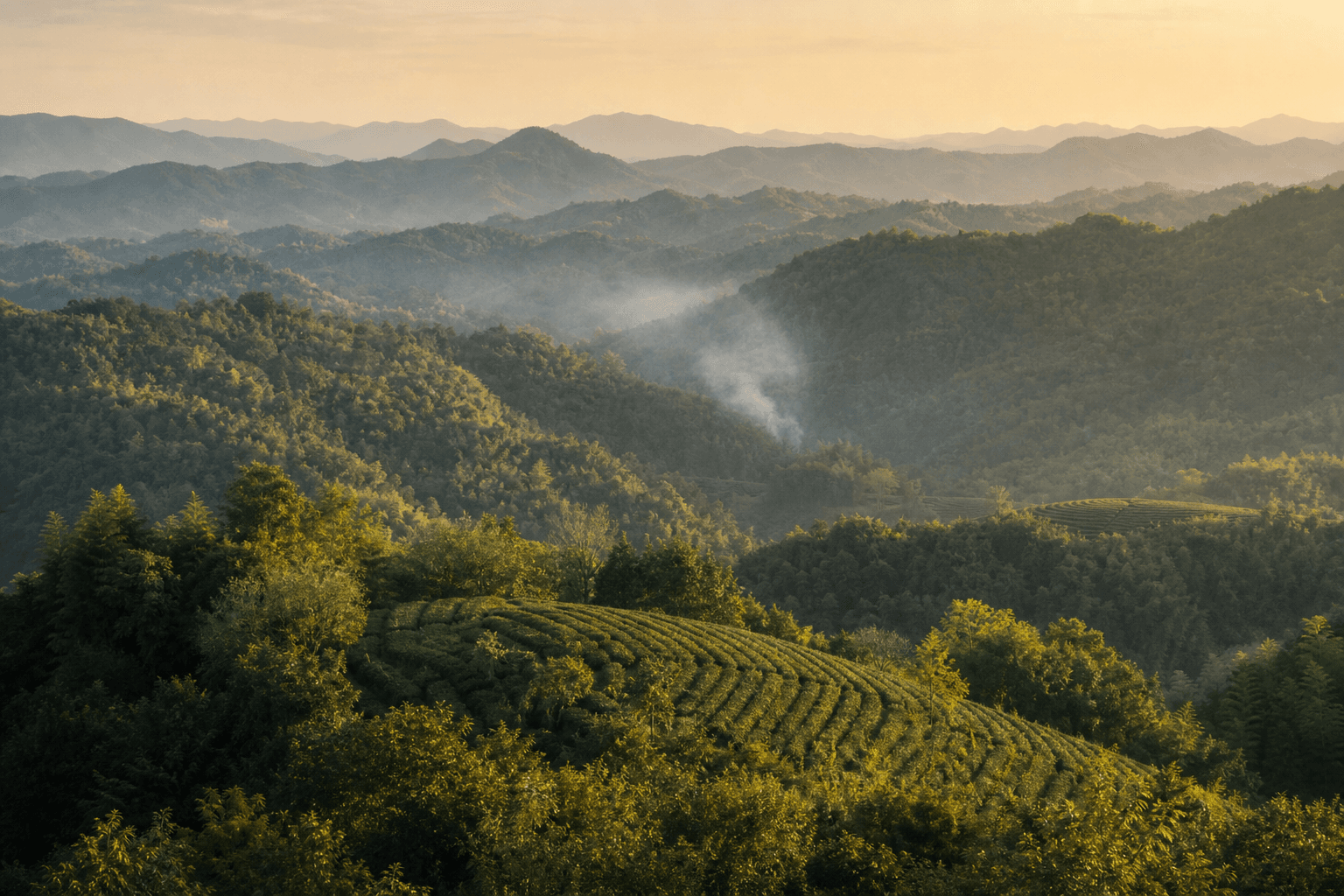
The cultivar is the local Zhuyeqi, grown on the gentle red-clay slopes of Qimen County in southern Anhui, between the Huangshan and Jiuhua ranges. The processing is exacting — withering, full rolling, a long oxidation in cool damp rooms, then a slow charcoal bake that pulls the leaf into its signature wiry curl. Hao Ya is the highest standard pick: bud and one young leaf, nothing coarser, hand-sorted before the final fire.
History & Origins
Keemun is a young tea by Chinese standards. In 1875 a former government official named Yu Ganchen, frustrated by the collapsing market for Qimen's green tea, traveled south into Fujian to study the black-tea methods that had made the Wuyi region rich. He returned to Anhui, adapted the Fujian technique to the local Zhuyeqi cultivar, and within a decade had founded a style — Qi Men Hong Cha — that would go on to define what the rest of the world meant by "China black."
The timing was almost theatrical. The British appetite for black tea was at its peak, and Keemun arrived with exactly the qualities the London market wanted: a deep wine-like body, a soft cocoa undertone, and an aroma — the famous qi men xiang — that no Indian or Ceylon leaf could match. By the 1890s it was the prestige Chinese black on the export wharves; by the early twentieth century it was the heart of English Breakfast and Earl Grey blends, and the cup poured for the British royal household.
Hao Ya is the modern grade-marking that survived the standardisation of the 1980s — bud-set leaf, separated from the coarser Mao Feng and Gong Fu grades, finished with a longer, gentler bake. The reason Keemun has lasted is the same reason it took: it sits at a rare crossroads, refined enough to drink without milk and rich enough to hold up to it.
Flavor
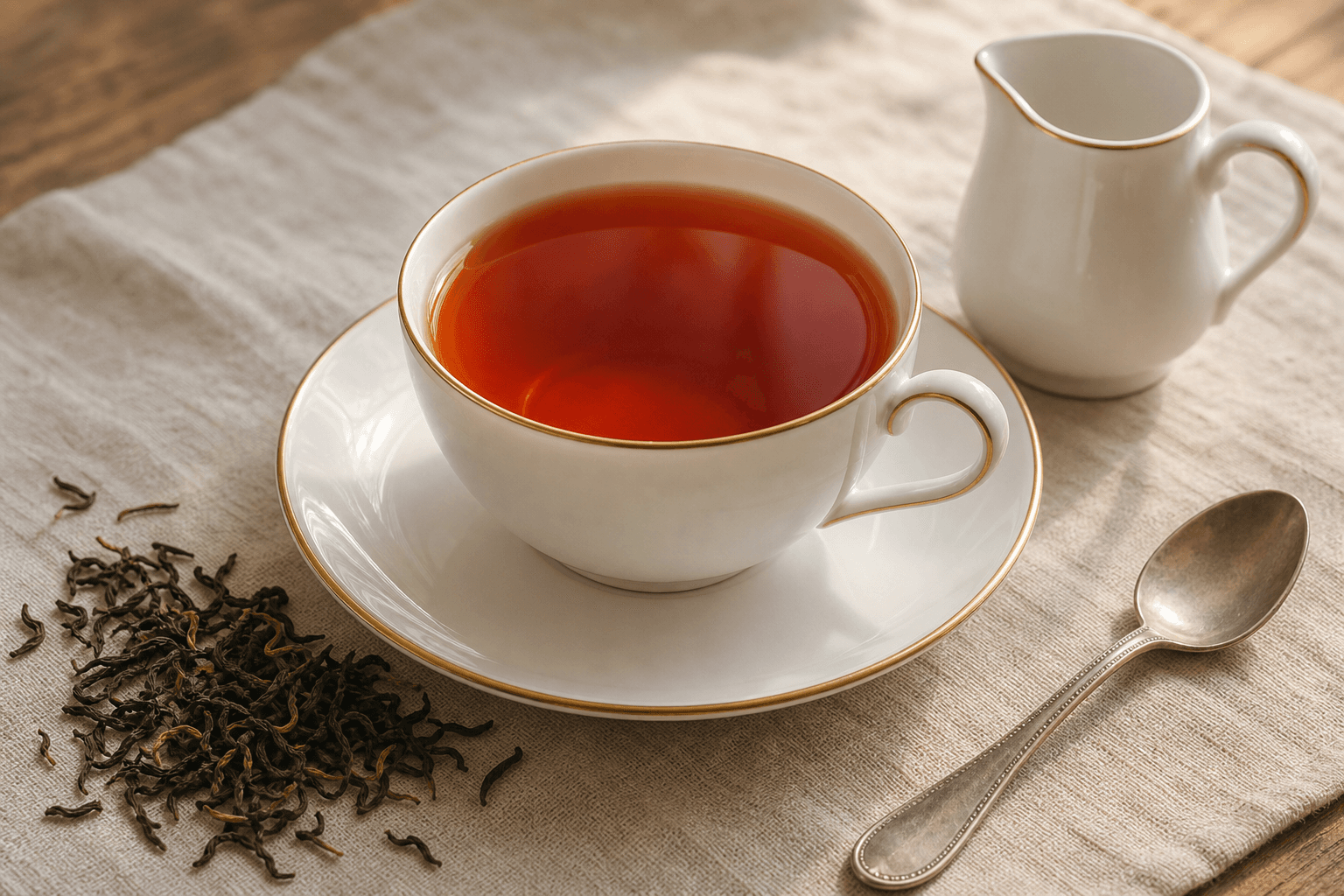
Brew at 90°C, four grams to a hundred millilitres of water — Hao Ya is a delicate bud-leaf and runs bitter if pushed harder. A short rinse opens the curl; the first true infusion at twenty-five seconds pours a clear deep red-amber, glowing like a stained-glass window held to the sun. The nose lifts off the empty cup before the full one has cooled.
Across five or six infusions the cup walks a careful line. Early steeps are wine-deep and almost sweet, with the cocoa note quietly framing them; middle steeps surrender that sweetness and let the orchid lift forward, the qi men xiang at full clarity. The tail steeps thin gently into a malted, bread-crust finish. Brewed Western-style with milk it becomes the classic English breakfast cup — but the orchid is what you lose, and the orchid is the point.
Round and wine-like on the body, no astringency at this leaf grade. Stewed dark fruit and unsweetened cocoa settle in the middle; the orchid threads through without ever taking the lead.
Long and softly drying, the way good red wine finishes. A sweet returning note arrives a beat later — bread crust, faint honey — and lingers well past the next pour.
Across the session
Wine-deep and sweet, cocoa quietly framing the cup.
The qi men orchid steps forward; sweetness recedes a half-step.
Bread crust and dried plum take over; the cup grows quieter and softer.
A clean, gently honeyed finish — the leaves giving up their last sweetness.