Earthy · Smooth · Woody
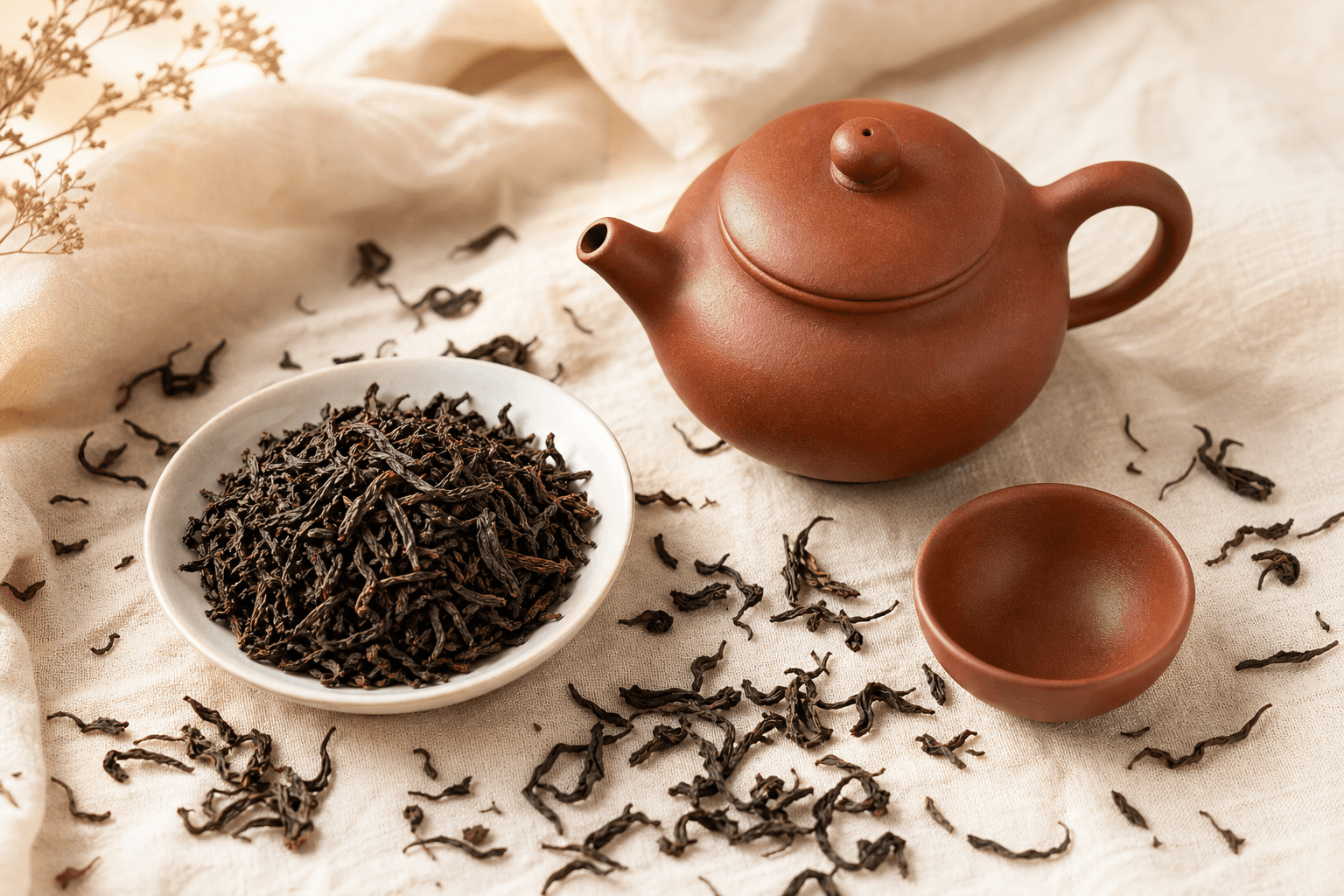
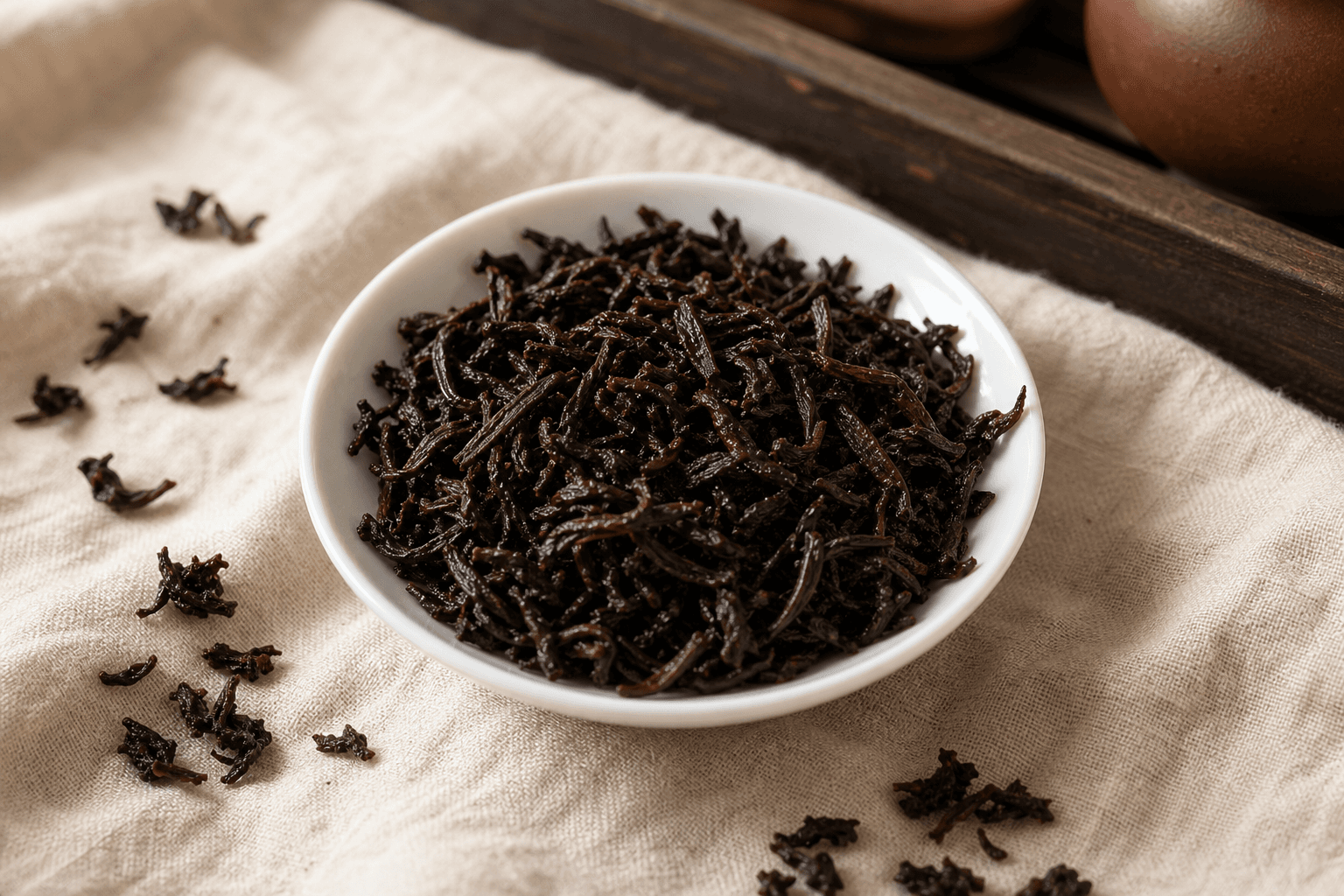
Loose-leaf ripe pu-erh — wet-piled to coax decades of ageing into a few months. Deep, woody, mushroom-forest sweetness with none of the rough edges. The friendliest gateway into pu-erh.
Brewing Guide
In Traditional Chinese Medicine shou pu-erh is classed as warming and grounding — said to support the spleen and stomach, descend stagnant qi, and cut through the residue of rich, fatty food. It is the cup most often poured at the end of a Cantonese banquet for exactly that reason. The wet-piling process is understood, in the older framing, to "cook" the cold, raw character out of the young leaf and leave behind something gentle enough for daily drinking.
The modern picture lines up. Wet-piling produces theabrownins — large polymerised polyphenols unique to fully fermented dark teas — alongside small amounts of statin-like compounds (lovastatin analogues) generated by the Aspergillus species working the pile. Loose shou is also unusually low in catechins compared to younger tea, which is part of why the cup feels smoother and the caffeine arrives gentler. None of this is a medical claim — but it explains the long Yunnan habit of keeping a tin of shou on the kitchen shelf.
Tradition
The classic after-meal cup in Yunnan and Guangdong — said to warm the middle burner and disperse food stagnation after rich or fatty dishes.
Modern lens
Microbial metabolites and statin-like compounds from wet-piling are studied for their effect on gut motility and lipid metabolism.
Tradition
A daily tonic against the heaviness of meat-heavy southern cooking — drunk by elders for "lightness in the body".
Modern lens
Multiple studies associate regular pu-erh consumption with measurable improvements in LDL cholesterol and triglyceride profiles.
Tradition
Considered gentle on the stomach where green or sheng tea can feel sharp — the cup recommended for sensitive digestion.
Modern lens
Rich in theabrownins; fermented dark teas are studied for prebiotic-like effects on the gut microbiome.
Tradition
Grounding without being sedating — the late-afternoon and evening cup for slow conversation or quiet work.
Modern lens
Lower in catechins than green tea; caffeine is moderate and arrives smoothly, paired with the calming amino acid L-theanine.
The Tea
Ripe Pu-erh in loose form is the most approachable face of an old, complicated tradition. The leaf is Yunnan large-leaf assamica — broad, sturdy, plucked from sun-fed tea trees in the south of the province — then wet-piled, or wo dui, until decades of microbial fermentation finish their work in forty-five to sixty days. What pours out of the pile is dark, glossy, and sweet, with the rough edges of youth already gone.
Most shou is pressed into cakes, bricks, and tuos to honour the old caravan-trade shape of the tea. This one is left loose. San cha, the makers call it — scattered tea — and the practical advantages are real: the leaves portion cleanly without a pick, brew faster on the first wash, and let a new drinker see exactly what they are working with. No ceremony, no chiselling. Just a careful spoonful into the gaiwan.
History & Origins
Pu-erh tea takes its name from the trading town of Pu'er in southern Yunnan, where Tang-era caravans on the Ancient Tea Horse Road first pressed sun-dried leaf into cakes for the long ride north into Tibet. For over a thousand years there was only one kind of pu-erh: sheng, the raw, green-tinged tea that mellowed slowly in the dry air of a southern warehouse — five years for the rough edges to soften, fifteen or more for real depth. A finished cake was, in effect, a long-term deposit.
Demand outran patience. By the early 1970s Hong Kong and Guangdong drinkers wanted aged-character pu-erh in volumes that natural ageing could not supply. In 1973 the Kunming Tea Factory, working from earlier Cantonese experiments with humid storage, formalised wo dui — wet-piling. Sun-dried maocha is heaped into long rows on a humid factory floor, sprayed with clean water, covered, and turned by hand every few days. The pile climbs to fifty or sixty degrees Celsius as Aspergillus and other native fungi work the leaf. Forty-five to sixty days later the tea is dark, sweet, and ready to drink. The style had a name: shou — "ripe" — pu-erh.
Loose-form shou was the simplest expression of the new method, and it remains the format that most clearly shows what wet-piling actually does. Without a press, the cup pours faster, brighter, and a degree or two less compressed than its caked siblings. It is the version teachers reach for when a student is meeting pu-erh for the first time, and the version old hands keep on the shelf for the cup before bed.
Flavor
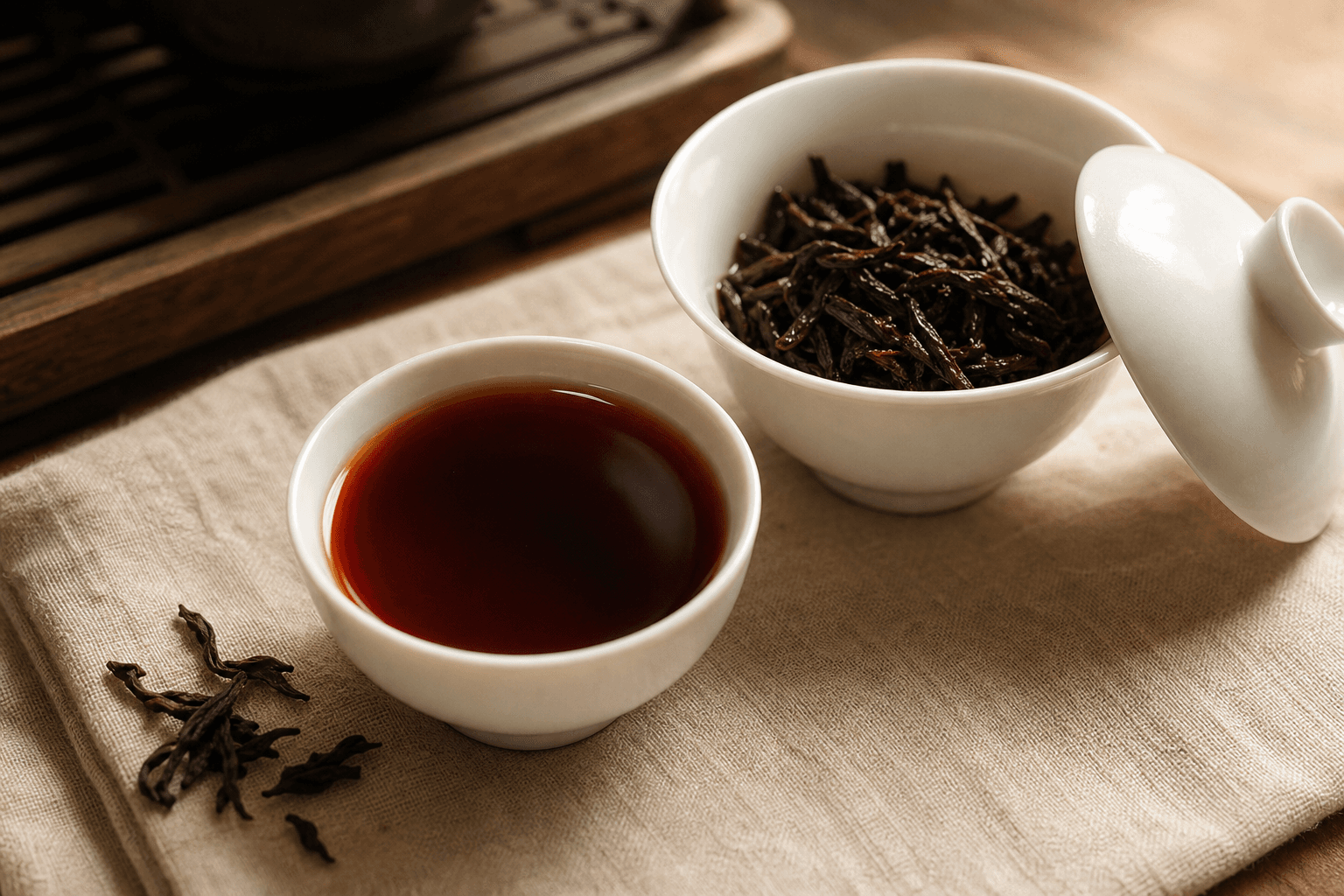
Begin with five grams in a hundred-millilitre gaiwan. Boil the water properly — 100°C, no compromise — and give the leaves a fast ten-second rinse to wash off pile dust and wake the cake. The first true steep is fifteen seconds. The liquor pours nearly opaque, a deep mahogany-red that glows at the rim where light passes through.
Loose shou is forgiving. It will not turn bitter on a long pour, and it will hold structure for ten or twelve infusions before going quiet. The arc moves from the heavy wet-pile note of the first cup — damp earth, mushroom, old wood — into a cleaner, sweeter middle that tastes of dried date, malt, and a faint cocoa, then settles into a long water-like tail that you can keep refilling well past dinner.
Round, smooth, no astringency — a velvety body carrying dried date, malt, and a cocoa-like depth, all settled on the mineral undertow of Yunnan earth.
Long, clean, gently sweet. The damp-pile note rinses away within two or three steeps, leaving a quiet hui gan that lingers on the breath.
Across the session
Heaviest pile note — damp wood and mushroom, the cup at its darkest.
The pile recedes; dried date, malt, and cocoa take the centre.
Sweetness softens to brown sugar; the cup turns mineral and clean.
A water-thin, faintly woody tail that refuses to go bitter.