Floral · Creamy · Bright
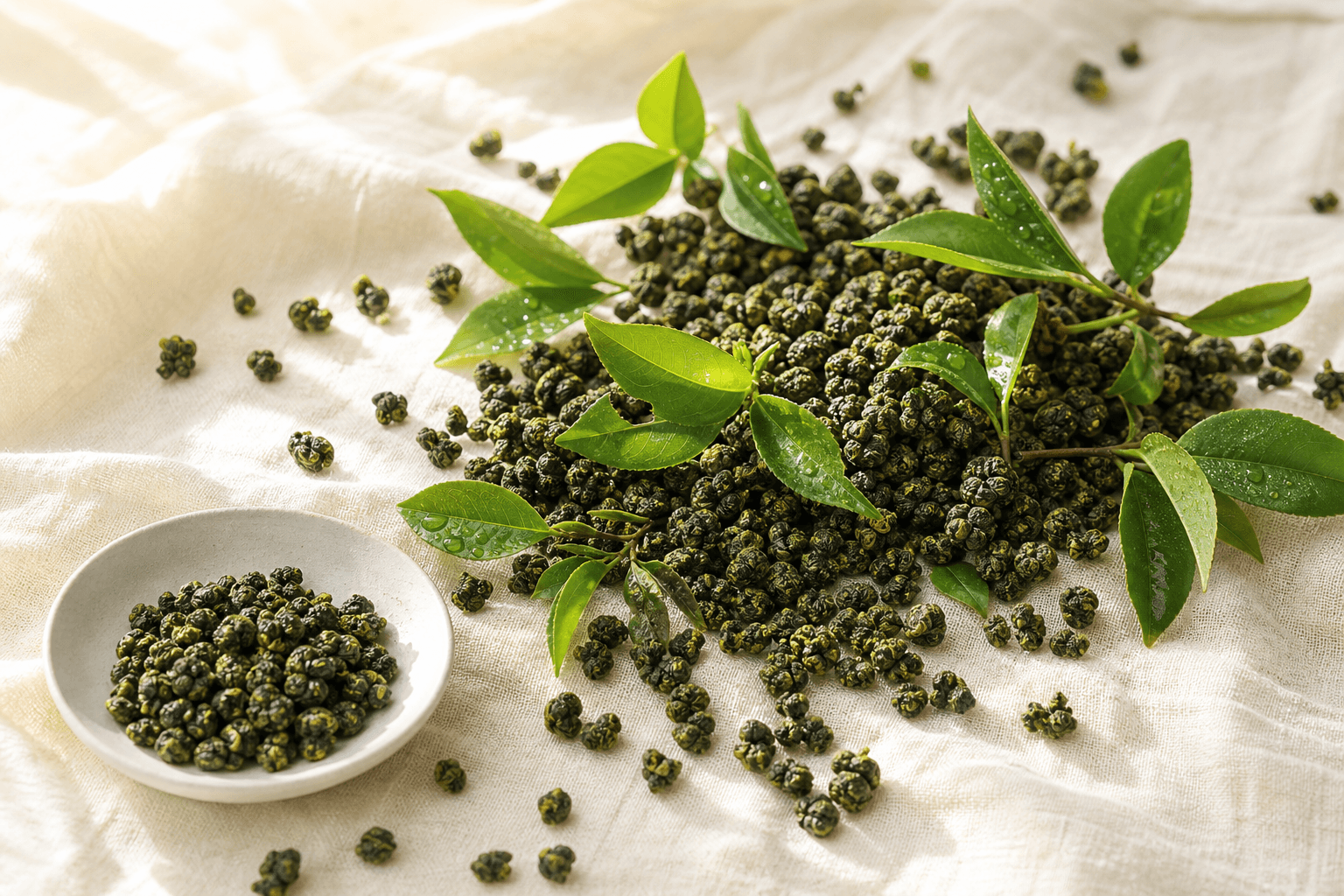
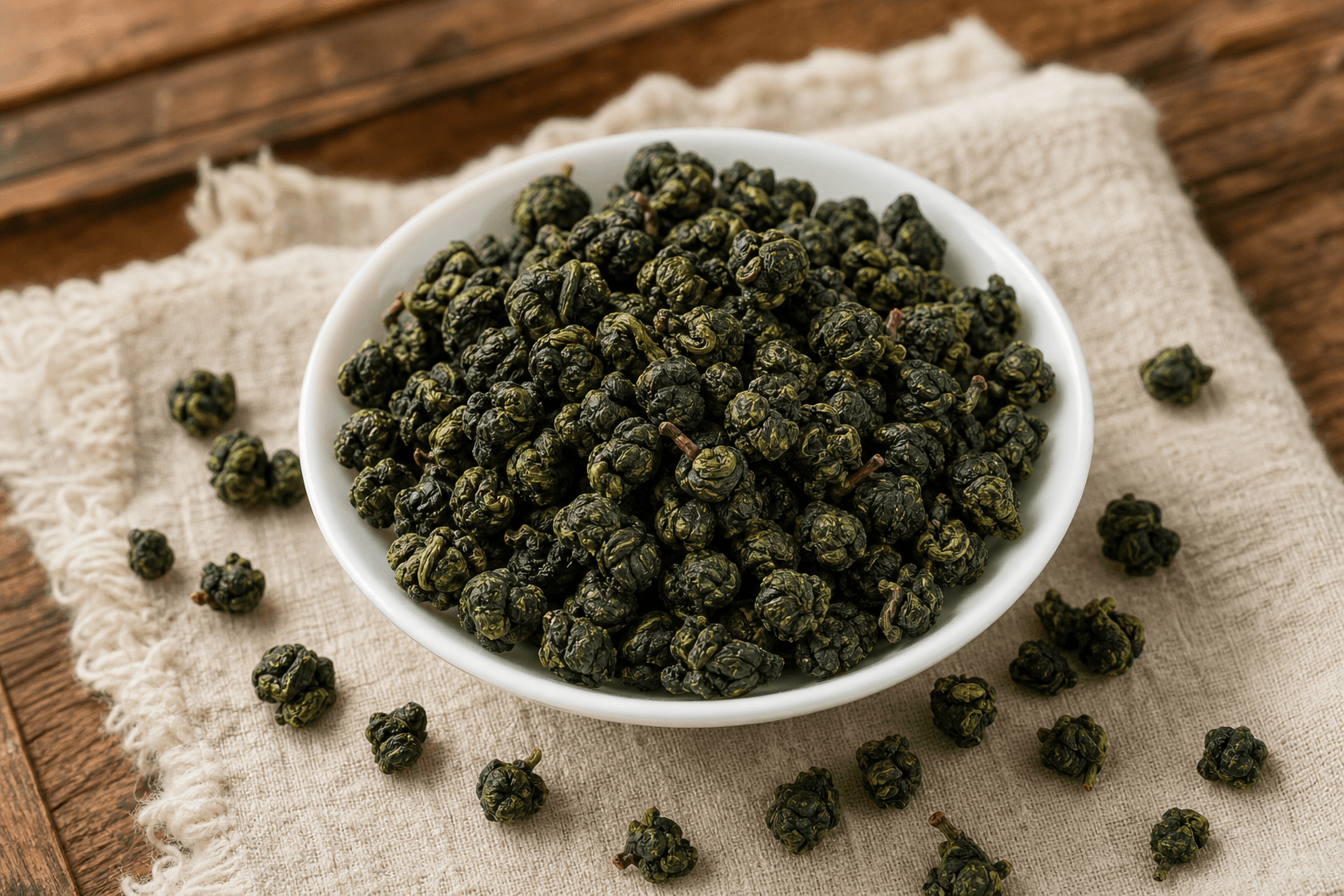
Modern jade-style Iron Goddess of Mercy — lightly oxidised, low-roast, the leaves curling open into bright green orbs. Lilac and gardenia florals over a milky body, lasting eight or more steepings.
Brewing Guide
In Traditional Chinese Medicine, oolong sits between the cool green teas and the warm fully-oxidised reds — neutral in temperature, said to clear heat from the upper body without chilling the middle. Tieguanyin in particular has a long reputation in Fujian as an after-meal digestive that "cuts the grease" of fatty food, and as a daily cup for clearing the head and brightening the complexion. It is the tea poured in the courtyard between conversations, light enough for many cups, complex enough to hold attention.
Modern analysis lines up well with that framing. Partially oxidised oolong sits chemically between green and black tea — high in catechins and EGCG like a green tea, but also rich in the polymerised theaflavins and unique oolong-specific polyphenols formed during oxidation. It carries moderate caffeine paired with L-theanine, which is associated with calm, focused alertness. None of this is a medical claim — but it is part of why the cup feels the way it does.
Tradition
The classic after-meal cup in Fujian — drunk to "cut the grease" of rich food and ease the body back into balance.
Modern lens
Oolong polyphenols are studied for their effects on lipid oxidation and resting energy expenditure in metabolic research.
Tradition
A daily cup said to clear heat from the upper body and brighten the complexion, particularly through humid Fujian summers.
Modern lens
Rich in catechins, EGCG, and oolong-specific polyphenols — a profile associated with antioxidant and anti-inflammatory activity.
Tradition
Light enough for long sessions; the cup of choice for afternoon study and slow conversation in the courtyard.
Modern lens
Moderate caffeine paired with L-theanine — the combination linked in studies to calm, sustained attention without jitter.
Tradition
Eight or more infusions from a single five-gram pour — a tea built for sipping across a whole afternoon, not gulping.
Modern lens
Low astringency and a gentle caffeine load make Tieguanyin among the easier teas to drink in volume across a day.
The Tea
Tieguanyin is first a cultivar, then a style. The plant itself — Camellia sinensis var. tieguanyin — is fussy, slow-growing, and almost exclusively at home in Anxi County, in the cloud-wrapped interior of southern Fujian. The leaves are thick, glossy, and just brittle enough at the edges to take the long bruise-and-rest cycle that defines oolong. Modern jade-style Tieguanyin — qing xiang, "fragrant aroma" — is lightly oxidised to fifteen or twenty per cent and given only a whisper of heat at the end, leaving the leaf a luminous green and the cup full of lilac and gardenia.
The signature shape comes from cloth-balling. After the kill-green and the partial oxidation, the leaves are wrapped tight in canvas and rolled, again and again, against a low table — pressed, opened, pressed again — over the course of an afternoon. Each leaf curls into a dense little orb, glaucous on the surface, that holds its aroma for months and unfurls dramatically in the gaiwan. It is a tea that rewards a maker who is willing to spend a full day on a single batch.
History & Origins
The tea takes its name from a Qing-dynasty legend in Xiping, a small village in western Anxi. A farmer named Wei Yin walked past a half-ruined temple every morning on his way to the fields and, troubled by its neglect, began sweeping the courtyard and burning incense before the iron statue of Guanyin inside. The bodhisattva, the story goes, appeared in his dream and led him to a single tea bush growing in a crevice between two boulders. He took a cutting, propagated it, and the cup it gave was so heavy and fragrant that he named it tieguanyin — Iron Guanyin — for the statue and for the curious metallic weight of the dry leaf in the hand.
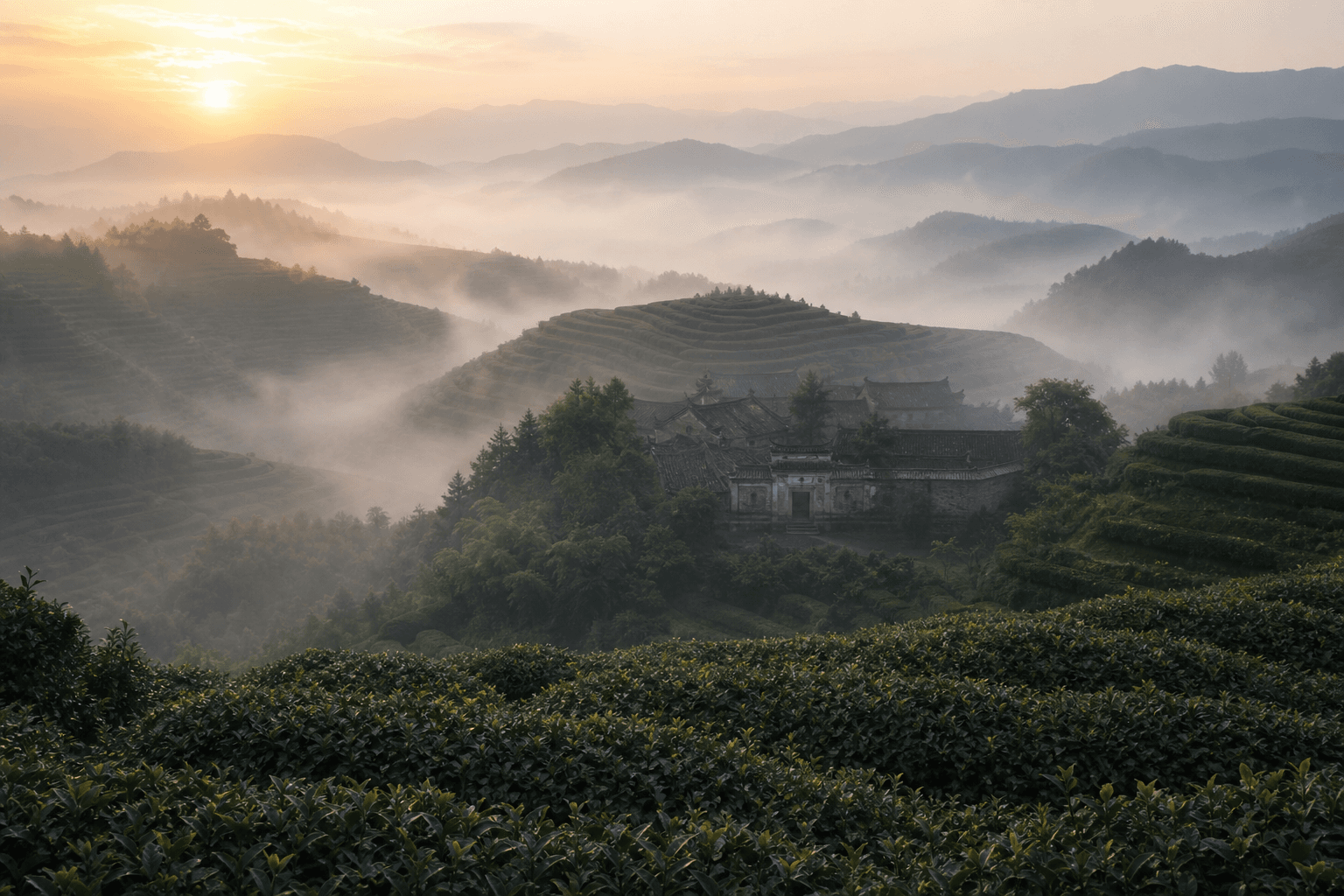
Anxi itself sits in the broken hill country south-west of Quanzhou, between three and eight hundred metres above sea level, where granite weathers slowly into mineral-rich red earth and the morning fog hangs in the valleys until midday. The climate is humid and mild year-round. Tea has been grown here since at least the late Ming, and by the eighteenth century Anxi farmers had developed the cloth-rolling technique that gives the modern leaf its shape. The county still produces the great majority of authentic Tieguanyin, though the cultivar has since travelled to Taiwan and to other parts of Fujian.
For most of its history Tieguanyin was made in the traditional nong xiang — "rich aroma" — style: heavily oxidised, then charcoal-roasted in bamboo baskets over a low fire for hours, sometimes finished and rested over years. In the 1990s, faster machinery and a Taiwanese taste for greener, fresher oolongs pulled the centre of gravity toward qing xiang — the lightly oxidised, low-roast jade style that now dominates export. The two camps still argue about which is more proper. Both are Tieguanyin; they are simply different conversations with the same leaf.
Flavor
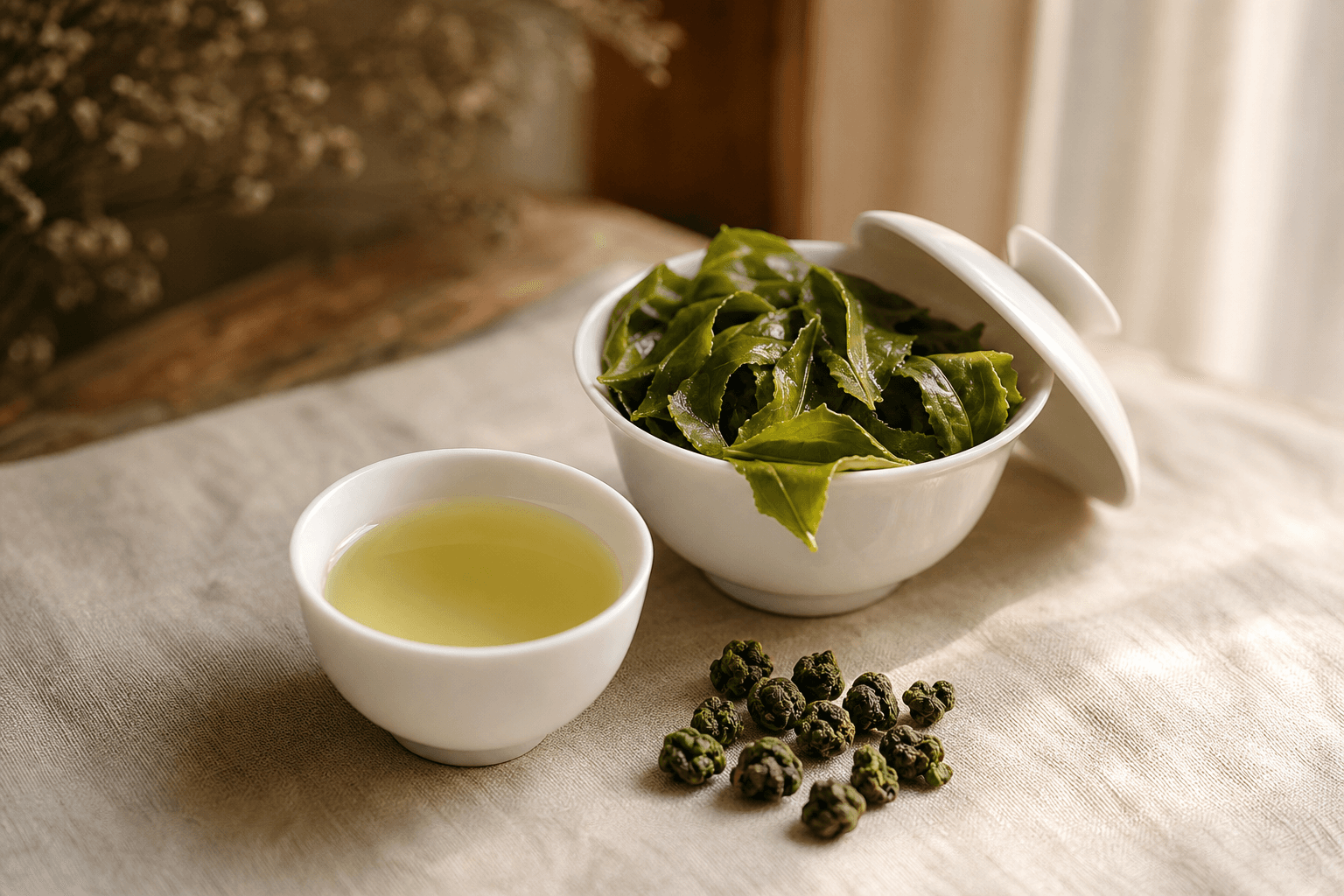
The session asks for a porcelain gaiwan and water just off the boil — 90°C is the customary mark, hot enough to crack the rolled ball open without scorching the lighter florals. Five grams of leaf to a hundred millilitres, a quick rinse to settle the curl, then a true twenty-second first infusion. Watch the gaiwan as you pour: the orbs swell and stretch, and by the third steep the spent leaves are nearly flat — large, intact, and a startling living green that is one of the visual hallmarks of the cultivar.
The liquor is pale jade-yellow with a faint green cast and pours clear all the way through. Across eight or more infusions the cup moves from high florals into a creamy, milky middle — what gongfu drinkers call rou gan, a soft buttery body that seems to coat the tongue — and out into a clean mineral sweetness on the long tail. Lengthen each subsequent steep by ten seconds and the leaves will keep giving well past the point most teas have surrendered.
Silky and round, almost milky in the middle of the cup. The florals carry over from the nose, lifted by a clean mineral spine and a gentle vegetal sweetness with no astringency at all.
Long and cooling, with a slow returning sweetness on the breath. The body fades before the aroma does — gardenia lingers in the empty cup well after the liquor is gone.
Across the session
Florals at full volume — lilac, gardenia, the first hint of cream behind them.
The milky rou gan body arrives. Orchid emerges; the cup feels round and weighted.
Florals soften and the mineral, vegetal core takes over with a quiet sweetness.
Pale, clean, slightly sugar-cane sweet — the leaves giving up their last bright notes.